
Owning an RV in Florida opens up endless travel possibilities, but it also comes with real financial risks. From accidents on the highway to theft at rest stops, your vehicle and personal belongings need protection.
At Providence Insurance Group, we help RV owners understand their Florida RV insurance options so they can travel with confidence. This guide breaks down coverage types, costs, and practical steps to find affordable rates that fit your needs.
What RV Insurance Actually Covers
RV insurance differs fundamentally from standard auto insurance because your motorhome or travel trailer carries your belongings, serves as temporary shelter, and exposes you to unique liability situations. Florida motorized RVs (Class A, B, and C) must carry a minimum of $10,000 in Personal Injury Protection and $10,000 in Property Damage liability, which matches car requirements but falls short of what most RV owners actually need. Travel trailers and fifth wheels aren’t legally required to have separate insurance in Florida since they’re towed, but this creates a dangerous gap-your auto policy typically won’t cover the trailer itself or anything inside it when unhitched. We recommend coverage even for towables because theft and weather damage happen constantly at campgrounds and storage facilities. Standard RV policies protect against liability from accidents, collision damage, comprehensive losses like theft or weather, personal belongings inside the RV, and emergency expenses if an incident forces you to abandon your trip.
Why Florida’s Risks Demand Specific Protection
Florida’s hurricane season from June through November creates concentrated risk that generic coverage misses entirely. Comprehensive coverage becomes essential here-it handles windstorm damage, flooding, and theft at rates that reflect the state’s exposure. The state also has a high concentration of uninsured motorists, which means you should seriously consider uninsured/underinsured motorist coverage even though it’s optional. If your RV is financed, your lender will require both collision and comprehensive coverage, so this decision may be made for you. Progressive’s 2024 data showed Florida motorhome owners paid an average of $1,386 annually and travel trailer owners paid $841 annually, but these figures vary dramatically based on the RV’s value and your specific storage location. Newer Class A motorhomes regularly cost $2,000 to $4,000 per year to insure because their replacement value is high, while older travel trailers might cost under $300 annually. The difference between storing your RV in a secured, covered facility versus leaving it in your driveway can swing your premium by 20 percent or more.
Personal Belongings and Campground Liability
RV owners face distinct hazards that traditional homeowners and auto policies ignore. Personal effects coverage protects your camping gear, electronics, and clothing inside the RV-without it, you rely on homeowners coverage that may have exclusions for items in a vehicle. Vacation liability coverage handles accidents at campgrounds, like someone sustaining an injury on your awning or at your campsite, which your standard liability won’t cover. These protections address real problems RV owners encounter, and skipping them creates expensive blind spots.
Specialized Coverage for RV-Specific Risks
Roadside assistance becomes genuinely valuable when you tow a 40-foot trailer on Interstate 75 at midnight. Pet injury protection reimburses veterinary care if your dog sustains an injury in an RV incident, and pest damage protection guards against hidden rodent or insect damage that can destroy an RV’s interior value. These coverages handle situations that standard policies simply don’t address, making them worth serious consideration as you evaluate your protection needs.
Coverage Options and What They Protect
Liability Coverage Forms Your Foundation
Liability coverage forms the foundation of any RV policy in Florida, and it’s the one piece insurers won’t let you skip. This coverage pays for injuries or property damage you cause to others, and Florida’s minimum of $10,000 per incident is dangerously low for RV owners. A single accident involving your RV can easily generate $50,000 to $100,000 in medical bills and vehicle damage, which means the state minimum leaves you personally responsible for the difference. Try bodily injury limits of at least $100,000 per person and $300,000 per accident, with property damage of $100,000 or higher.
If you tow a trailer or own a motorized RV worth more than $200,000, an umbrella policy that adds $1 million in liability coverage costs $350 to $500 annually. This extra layer protects your personal assets if someone sues you after a serious accident, and it’s far cheaper than defending yourself in court without it.
Collision and Comprehensive Coverage Work Together
Collision and comprehensive coverage split RV damage protection into two distinct categories that work together. Collision covers damage from accidents, rollovers, and hitting objects, while comprehensive handles theft, weather damage, vandalism, and contact with animals. In Florida’s hurricane zone, comprehensive coverage is non-negotiable because windstorm and flood damage happen regularly during peak season from June through November.
If your RV is financed, your lender requires both coverages. Even if you own it outright, the cost difference between a $500 deductible and a $1,000 deductible is typically $200 to $400 annually, making the lower deductible worth the investment.
Personal Belongings and Specialized Protections
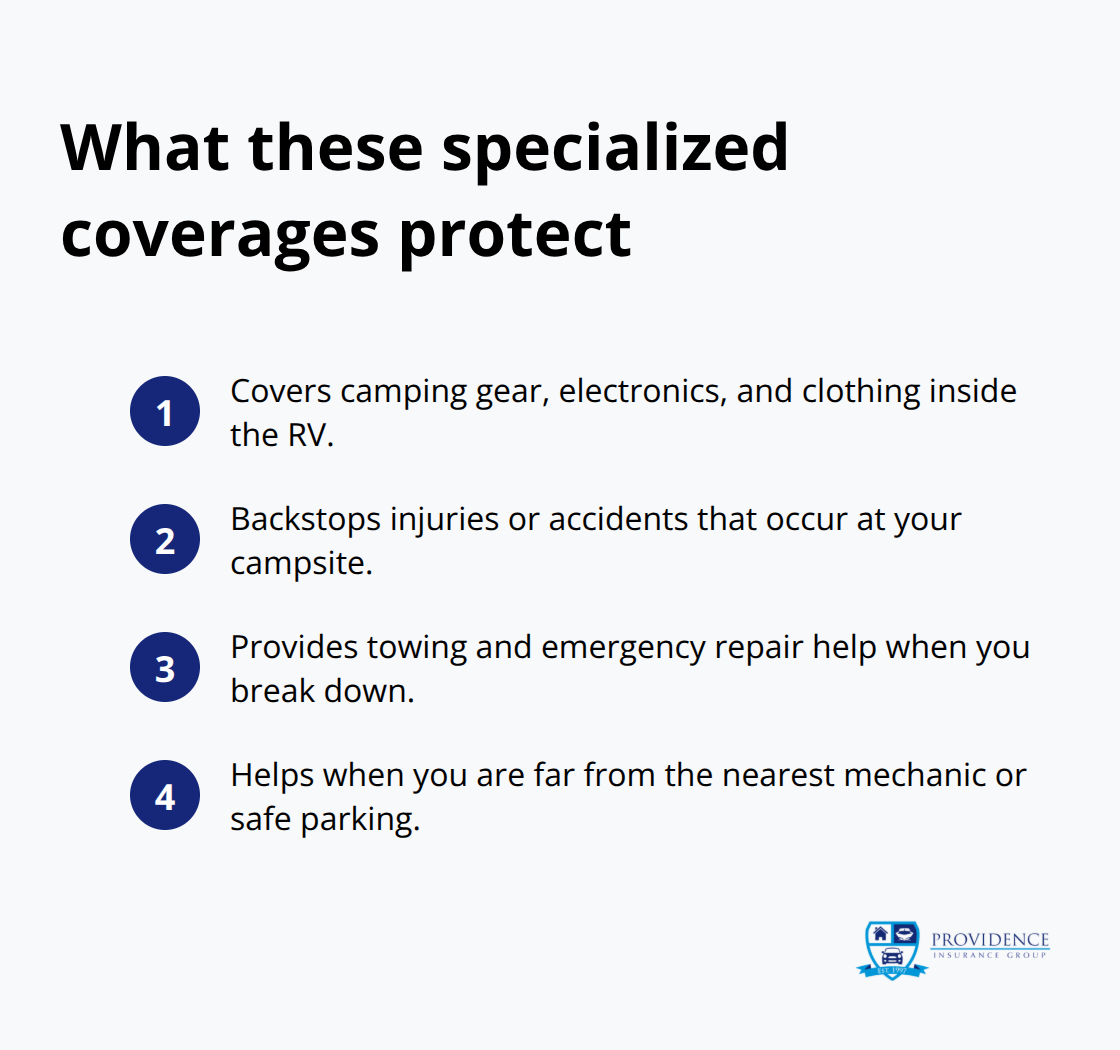
Personal belongings coverage protects your camping gear, electronics, and clothing inside the RV from theft or damage. Without it, your homeowners policy may deny coverage for items in a vehicle. Vacation liability covers accidents at campgrounds where someone sustains an injury on your property. Roadside assistance provides towing and emergency repair service when you break down miles from the nearest mechanic.
These specialized coverages address real situations RV owners face regularly. Skipping them creates expensive gaps in your protection that cost far more than the premium savings. The next step involves understanding what actually drives your RV insurance costs in Florida-factors that vary dramatically from one owner to another based on your specific vehicle and circumstances.
Factors That Drive Your RV Insurance Premium in Florida
Your RV’s Value Sets the Price Foundation
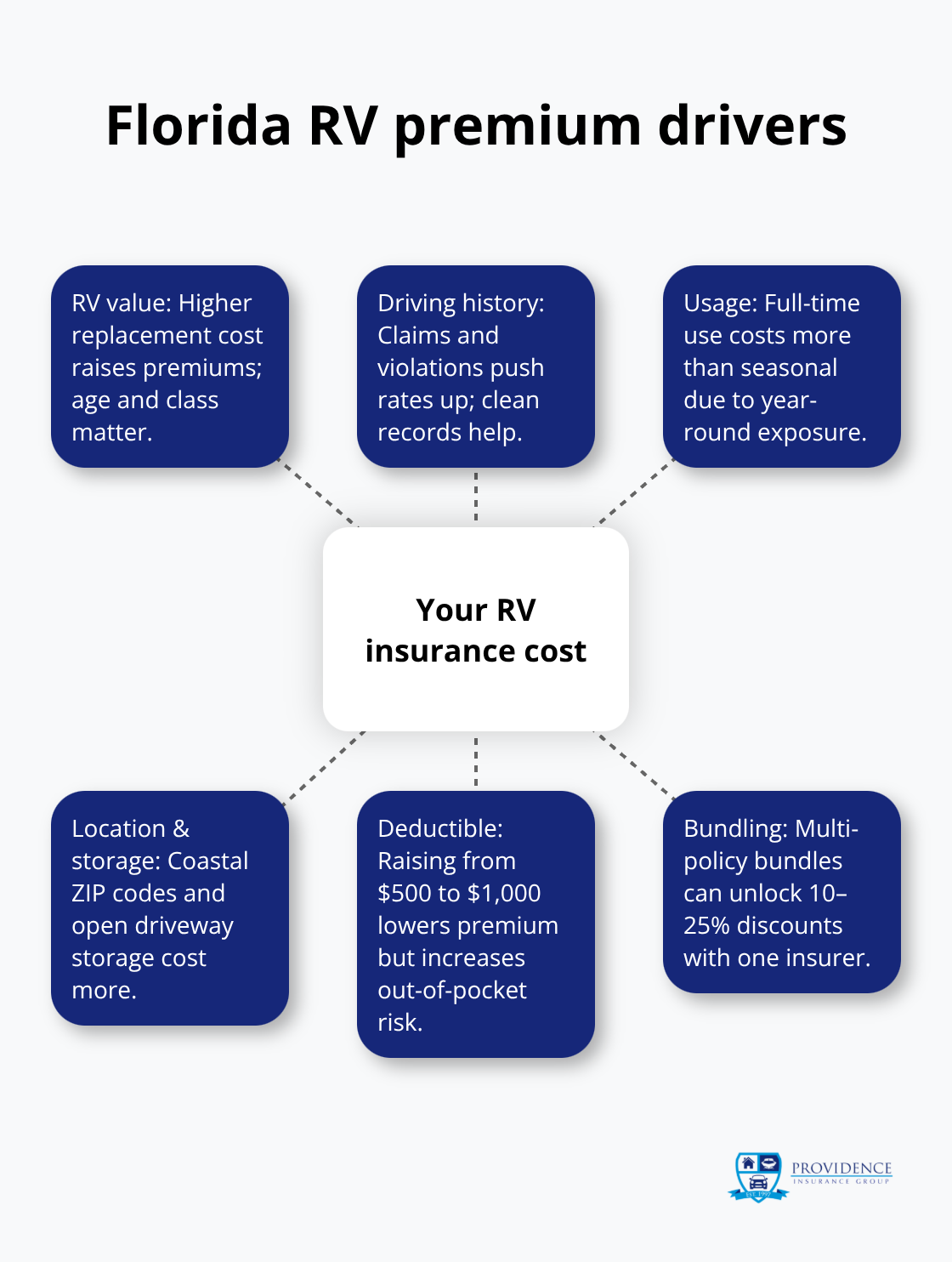
Your RV’s replacement cost is the single biggest factor determining your insurance premium, and it dwarfs almost everything else. A brand-new Class A motorhome valued at $250,000 will cost three to five times more to insure than a ten-year-old travel trailer worth $40,000, even if both owners have identical driving records. Progressive’s 2024 data showed Florida motorhome owners paid $1,386 annually on average while travel trailer owners paid $841 annually, but these figures mask the real spread. Class A motorhomes actually range from $1,000 to $4,000 per year depending on value and age, while Class B units run $500 to $1,000 and Class C units fall between $600 and $2,000. Travel trailers show the widest variation, from $150 annually for a used 20-footer to $800 for a newer 35-footer. Insurers calculate the cost to replace or repair your specific RV model, and that number drives everything else. If you’re shopping for an RV, this reality should influence your decision. A $150,000 motorhome will cost substantially less to insure than a $300,000 model, and that savings compounds over years of ownership.
Driving History and Usage Patterns Shape Your Rate
Your driving history and how you actually use the RV create the second tier of pricing variation. Accidents, violations, and claims on your record can increase your premium by 30 to 50 percent, while a clean history qualifies you for responsible driver discounts that reduce costs by 10 to 15 percent. Full-time RV living costs more than seasonal use because you face risk year-round, and carriers recognize this with full-timer premiums that run $1,500 to $4,000 annually depending on RV value.
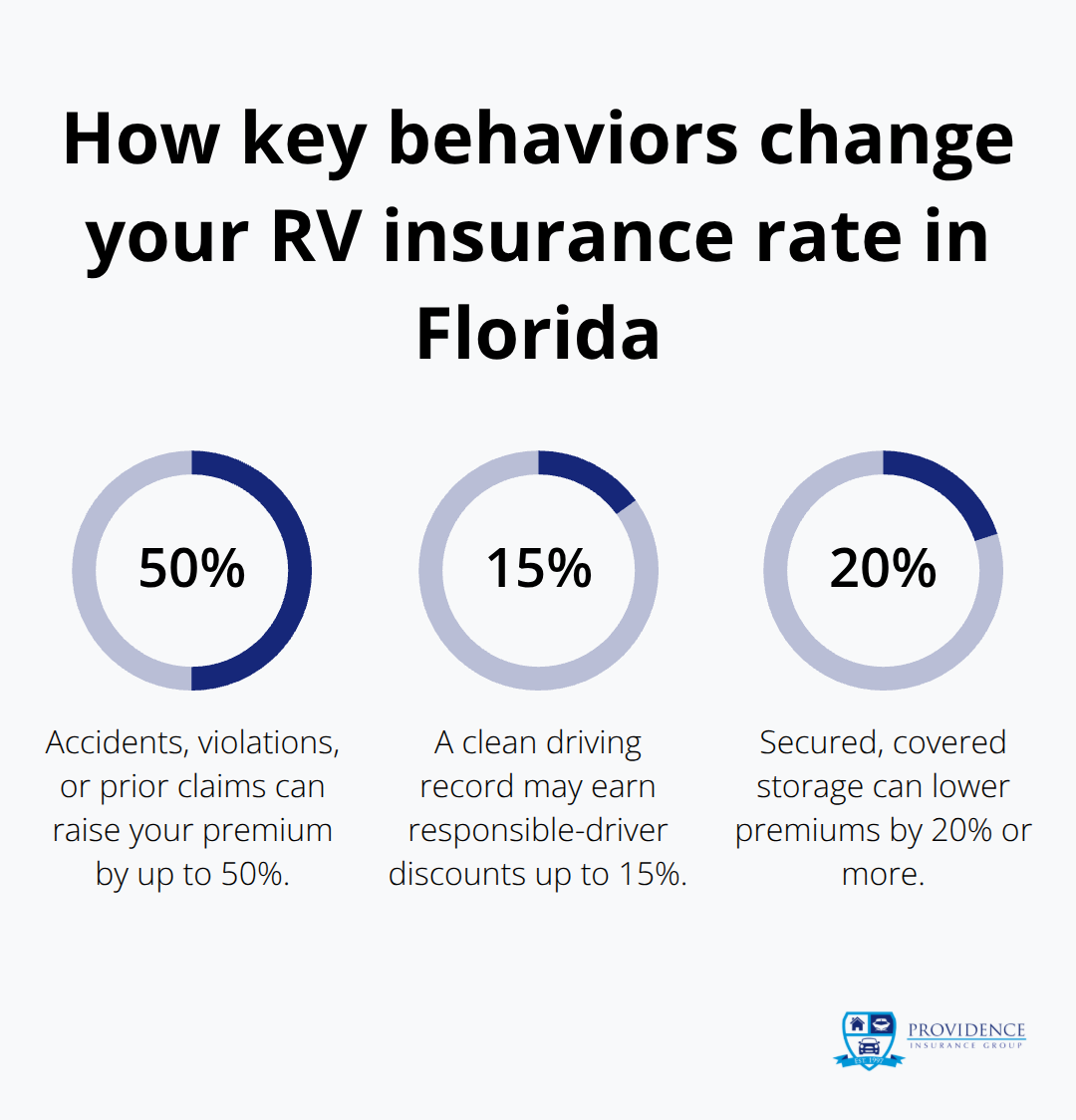
Where you store your RV matters dramatically in Florida. An RV parked in a secured, covered facility with surveillance lowers your premium by 20 percent or more compared to storing it in your driveway or an open lot.
Location and Storage Create Significant Cost Differences
Hurricane exposure compounds storage effects during peak season from June through November, so your ZIP code influences your rate significantly. An RV stored in coastal Miami-Dade County will cost more to insure than the identical unit stored in inland Ocala. Your deductible choice also shifts your premium directly. Raising your collision and comprehensive deductible from $500 to $1,000 typically saves $200 to $400 annually, but this trade-off only makes sense if you can afford to pay that higher amount out of pocket after a claim.
Discounts and Multi-Policy Bundling Reduce Costs
Multi-policy bundling with your auto or homeowners insurance unlocks discounts ranging from 10 to 25 percent, so consolidating with your existing insurer should be your first move when shopping for quotes. Many RV owners miss savings they qualify for simply because they don’t ask about available discounts. As an independent insurance agent, we take the time to get to know your situation, which helps us identify which discounts actually apply to you and customize coverage specific to your needs.
Final Thoughts
Florida RV insurance protects your investment and shields you from financial disaster when accidents, theft, or weather damage strikes. The coverage you choose determines whether a single incident becomes a manageable claim or a catastrophic loss that drains your savings. Liability coverage forms your foundation, but collision, comprehensive, and personal belongings protection fill the gaps that standard auto policies leave wide open.
Your RV’s value, driving history, storage location, and usage patterns all influence what you’ll pay annually, but multi-policy bundling and available discounts can reduce your premium by thousands of dollars over time. Finding affordable rates requires comparing quotes from multiple carriers side by side, which takes hours if you handle it alone. We at Providence Insurance Group compare rates and coverages across Florida’s top carriers to find the protection that matches your budget and your actual needs.
Contact Providence Insurance Group today to see how much you can save on Florida RV insurance while gaining the coverage that lets you travel with genuine peace of mind. A quote takes minutes and costs nothing. Our team understands Florida’s unique risks and helps you identify discounts you qualify for so your RV travels stay protected without breaking your budget.
Disclaimer: The information provided in this blog is for general informational purposes only and does not constitute legal, financial, or insurance advice. Coverage options, terms, and availability may vary. Please consult with a licensed professional for advice specific to your situation