
Travel trailers offer freedom on Florida’s roads, but they also bring unique insurance challenges. Most owners don’t realize how many coverage gaps exist until something goes wrong.
At Providence Insurance Group, we’ve seen firsthand how inadequate travel trailer Florida insurance leaves owners vulnerable to costly losses. This guide walks you through the coverage types you actually need, the towing protections that matter, and the gaps you’re likely missing.
What Coverage Do Travel Trailers Actually Need in Florida
Liability Protection Extends Beyond Your Towing Vehicle
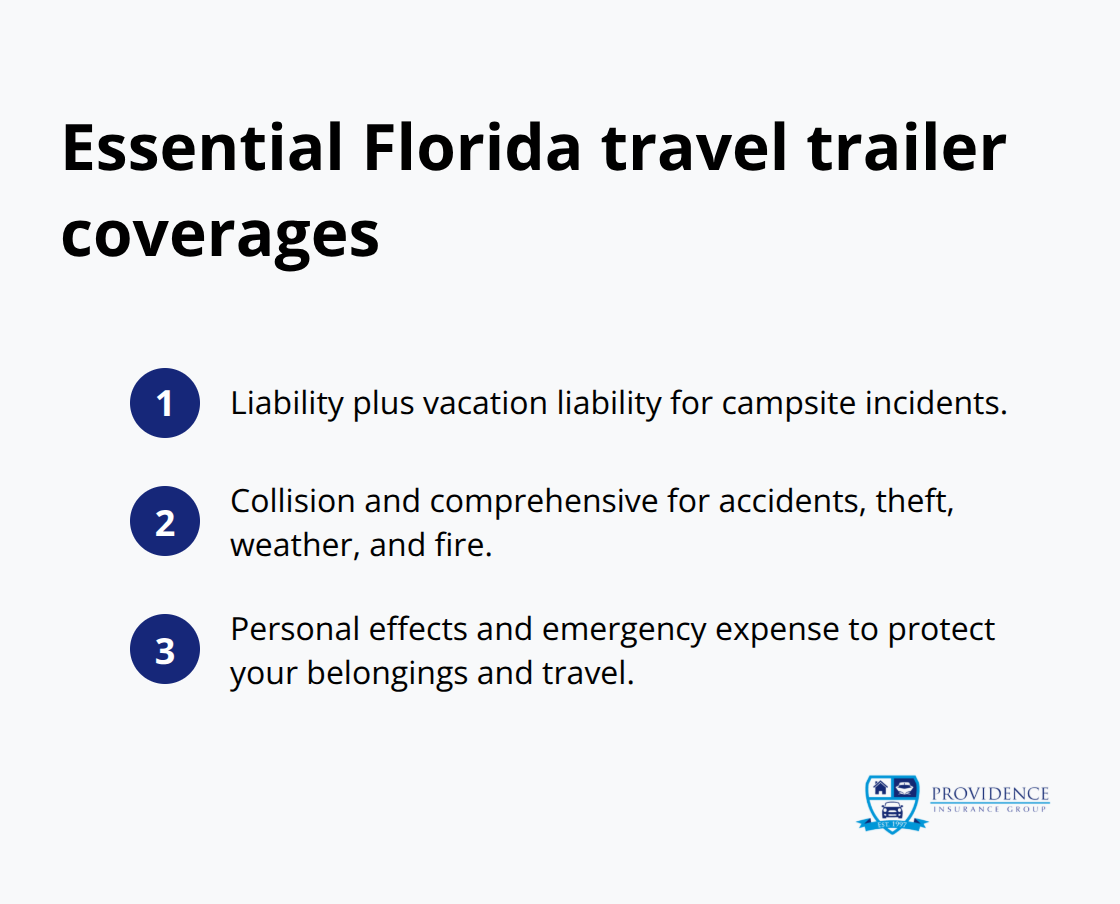
Liability coverage protects you when your trailer damages someone else’s property or injures another person. Florida requires the towing vehicle to carry a minimum of $10,000 in property damage liability, according to the Florida Department of Highway Safety and Motor Vehicles. However, this covers only the vehicle doing the towing, not the trailer itself. If your trailer causes an accident while unhitched at a campsite, your auto policy won’t cover the liability. Vacation liability coverage fills this gap by protecting you against injuries or property damage that occur in or around your RV while traveling. Without it, you’re personally responsible for medical bills or property damage claims from campsite incidents. Try carrying at least $100,000 in combined single-limit liability protection when traveling in Florida, especially if you frequently camp in busy RV parks.
Collision and Comprehensive Coverage Work Together
Collision and comprehensive coverage work together to protect your trailer’s physical structure. Collision covers damage from accidents, rollovers, or hitting objects like guardrails or trees. Comprehensive covers theft, vandalism, weather damage, and fire. If your trailer is financed, your lender requires both collision and comprehensive coverage. For older trailers worth less than $5,000, you might skip collision coverage to reduce premiums, but comprehensive is non-negotiable in Florida due to hurricane exposure and theft risk. Named-storm deductibles triggered by National Hurricane Center designations can run $1,000 or higher, so verify your deductible before hurricane season arrives.
Personal Effects Coverage Protects Your Belongings
Personal effects coverage protects your belongings against theft, damage, or loss while inside the trailer. Standard homeowners policies provide limited off-premises coverage and often exclude items in RVs entirely. A dedicated travel trailer policy typically covers personal effects up to a specified limit, protecting everything from bedding and cooking equipment to electronics and outdoor gear. Many owners underestimate how much they have stored in their trailers and end up with coverage limits that fall short after a theft or accident. You should document your trailer’s contents with photos and receipts before you travel. If your trailer is stolen, these records prove ownership and help you file a complete claim. Emergency expense coverage, which reimburses hotel and transportation costs if your trailer breaks down more than 50 miles from home, can pay up to $1,000 and prevents unexpected travel disruptions.
Towing and Roadside Assistance Deserve Your Attention
Roadside assistance coverage provides 24/7 emergency support when your trailer breaks down or becomes immobilized during travel. This coverage pays for towing services, lockout assistance, and fuel delivery, which can cost hundreds of dollars without protection. Travel trailers face unique towing challenges in Florida’s heat and humidity, where tire blowouts and mechanical failures occur more frequently than in other states. Equipment and attachment coverage protects additions like solar panels, upgraded suspensions, awnings, and satellite gear that you’ve added to your trailer. These modifications often require special underwriting, so confirm coverage for these items with your agent before you hit the road.
What Roadside and Towing Protection Actually Covers
Towing Coverage Limits Matter More Than Distance
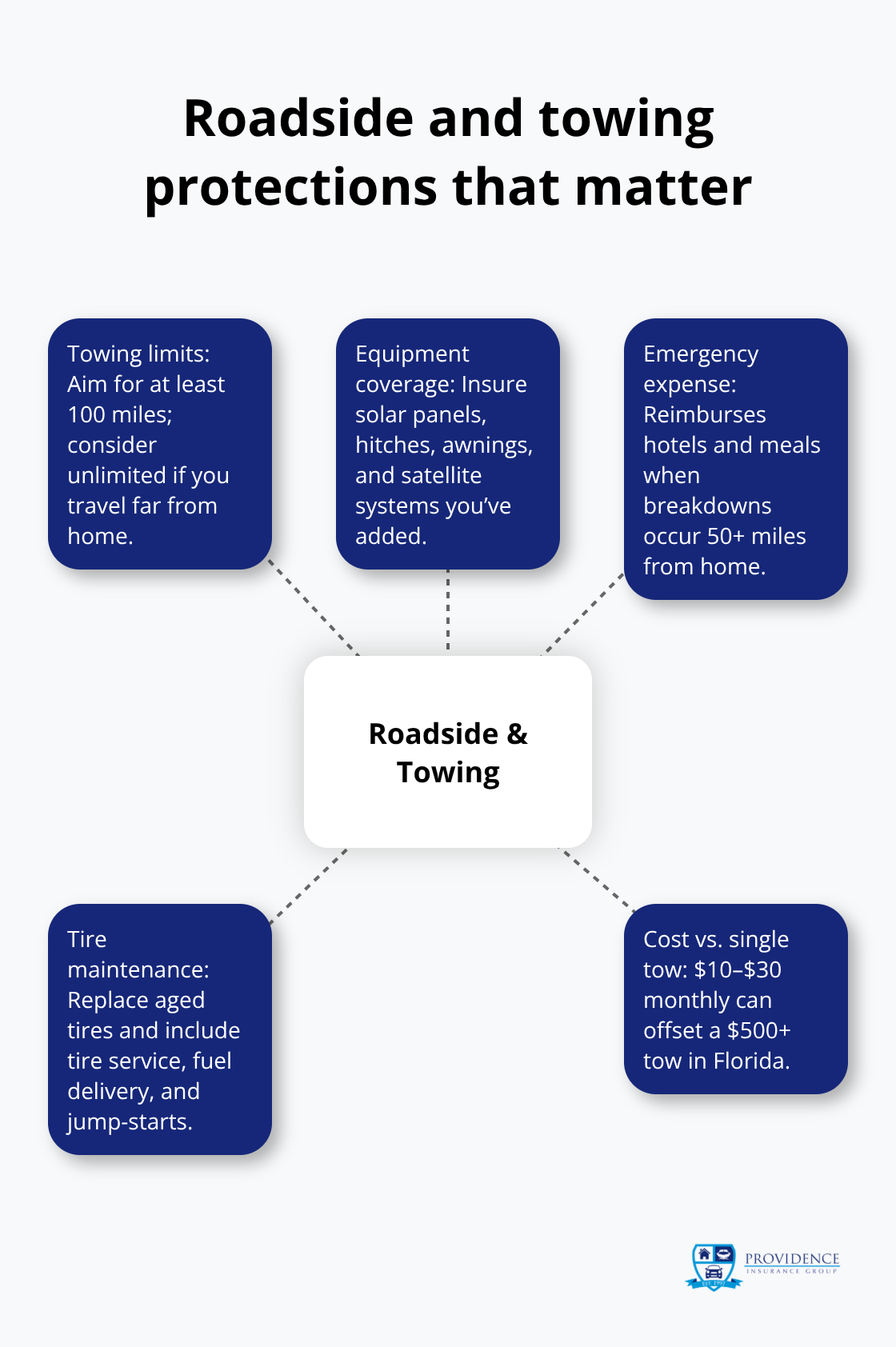
Towing coverage protects you when your trailer needs transport to a repair facility, but the limits determine whether you stay stranded or get help. Standard roadside assistance covers towing distances of 50 to 100 miles, which sounds reasonable until your transmission fails 120 miles from home. Florida’s heat accelerates wear on trailer components, making breakdowns more common than in cooler states. Try requesting towing coverage with at least 100-mile limits when you purchase your policy. If you frequently travel beyond 100 miles from your base, negotiate for unlimited towing distance or consider a separate roadside assistance plan through organizations like Good Sam, which specifically serves RV travelers and offers towing up to 200 miles.
Equipment Coverage Protects Your Modifications
Equipment coverage for attachments like solar panels, upgraded hitches, awnings, and satellite systems requires separate underwriting because standard policies exclude these additions. Many owners add $5,000 to $15,000 in aftermarket equipment without notifying their insurer, only to discover these items aren’t covered after damage occurs. List every modification with your agent before travel season, including the cost and installation date. This step prevents coverage denials when you file a claim for damage to equipment you’ve installed.
Emergency Expense Coverage Prevents Travel Disruptions
Emergency expense coverage reimburses hotel stays and meal costs if your trailer breaks down more than 50 miles away, typically up to $1,000 per claim. This protection prevents unexpected financial strain during travel disruptions and covers costs that your standard policy won’t touch. Without this coverage, a breakdown far from home forces you to absorb lodging and food expenses out of pocket while waiting for repairs.
Tire Maintenance Reduces Roadside Emergencies
Tire blowouts rank as the leading cause of travel trailer breakdowns, especially when tires are underinflated or aged beyond five years. Many owners neglect tire pressure checks before long trips, resulting in expensive roadside repairs that prevention could have stopped. Inspect tire pressure weekly during travel season and replace tires every five to seven years regardless of tread depth. Roadside coverage should include tire service, fuel delivery, lockout assistance, and jump-starts at minimum.
Roadside Assistance Costs Less Than a Single Tow
The difference between basic coverage and robust roadside assistance often amounts to $10 to $30 monthly, a minimal cost considering that a single tow in Florida can exceed $500 without coverage. Coordinate your roadside coverage with your collision and comprehensive limits to avoid overlapping protection you’re paying for twice, then redirect those savings toward higher liability limits instead. Coverage gaps in towing protection leave many Florida owners vulnerable to the exact scenarios that happen most often on the road.
Coverage Gaps That Cost Florida Travel Trailer Owners Thousands
Undervaluing Your Trailer Leaves You Short After a Total Loss
Most Florida travel trailer owners drastically underestimate what their trailers are actually worth when they purchase insurance. You add a new refrigerator, upgrade the electrical system, install solar panels, and suddenly your $25,000 trailer is worth $35,000 in components and equipment. If your trailer is totaled, you receive only the actual cash value stated on your policy, not the replacement cost. A professional appraisal of your trailer before purchasing coverage, including all upgrades and modifications, reveals the true value you need to insure. Many owners discover after a total loss that they fall $10,000 to $15,000 short because they insured based on the original purchase price rather than current value.
Named-storm deductibles in Florida policies range from $1,000 to $2,500, which means hurricane season damage comes out of your pocket before insurance kicks in. If you finance your trailer, your lender requires collision and comprehensive coverage anyway, so you might as well ensure the coverage limits reflect what you actually owe plus the value of your additions.
Full-Time Travel Demands Different Coverage
Full-time travel creates insurance complications that seasonal users never encounter. If you live in your trailer for more than a few months per year, your standard travel trailer policy may not cover you adequately because insurers often exclude or limit coverage for full-time residents. You must explicitly notify your agent that you use the trailer as a residence and request full-timer coverage, which costs more but provides the protection you actually need. Standard policies assume your trailer sits parked most of the time, not that you occupy it continuously. This distinction matters significantly when you file a claim for damage or loss while living inside the trailer.
Unattached Trailer Theft Represents Your Biggest Blind Spot
Unattached trailer theft represents the single biggest coverage blind spot most owners face. Your auto liability policy covers nothing when your trailer sits unhitched at a campground, storage facility, or your driveway. A thief can hook up and drive away with your entire trailer, and without specific trailer coverage for theft, you absorb the total loss yourself.
Coastal Florida storage locations and RV parks near highways experience trailer theft rates significantly higher than inland areas. If you store your trailer within 10 miles of the coast or near major highways, you must have comprehensive coverage with theft protection explicitly included. Specialized coverages address real situations RV owners face regularly, and skipping them creates expensive gaps that cost far more than the premiums you’d pay. Some insurers require that you use anti-theft devices like high-quality locks, wheel immobilization, GPS tracking, and smart parking practices to qualify for theft coverage in high-risk areas.
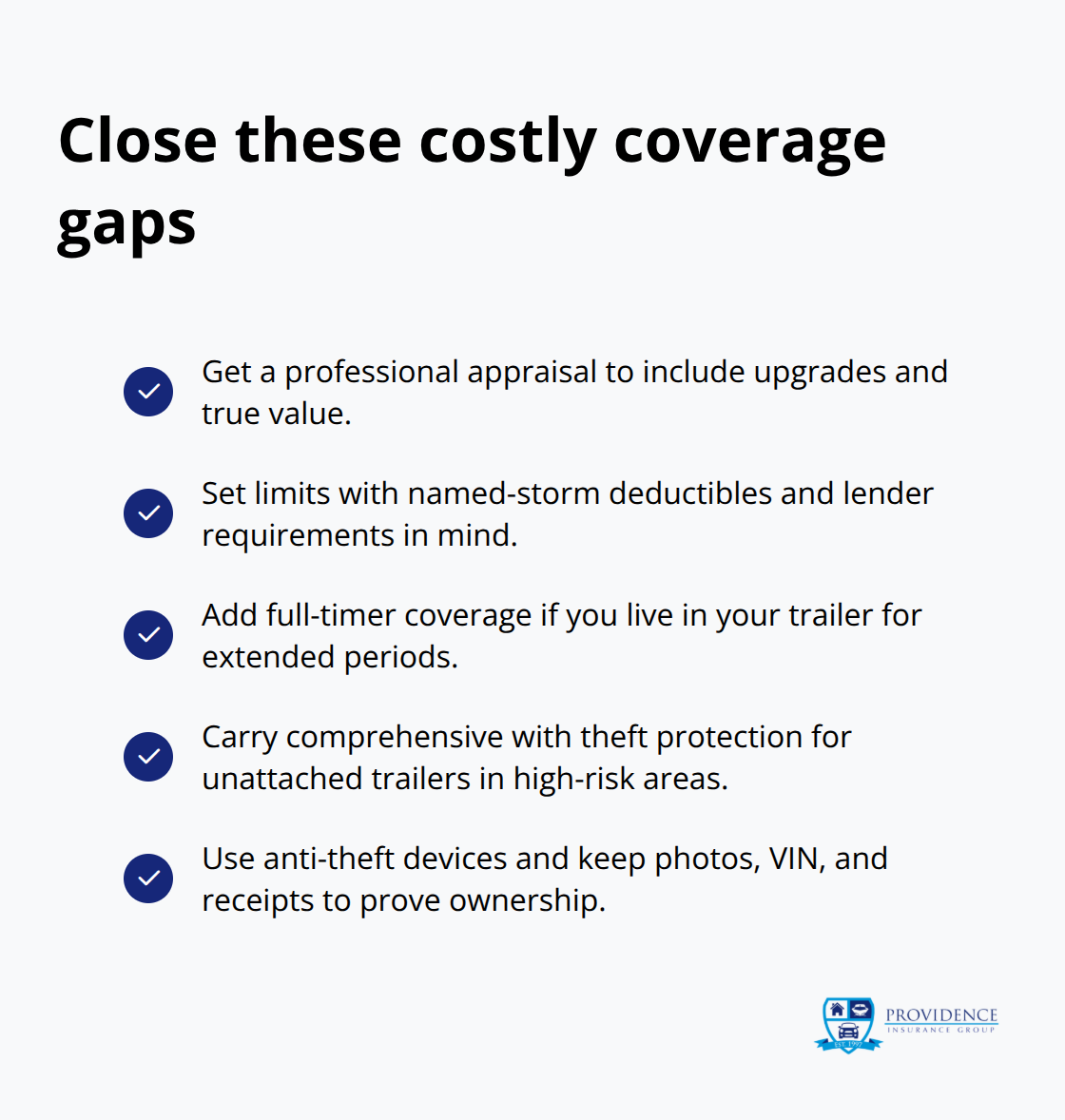
Document your trailer’s VIN, take photos of the exterior and interior, and store receipts for all equipment so you can prove value and ownership if theft occurs.
Final Thoughts
Travel trailer Florida insurance protects far more than just your vehicle-it protects your freedom to explore without financial catastrophe. The coverage gaps we’ve outlined throughout this guide represent real situations that happen to Florida RV owners every year, and they cost thousands in out-of-pocket losses when you’re unprepared. Your coverage strategy should start with liability protection that extends beyond your towing vehicle, collision and comprehensive coverage that reflects your trailer’s actual value including upgrades, and personal effects protection for everything you carry inside.
Roadside assistance with adequate towing limits prevents expensive breakdowns from becoming financial disasters, while equipment coverage protects the modifications you’ve invested in. Most importantly, you need theft protection for unattached trailers and vacation liability coverage for campsite incidents-the two gaps that catch most owners off guard. Review your travel trailer Florida insurance policy annually, especially before hurricane season and whenever you add equipment or modifications to your trailer.
We at Providence Insurance Group specialize in customizing coverage for your specific situation. As an independent agency, we compare rates and coverages from Florida’s top carriers side by side, then maximize your discounts so you pay fairly for the protection you actually need. Contact Providence Insurance Group today to review your current coverage or get a quote that reflects your real travel plans and trailer value.
Disclaimer: The information provided in this blog is for general informational purposes only and does not constitute legal, financial, or insurance advice. Coverage options, terms, and availability may vary. Please consult with a licensed professional for advice specific to your situation