

Florida independent contractor rates are climbing in 2026, and most business owners aren’t prepared for the jump. Insurance premiums across multiple carrier lines have increased significantly, making it harder to budget for coverage.
At Providence Insurance Group, we’ve helped hundreds of independent contractors navigate these changes. The good news is that you have options to control costs and protect your business properly.
What’s Driving Rate Increases for Florida Contractors in 2026
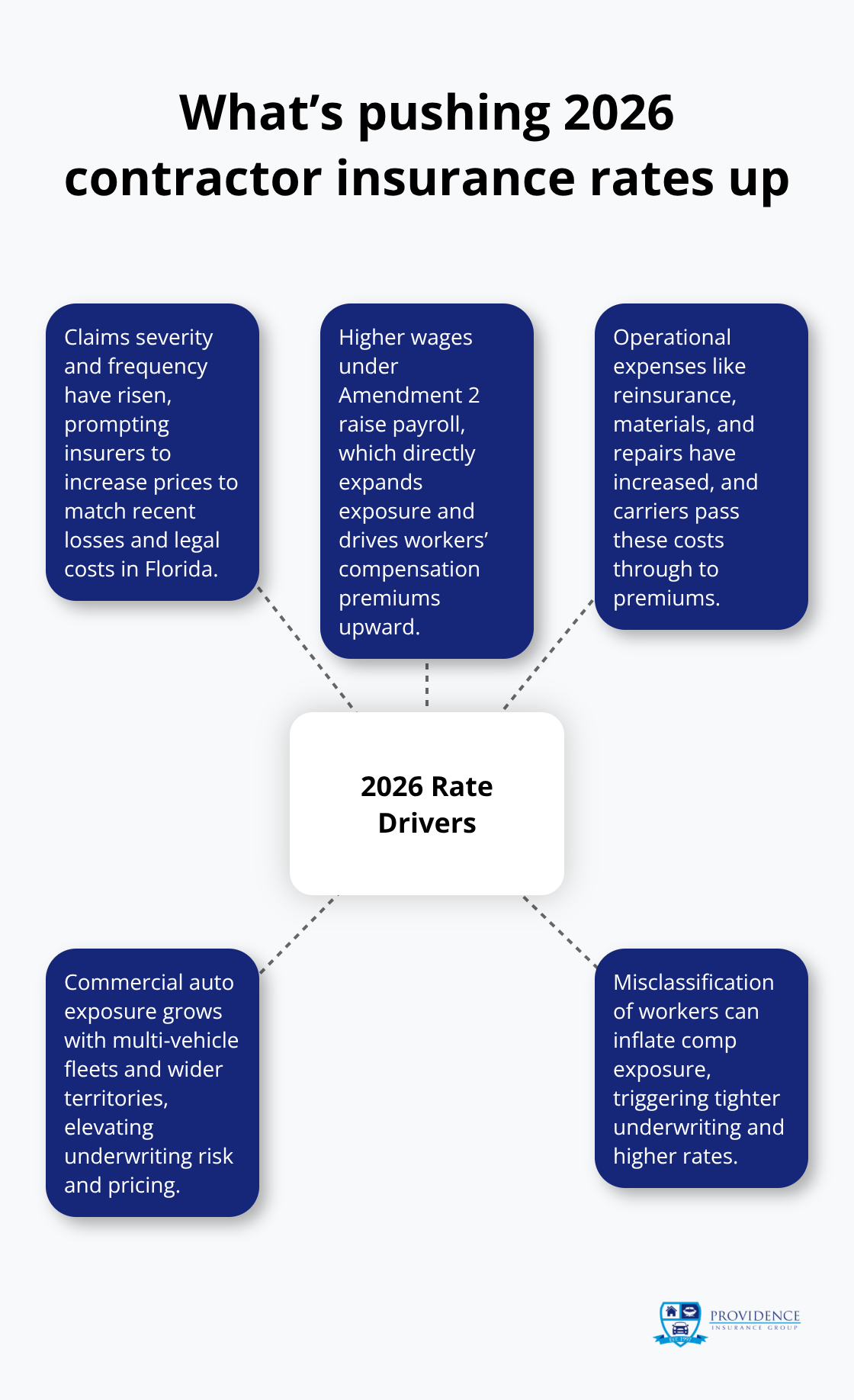
General liability premiums for independent contractors have jumped 8 to 15 percent across major Florida carriers so far in 2026, with workers’ compensation and commercial auto following close behind. The increase reflects real shifts in claims data, operational costs, and market conditions that affect how insurers price risk. Workers’ compensation rates remain volatile because Florida’s minimum wage scheduled to reach $15.00 per hour by 2026 under Amendment 2, which directly increases payroll costs and insurance exposure for contractors who misclassify workers or carry employees on their books. Higher wages mean higher workers’ comp premiums. Commercial auto rates have also tightened, particularly for contractors who operate multiple vehicles or work across wider service territories, since driver history and vehicle exposure factor heavily into underwriting decisions.
Why Your Specific Rate Matters
Your rate depends on your actual operational profile, not generic contractor averages. General liability premiums hinge on your trade type, annual revenue, payroll size, whether you use subcontractors, prior claims history, and the coverage limits you select. A painting contractor with $200,000 annual revenue and no claims history will pay far less than a general contractor with $2 million in revenue and a past liability claim. Workers’ compensation costs tie directly to your payroll and job classification code-roofers and electricians face steeper rates than office consultants because injury risk is higher. Commercial auto premiums depend on how many vehicles you operate, where you garage them, your drivers’ motor vehicle records, and whether you work locally or across multiple counties. Regional differences within Florida matter too: contractors in high-density areas like Miami-Dade and Broward counties face different property and liability exposures than those in rural North Florida, which affects underwriting risk and premium placement.
How to Obtain Accurate Quotes
Don’t accept the first quote you receive. Carriers price risk differently, and a quote from one insurer can vary 20 to 40 percent from another for identical operations. When you request quotes, provide complete and honest information about your business-payroll amounts, number of employees versus independent contractors, prior claims, years in business, and specific services you offer. Misrepresenting your business to obtain a lower quote will backfire during a claim when the carrier investigates and denies coverage. Shop at least three carriers and compare not just premium but also coverage limits, deductibles, exclusions, and what each policy actually covers. Some carriers exclude certain contractors or impose stricter underwriting requirements, so availability varies. An independent agent can pull quotes from multiple Florida carriers side by side, which saves you time and exposes you to options you might not find on your own.
Cut Your Contractor Insurance Costs Without Cutting Coverage
Provide Complete Information to Get Accurate Quotes
Negotiating lower rates starts with accuracy and leverage. The contractors who pay the least are not the ones with the smallest operations-they’re the ones who provide complete, honest information and shop aggressively. When you contact carriers or an agent for quotes, supply exact figures: your actual annual revenue from the past two years, precise payroll amounts broken down by employee versus independent contractor, your specific job classifications, years in business, and detailed descriptions of services. Vague or rounded numbers signal to underwriters that your application is incomplete, which often results in higher provisional rates or requests for documentation that delay the process.
Carriers use different algorithms to score risk, so identical information plugged into five different insurers produces five different premiums. The spread is real-comparing quotes from three major Florida carriers for the same contractor profile often reveals a 25 to 35 percent variance in general liability premiums alone.
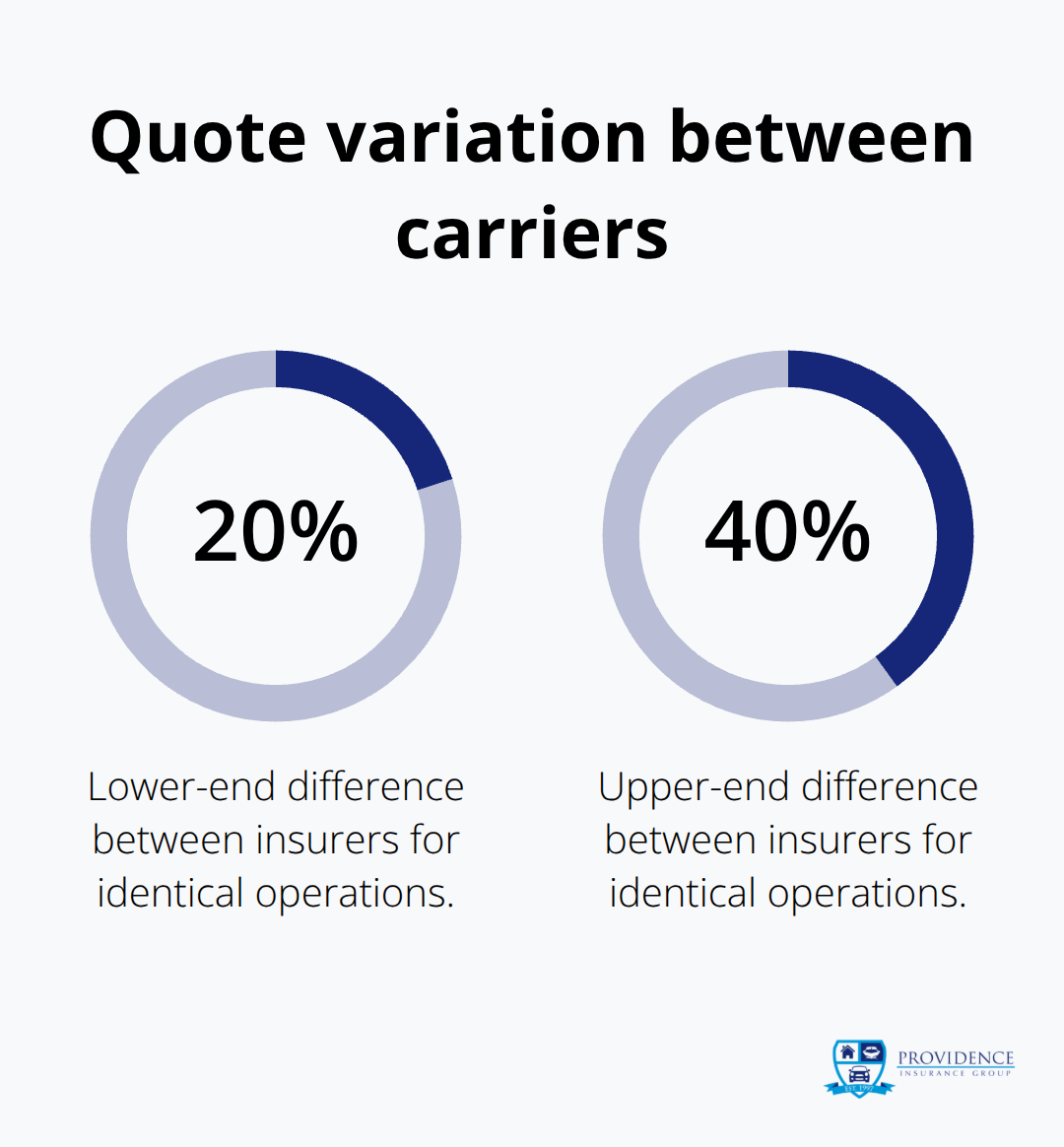
This difference directly affects your bottom line. Request quotes with identical coverage limits and deductibles across all carriers so you compare apples to apples. Once you have quotes, don’t negotiate on price alone-verify what each policy includes, what it excludes, and whether the carrier has restrictions on your specific trade or service area. Some carriers avoid certain contractor types or impose exclusions that matter during a claim, so the cheapest quote may not be the best value.
Consolidate Policies for Substantial Discounts
Carriers offer substantial discounts when you consolidate multiple policies with them, typically reducing your combined premium by 10 to 20 percent compared to purchasing policies separately. If you carry general liability, commercial auto, and workers’ compensation, consolidating all three with one insurer often costs less than buying two policies from one carrier and one from another.
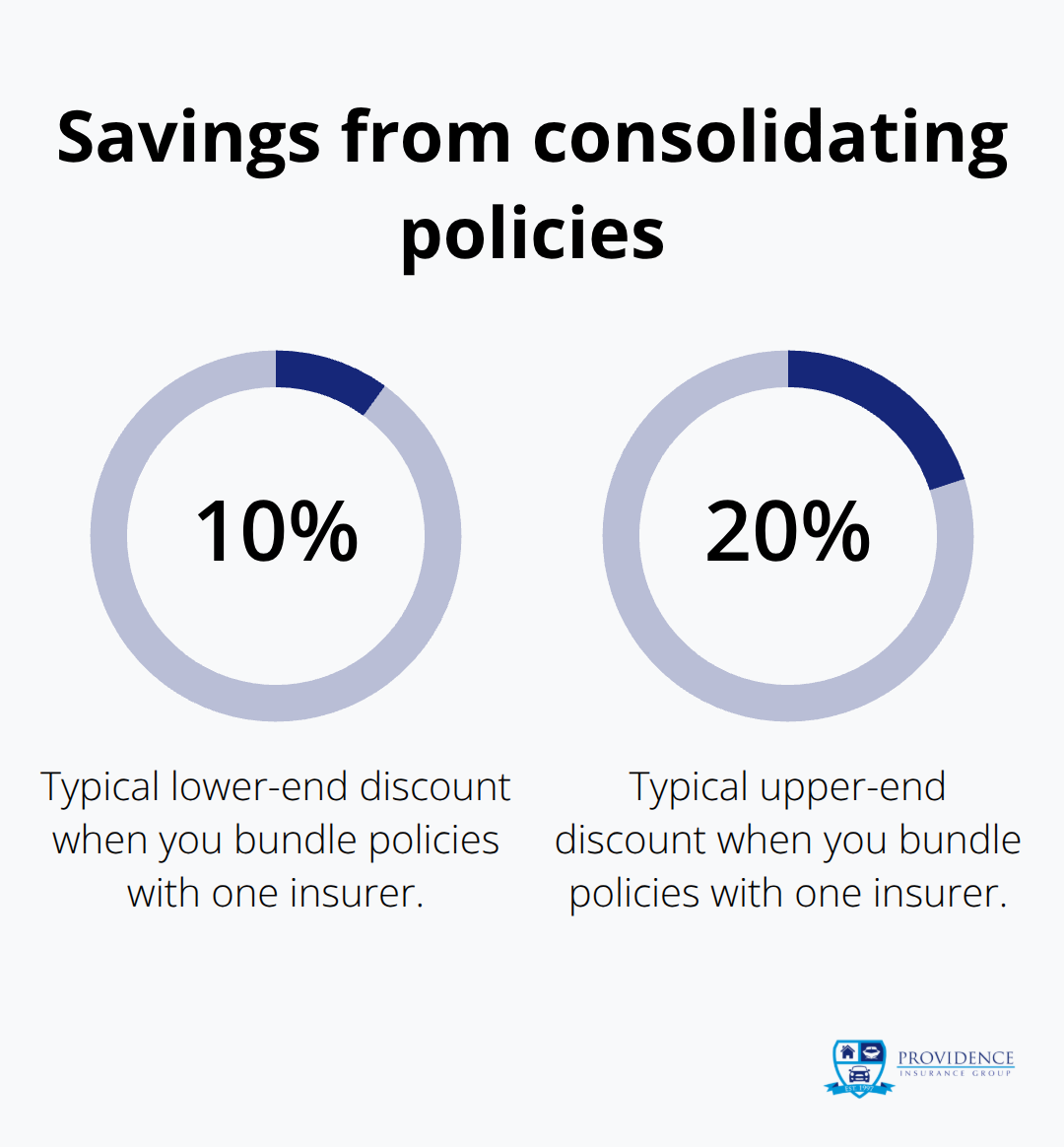
The discount applies because consolidation reduces the carrier’s administrative costs and locks in your loyalty.
However, consolidation only makes sense if the consolidated rates remain competitive-don’t accept a consolidated package from one carrier if another carrier’s individual policies are significantly cheaper. Request consolidated quotes explicitly and ask the carrier to show you the discount in writing so you understand what you’re saving. Many contractors miss this step because they don’t realize consolidation is an option or they assume their current agent is already maximizing discounts.
Update Coverage When Your Business Changes
Update your coverage whenever your business changes-if you hire your first employee, expand into a new service area, purchase a second vehicle, or add subcontractors, notify your agent immediately and request a fresh quote. These changes trigger rate adjustments, but they also create opportunities to shop your policy again because your risk profile has shifted. Carriers price based on current conditions, and a renewal quote after a business change is an ideal moment to compare options with competitors rather than simply renewing with your existing carrier. An independent agent can pull quotes from multiple Florida carriers side by side when your business changes, which saves you time and exposes you to options you might not find on your own. This proactive approach positions you to capture savings that most contractors overlook during transitions.
Three Insurance Mistakes That Cost Contractors Real Money
Underestimating Your Actual Liability Exposure
Most independent contractors underestimate what their liability exposure truly costs in a real claim. You think general liability covers basic accidents on job sites, but if you cause $500,000 in property damage or a client sues you for incomplete work that costs them $750,000 to fix, your $300,000 coverage limit leaves you personally liable for the difference. Contractors often assume their coverage limit matches their exposure, but it does not.
A general contractor who builds decks or performs roofing faces exposure that far exceeds $100,000 per occurrence in Florida’s market, where construction disputes and weather-related damage claims regularly reach six figures. We’ve seen contractors with $1 million annual revenue carry only $500,000 general liability limits because they selected coverage based on what they thought was standard rather than what their actual risk demanded. The math is brutal: if a claim exceeds your limit, you pay the overage from your business bank account or personal assets.
Your workers’ compensation limit matters just as much. If you carry employees and a worker suffers a permanent disability, Florida’s workers’ comp system can generate claims exceeding $250,000 to $500,000 depending on the worker’s age and wage. Contractors who hire younger workers or pay higher wages face steeper exposure because disability benefits scale with lost wages. Many contractors skip this calculation entirely and carry whatever limit their insurer recommends without asking whether that limit actually protects them.
Failing to Report Business Changes Immediately
The second mistake is waiting until renewal or a claim to update your coverage when your business changes. You hire your first employee, add a second vehicle, or start using subcontractors, but you do not tell your agent until your renewal date arrives three months later. During those three months, you operate underinsured and outside your policy terms because your coverage no longer matches your actual operations.
Carriers impose strict language requiring you to report material changes to your business, and if a claim happens during that gap, the carrier can deny coverage or reduce benefits based on misrepresentation. Worse, when you finally report the change, your rate jumps because you’ve been operating at a lower coverage tier than your current risk demands. The contractors who pay the least over time are the ones who update their agent immediately when business conditions shift, because that creates opportunities to shop your policy again rather than simply accepting a renewal increase.
Consolidation discounts, carrier availability, and rate positioning all change when your business profile changes, so contractors who stay silent until renewal miss leverage. We’ve seen contractors with expanding operations stay with the same carrier and coverage structure for years because they never proactively reported changes, only to discover at renewal that a competitor could have saved them 25 to 35 percent if they’d shopped earlier. The cost of that delay compounds across years.
Final Thoughts
Florida independent contractor rates will climb through 2026, but you control how much you pay. Contractors who shop multiple carriers instead of renewing automatically, report business changes immediately, and consolidate policies when it makes financial sense typically save 15 to 30 percent annually. The rate environment rewards those who stay informed and take action rather than accept renewal quotes passively.
Your specific rate depends entirely on your operational profile, claims history, and coverage choices, not on industry averages. Two contractors in the same trade can pay vastly different premiums based on how they structure their coverage and which carriers they approach. An independent agent pulls quotes from multiple Florida carriers simultaneously and compares coverage options side by side, which exposes you to options you would not find shopping alone.
Contact an independent agent and provide complete information about your business, then request quotes from at least three carriers with identical coverage limits and deductibles. Visit Providence Insurance Group to discuss your coverage needs and get started with a carrier comparison that fits your actual risk profile.
Disclaimer: The information provided in this blog is for general informational purposes only and does not constitute legal, financial, or insurance advice. Coverage options, terms, and availability may vary. Please consult with a licensed professional for advice specific to your situation