
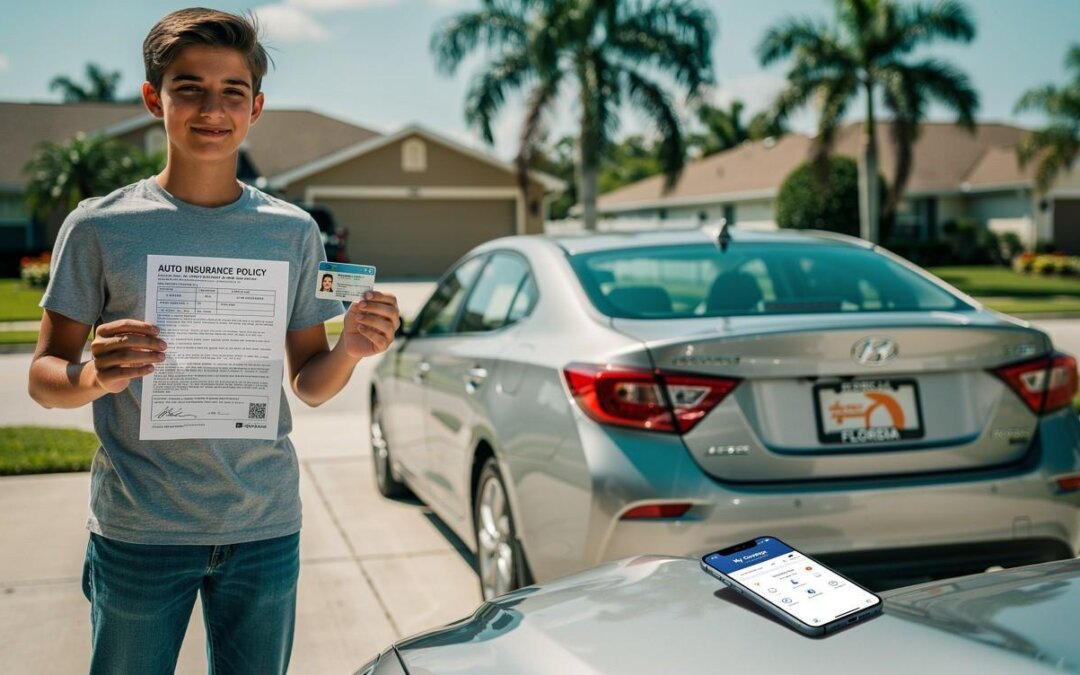
Adding a teen driver to your family’s policy brings real questions about coverage and cost. Florida teen car coverage requirements differ from other states, and understanding them now saves headaches later.
At Providence Insurance Group, we help families navigate these decisions with clarity. This guide walks you through state requirements, coverage options, and practical ways to lower your premiums.
What Coverage Do Florida Teen Drivers Actually Need
Florida’s Minimum Coverage Requirements
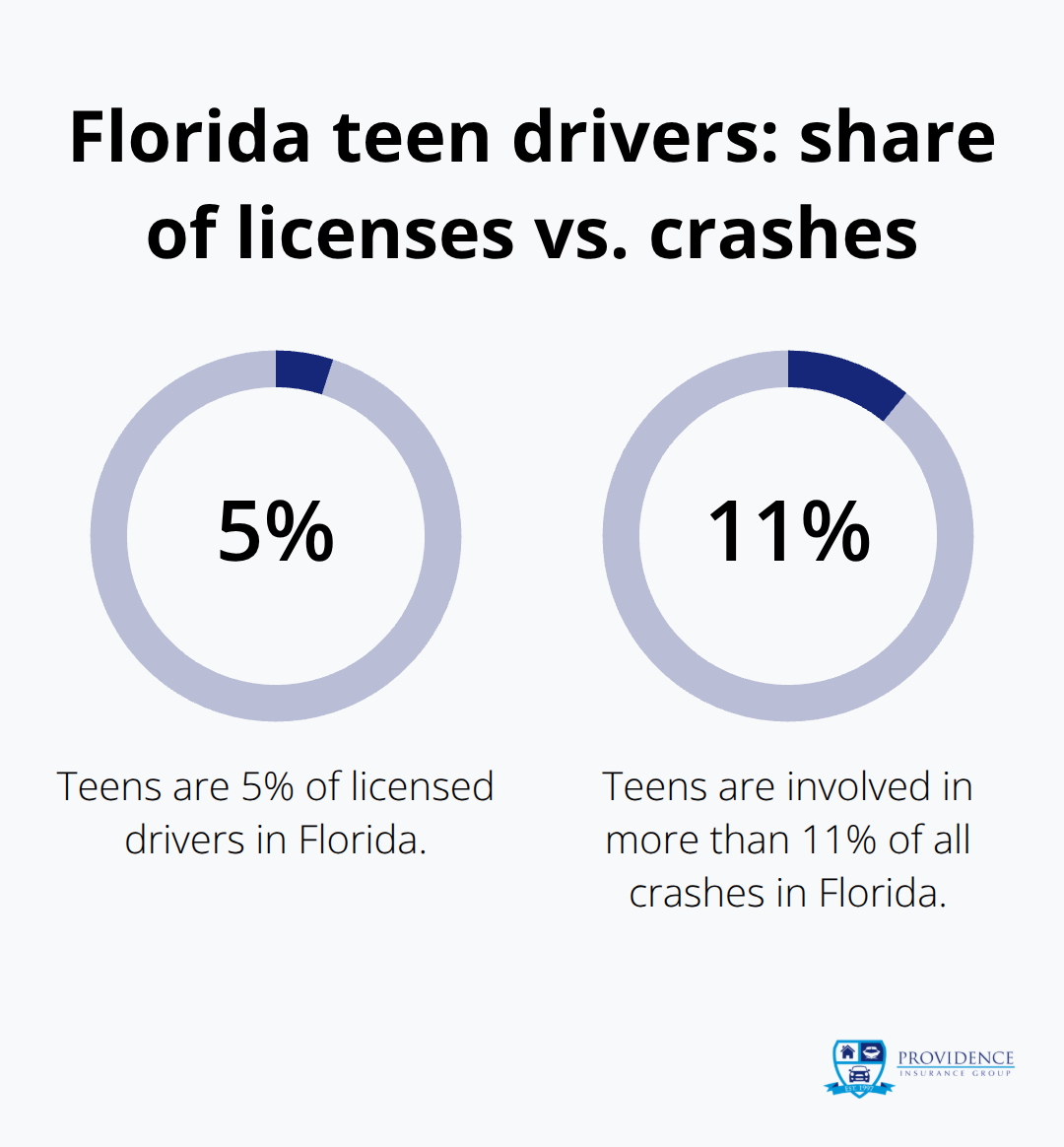
Florida’s minimum coverage requirements for teen drivers exist because the state recognizes a hard truth: teen drivers crash more often than adults. According to the Florida Department of Highway Safety and Motor Vehicles, teens represent just 5% of licensed drivers but account for more than 11% of all crashes. This reality shapes what your family must carry.
Florida requires bodily injury liability of at least $10,000 per person and $20,000 per accident, property damage liability of $10,000, and personal injury protection of $10,000. These minimums apply whether your teen holds a learner’s permit or carries a full license. The state enforces these requirements strictly-driving without proper coverage results in license suspension, vehicle registration suspension, and reinstatement fees up to $500. You cannot legally put a teen behind the wheel without meeting these thresholds.
Why Minimum Coverage Falls Short
Meeting Florida’s minimum coverage is not enough for most families. The average cost of car insurance for a Florida teen driver runs about $316 per month according to Insurify Quick Facts, compared with roughly $188 per month for an average adult driver in the state. That gap exists because insurers know the risk profile. If your teen causes an accident and injures someone, Florida’s $10,000 bodily injury minimum evaporates quickly-a serious injury claim can easily exceed $50,000 or more. Your family’s personal assets then become vulnerable. We recommend higher liability limits of at least $50,000 per person and $100,000 per accident, which provides meaningful protection without dramatically raising premiums. Adding uninsured and underinsured motorist coverage also matters significantly in Florida, where a substantial portion of drivers carry minimal or no insurance.
How Adding a Teen Changes Your Premium
Adding a teen to your existing family policy increases your total premium, but the increase varies based on your current coverage, the teen’s driving record, and available discounts. Insurify data shows that a teen on a family policy costs roughly $99 more per month than the family rate alone, translating to about $1,182 annually. This is substantially cheaper than a separate teen policy, which averages $234 per month for liability-only coverage or $397 per month for full coverage. The discount for keeping your teen on your family policy reflects how insurers calculate risk across multiple drivers. Your teen’s age, the vehicle assigned to them, completion of driver education, and maintaining a clean driving record all influence the actual rate impact. Shopping quotes from multiple carriers reveals significant variation-State Farm quotes around $149 monthly for liability-only teen coverage while other carriers charge considerably more for identical coverage.
What Affects Your Teen’s Specific Rate
The vehicle your teen drives plays a major role in determining premiums. A safer car with top IIHS safety ratings typically costs less to insure than an older vehicle with minimal safety features. Your teen’s completion of an approved driver education course can reduce the rate further. A clean driving record (no tickets or at-fault accidents) helps stabilize premiums over time.
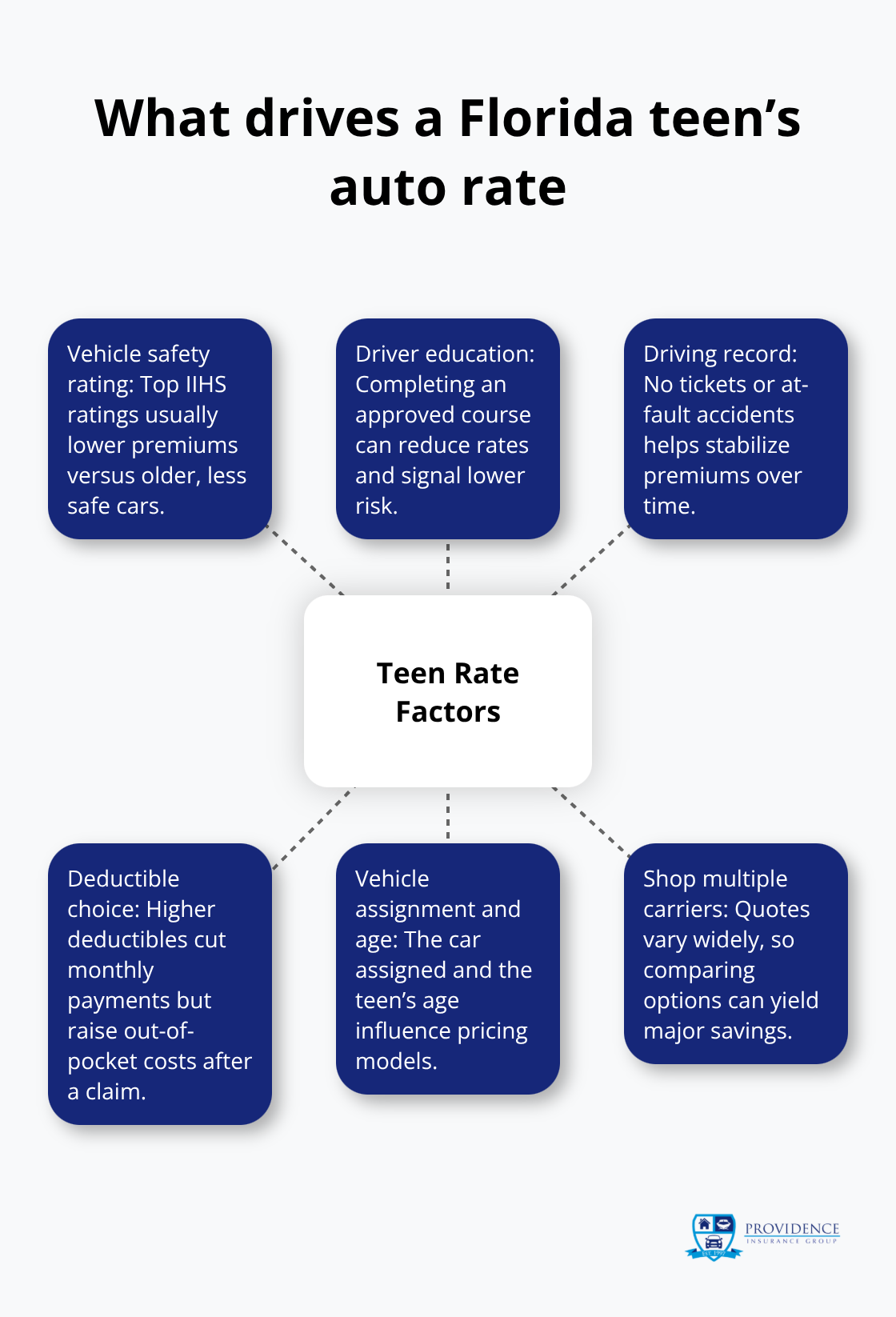
The deductible you select also matters-higher deductibles reduce monthly payments but increase out-of-pocket costs after a claim. These factors combine to create a unique rate for your family’s situation, which is why comparing quotes across multiple insurers reveals such dramatic differences in what you’ll actually pay.
What Coverage Should You Actually Buy for Your Teen
Comprehensive and Collision Coverage: When You Need It
Comprehensive and collision coverage protects your teen’s vehicle from damage regardless of fault, but you should decide whether to carry these coverages based entirely on your car’s value and your financial situation. If your teen drives a vehicle worth $5,000 or less, the monthly cost of comprehensive and collision coverage often exceeds what you’d pay out-of-pocket for repairs. A $500 deductible on a $4,000 car means you essentially self-insure anyway.
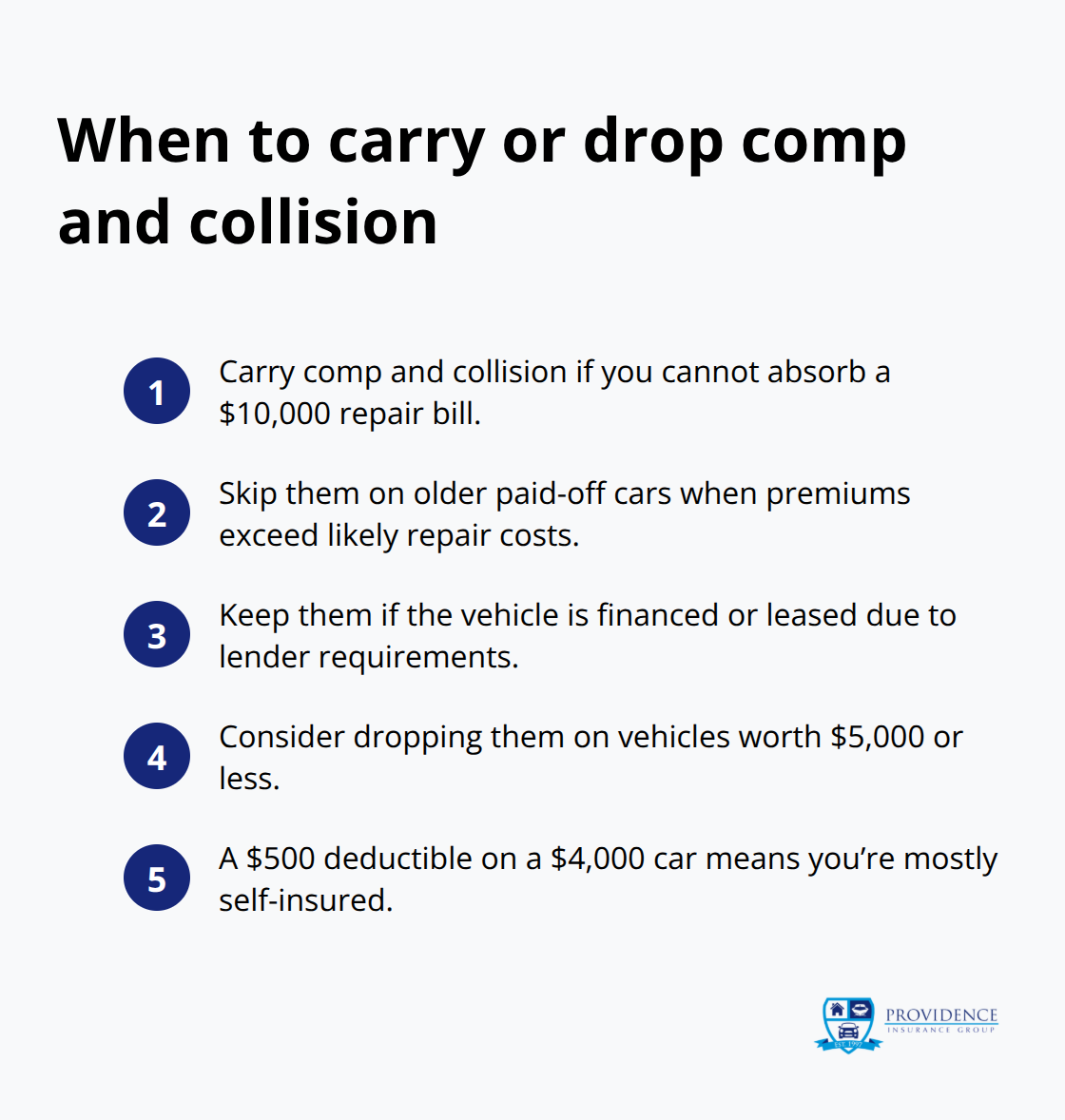
However, if the vehicle is financed or leased, your lender requires both coverages, so you have no choice. The real decision comes down to this: can your family absorb a $10,000 repair bill without financial hardship? If not, carry comprehensive and collision coverage.
If your teen drives an older paid-off vehicle and you have emergency savings, dropping these coverages and raising your liability limits instead often makes more financial sense. This approach shifts your protection strategy toward the liability exposure that poses the greatest risk to your family’s assets.
Uninsured and Underinsured Motorist Coverage: Non-Negotiable in Florida
Uninsured and underinsured motorist coverage protects your teen when another driver causes an accident but lacks adequate insurance to cover damages. Florida reports a significant portion of drivers carry minimal or no insurance, making this protection essential. Florida offers uninsured motorist protection, but you must actively choose it on your policy-it does not come automatically. We recommend carrying uninsured and underinsured motorist limits matching your liability coverage, so if you carry $50,000 per person bodily injury liability, match that with $50,000 uninsured motorist protection. The cost difference is minimal, typically $15 to $25 monthly, but the protection is substantial given Florida’s traffic patterns and driver demographics.
Additional Coverage Options That Deliver Real Value
Personal injury protection covers medical expenses for you and your teen regardless of fault, up to your chosen limit. Emergency roadside assistance costs roughly $5 to $10 monthly and covers towing, lockouts, and battery service-situations teens encounter more frequently than experienced drivers. Rental car reimbursement pays for a rental vehicle while yours is being repaired after a collision, typically running $15 to $20 monthly. These add-ons provide practical protection without dramatically increasing your premium.
Discounts That Reduce Your Teen’s Premium
Usage-based insurance programs monitor your teen’s actual driving behavior and can save up to 30% for safe driving habits. These programs provide real feedback to your teen about acceleration, braking, and speed, making them educational tools beyond just discount mechanisms. Good student discounts apply when your teen maintains at least a 3.0 GPA and can reduce premiums by up to 25%, saving families substantial amounts through high school and college years. Driver training discounts reward completion of approved driver education courses, recognizing that structured instruction reduces crash risk.
Bundling and Multi-Policy Savings
Bundling your teen’s auto policy with your home or renters insurance typically saves over $950 annually across carriers, making it worth shopping bundled rates even if your current insurer seems competitive on auto alone. The combination of these coverages and discounts creates a customized protection plan tailored to your family’s specific situation. Comparing quotes across multiple carriers reveals dramatic variations in what you’ll actually pay for identical coverage, which is why working with an independent agent who can access multiple carriers becomes invaluable. Your agent can layer discounts, adjust deductibles, and recommend coverage combinations that match both your budget and your teen’s risk profile.
How to Cut Your Teen’s Insurance Costs
The gap between what families actually pay for teen auto insurance and what they could pay with the right strategy is enormous. A Florida teen on a family policy costs roughly $99 more monthly than the family rate alone, but that number shifts dramatically when you stack discounts and choose the right coverage approach.
Stack Discounts That Move Your Premium
The real savings come from understanding which discounts apply to your specific situation and which ones actually move the needle on your premium. Good student discounts reduce premiums by up to 25% when your teen maintains at least a 3.0 GPA, and this discount typically runs through age 25, meaning your savings compound over years, not months. Driver training discounts reward completion of an approved driver education course, recognizing that structured instruction reduces crash risk. Usage-based insurance programs monitor actual driving behavior and can save up to 30% for safe driving, providing real feedback about acceleration, braking, and speed rather than just charging a flat rate based on age and zip code. The practical advantage here matters more than the discount percentage: your teen receives immediate feedback about dangerous habits, creating accountability that extends beyond the insurance savings.
Bundle Policies for Substantial Savings
Bundling your auto policy with home or renters insurance typically saves over $950 annually across carriers, and this calculation assumes you bundle with just one additional policy. Adding multiple policies amplifies savings further, making it worth shopping bundled rates even if your current insurer seems competitive on auto alone. Many families overlook this entirely, paying separate premiums to different carriers when consolidating would cost substantially less.
Choose the Right Vehicle and Deductible
The second critical strategy involves selecting the right vehicle and deductible combination. A safer car with top IIHS safety ratings costs less to insure than an older vehicle with minimal safety features, and this difference often exceeds the cost difference between the vehicles themselves in the used car market. Raising your deductible from $250 to $500 typically reduces monthly premiums by 15 to 20 percent, and for families with emergency savings, this trade-off makes financial sense.
Shop Multiple Carriers Annually
Shopping quotes from multiple carriers every 12 months reveals dramatic variations in what you’ll pay for identical coverage. Rates shift annually based on claim history, driving record, and company-specific pricing models. An independent agent who accesses multiple carriers simultaneously can layer these discounts, adjust deductibles, and recommend coverage combinations that match both your budget and your teen’s risk profile, eliminating the need to contact carriers individually and compare spreadsheets yourself.
Final Thoughts
Florida teen car coverage requires balancing state minimums with realistic protection for your family’s assets. Teens represent 5% of licensed drivers but cause more than 11% of crashes, which means carrying liability limits above Florida’s minimums protects your family from devastating financial exposure. A serious injury claim easily exceeds the state’s $10,000 minimum, leaving your personal assets vulnerable if you skimp on coverage.
Stack discounts aggressively to reduce your premium substantially. Ensure your teen maintains good grades for the good student discount, completes driver education for the training discount, and enrolls in a usage-based program that monitors actual driving behavior and rewards safe habits. These discounts compound, often reducing premiums by 50% or more compared to baseline rates, while bundling your teen’s auto policy with home or renters insurance captures savings exceeding $950 annually.
The vehicle your teen drives and your deductible selection matter more than most families realize. A safer car with strong IIHS ratings costs less to insure, and raising your deductible from $250 to $500 typically reduces monthly premiums by 15 to 20 percent. Contact Providence Insurance Group to get a personalized quote and discover how much you could save on Florida teen car coverage.
Disclaimer: The information provided in this blog is for general informational purposes only and does not constitute legal, financial, or insurance advice. Coverage options, terms, and availability may vary. Please consult with a licensed professional for advice specific to your situation