

Running a contracting business in Florida means navigating specific insurance requirements that protect both your operations and your bottom line. Without the right coverage, you’re exposed to costly gaps that could derail your business.
At Providence Insurance Group, we’ve helped countless Florida contractors understand what they actually need versus what’s optional. This guide walks you through state requirements, coverage types, and how to find affordable policies that fit your specific contracting work.
What Florida Actually Requires for Contractor Insurance
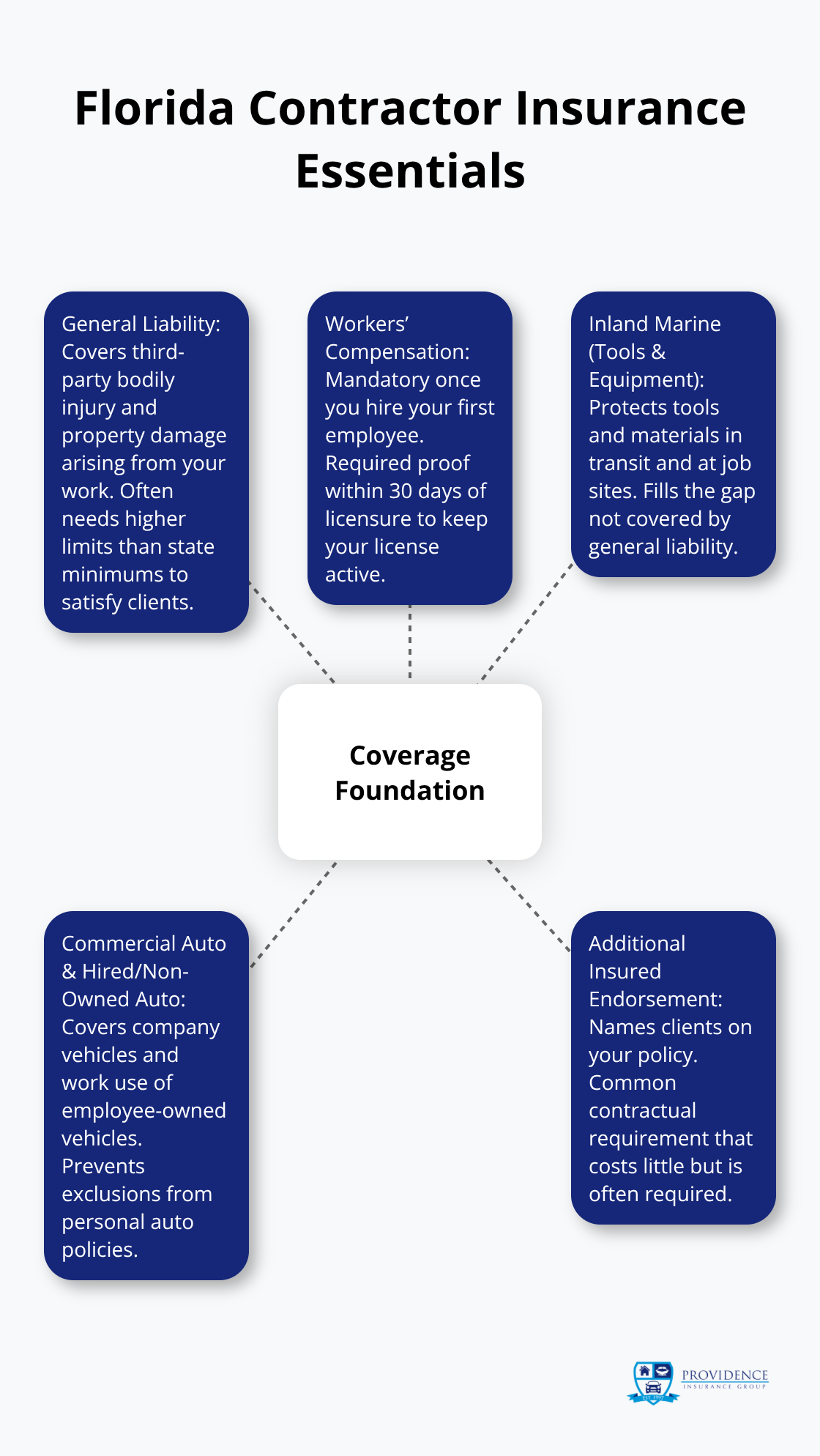
Florida’s Department of Business and Professional Regulation sets specific insurance minimums that you cannot ignore if you want to keep your license active. General contractors and certified specialists must carry general liability insurance of at least $300,000 for bodily injury and $50,000 for property damage. Registered licenses limited to local jurisdictions require these same thresholds. Workers’ compensation coverage becomes mandatory the moment you hire your first employee-there’s no gray area here. The state requires proof of both coverages within 30 days of receiving your license, and you must maintain a current Certificate of Insurance on file to keep your license active. Many contractors mistakenly believe state minimums are sufficient, but they’re really just the legal floor, not a business strategy. Clients and lenders regularly demand higher limits than what the state requires, and you’ll lose contracts if you can’t meet those expectations.
The Real Cost of State Minimums
State-mandated coverage costs vary based on your project type, revenue, and claims history. The problem is that these minimums don’t cover most real-world situations. A single serious injury or property damage claim can easily exceed $300,000, leaving you personally liable for the difference. You also need tools and equipment coverage, which protects your materials and equipment in transit and at job sites from theft or damage. Commercial auto insurance becomes another requirement if you operate company vehicles-Florida mandates property damage and personal injury protection coverage. Most contractors also need surety bonds for performance and payment, especially on public or larger private projects. These aren’t optional add-ons; clients expect you to have them as contractual requirements.
Equipment and Vehicle Gaps That Expose Your Business
The biggest gap we see is contractors who carry only general liability and workers’ compensation, thinking they’re fully protected. They ignore inland marine coverage for tools and equipment, leaving thousands of dollars in equipment vulnerable to theft or damage. Professional liability insurance gets overlooked by contractors who provide design input or consulting services, which opens them to negligence claims. Many contractors also skip commercial property coverage for their office space and stored materials, assuming it’s covered elsewhere. Pollution liability-coverage for silica dust exposure, chemical spills, or environmental claims on job sites-is almost always missing from contractor policies.
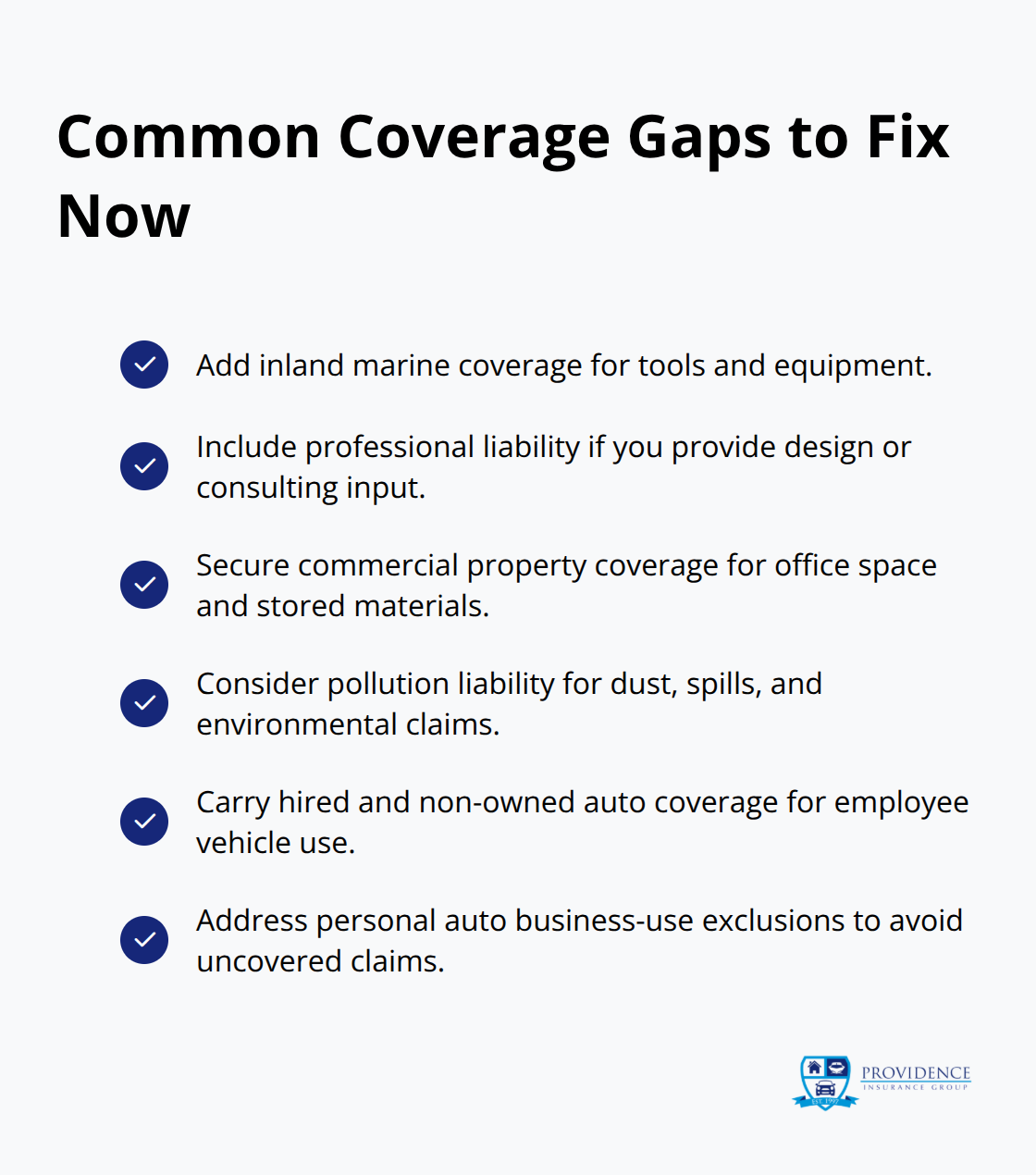
Hired and non-owned auto coverage represents another frequent gap when your employees drive personal vehicles for work. Your employees’ personal auto policies specifically exclude business use, leaving you exposed to liability claims.
Why These Gaps Matter More Than You Think
A single claim in any of these overlooked areas can wipe out years of profit and threaten your business license. Equipment theft at a job site costs you replacement expenses plus project delays if you can’t continue work. An employee injury from pollution exposure creates workers’ compensation claims that exceed standard coverage limits. A vehicle accident involving an employee’s personal car used for business purposes leaves you liable for damages that your employee’s personal policy won’t cover. These aren’t theoretical risks-they happen regularly in Florida’s construction industry. The state doesn’t mandate these coverages, so contractors think they’re unnecessary, but that logic ignores the financial reality of running a contracting business. Your next step is understanding which specific coverage types actually protect your operation and which ones your clients will require before you step foot on their property.
Types of Coverage Every Florida Contractor Should Consider
General Liability Insurance: Your First Line of Defense
General liability insurance protects you when a third party suffers bodily injury or property damage from your work. Someone gets hurt on your job site or you damage a client’s property-your general liability policy covers the resulting claims. State licensing boards may require $50,000 to $100,000 in general liability coverage for contractors, with $2M in aggregate coverage, though clients and lenders routinely demand higher limits than these minimums, often $1 million or more.
The average general liability premium in Florida runs about $114 per month, or roughly $1,368 annually, though this varies significantly by your ZIP code, project type, and whether you hire subcontractors. If you can’t meet contractual requirements for higher coverage limits, you lose the job-it’s that straightforward.
When obtaining quotes, have your expected revenue, project types, and claims history ready so carriers can give you accurate pricing. Most contractors also skip the additional insured endorsement, which clients require to be named on your policy. This endorsement costs almost nothing but is mandatory on most commercial contracts, so verify your policy includes it before signing any agreement.
Workers’ Compensation: A Legal Requirement You Cannot Ignore
Workers’ compensation becomes mandatory the moment you hire your first employee, and Florida enforces this strictly. The state requires proof within 30 days of licensure, and you must maintain active coverage to keep your license valid. According to Insureon, the average workers’ compensation premium for Florida contractors runs about $532 monthly, though this fluctuates based on your payroll, job classification, and safety record.
Sole proprietors without employees can potentially claim an exemption, but this requires filing paperwork with the state within 30 days. Many contractors skip coverage as sole proprietors, then hire their first employee and scramble to obtain insurance retroactively-the state doesn’t allow gaps in coverage. This creates immediate compliance problems and exposes you to penalties.
Tools, Equipment, and Vehicle Coverage: The Overlooked Protections
Tools and equipment coverage, also called inland marine insurance, protects your materials and equipment from theft or damage while in transit and at job sites. General liability doesn’t cover your own equipment, so this coverage matters far more than most contractors realize. A single theft of power tools or materials costs thousands, and without inland marine coverage, you absorb that loss entirely.
Commercial auto insurance covers company vehicles and hired or non-owned auto coverage protects you when employees drive personal vehicles for work. Florida requires property damage and personal injury protection on all vehicles, and your employee’s personal auto policy explicitly excludes business use-leaving you exposed to liability if an accident occurs during work-related travel. These gaps create financial exposure that extends beyond your job site and into your employees’ daily operations.
Your next step involves understanding how to compare these coverage types across multiple carriers and identify which discounts actually apply to your specific contracting business.
How to Find the Right Contractor Insurance at the Right Price
Comparing Quotes from Multiple Carriers
Getting accurate quotes from multiple carriers matters far more than most contractors realize, and the difference between shopping with one insurer versus three can easily exceed $2,000 annually on your premiums. When you request quotes, have your expected annual revenue, specific job classifications, and detailed claims history ready before you contact carriers. Vague information produces vague pricing, and carriers will quote you higher limits to protect themselves against unknown risk.
Most Florida contractors operate across multiple ZIP codes, so provide your primary work location plus any secondary areas where you regularly bid jobs. Your project type dramatically affects pricing too-residential remodeling costs significantly less to insure than commercial demolition or roofing work. Once you have three to five quotes in hand, don’t just compare the lowest price.
Examine what coverage limits each quote includes, which additional insured endorsements are built in, and whether the policy includes hired and non-owned auto coverage. A quote that’s $200 cheaper monthly but lacks equipment coverage or leaves out additional insured endorsements actually costs you more when a claim hits. Request detailed explanations of any exclusions or gaps in coverage before you commit.
Maximizing Available Discounts
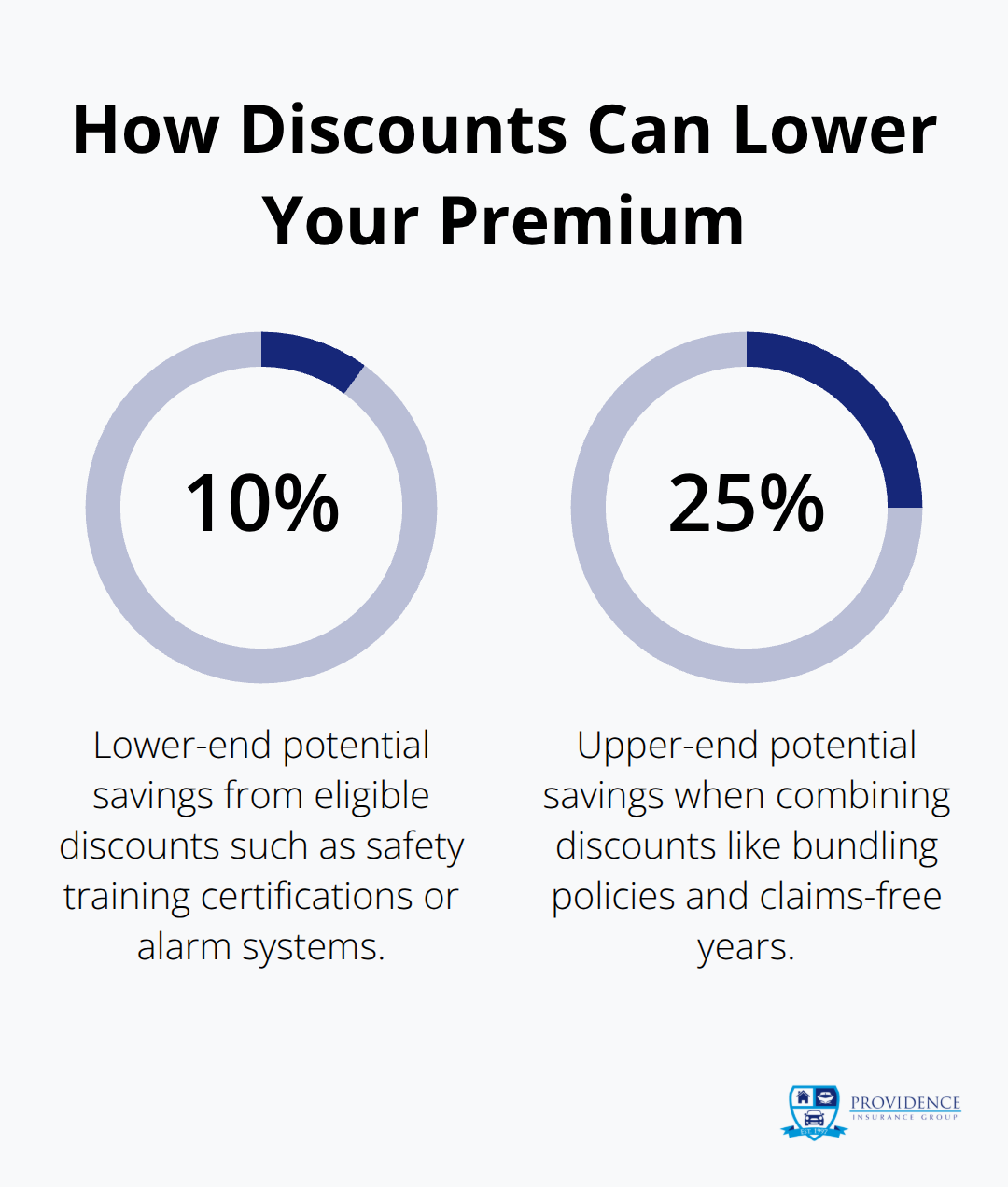
Carriers offer numerous discounts that most contractors never ask about-safety training certifications, alarm systems at your office, claims-free years, and bundling multiple policies together can reduce your annual premium by 10 to 25 percent depending on your situation. These discounts exist across the market, so compare what each carrier offers rather than accepting the first quote you receive.
Customizing Coverage to Match Your Business Type
Customizing your coverage to match your specific contracting work separates contractors who stay profitable from those who constantly deal with coverage surprises. A plumber’s insurance needs differ entirely from a roofer’s or a general contractor’s, and applying a generic policy to your business leaves you underprotected in critical areas.
If you work on roofing projects, wind mitigation coverage and weather-related damage protection matter more than they do for interior finish work. Pool and spa contractors need specialized liability coverage that standard policies don’t include. Electrical contractors face different risk profiles than concrete contractors, and your premium should reflect that reality rather than charging you for coverage you’ll never use.
An independent insurance agent takes the time to understand your specific contracting services so they can build a policy around your actual operations rather than forcing you into a one-size-fits-all template. This approach means you pay for protection you need and avoid overpaying for coverage that doesn’t apply to your work.
Updating Coverage as Your Business Evolves
Many contractors fail to update their coverage as their business evolves-you started as a sole proprietor, then hired your first employee, then added a company vehicle, and each change should trigger a policy review to ensure your coverage grows with your operation. Annual policy reviews prevent gaps from forming and catch discount opportunities you might have missed.
Request rate comparisons every two years even if you’re satisfied with your current carrier, because market rates shift and new discounts emerge regularly that could lower your costs without reducing your protection.
Final Thoughts
You now understand the specific coverage types that protect your Florida contractor insurance needs and the gaps that expose you to financial ruin. General liability, workers’ compensation, tools and equipment coverage, and commercial auto insurance form the foundation of any contractor’s protection strategy. Beyond these essentials, professional liability, commercial property, and pollution liability address the real-world risks that state minimums ignore.
Your next step involves requesting quotes from multiple carriers and comparing not just price but coverage limits, endorsements, and exclusions. A policy that costs $200 less monthly but lacks critical coverage actually costs you far more when a claim arrives. Update your coverage annually as your business evolves, because hiring your first employee, adding a vehicle, or expanding into new project types all require policy adjustments.
Working with an independent agent makes this process far simpler than shopping alone. At Providence Insurance Group, we take the time to understand your specific contracting services so we can build coverage around your actual operations rather than forcing you into a template that doesn’t fit. Contact Providence Insurance Group today to discuss your Florida contractor insurance needs and get a customized quote that matches your business.
Disclaimer: The information provided in this blog is for general informational purposes only and does not constitute legal, financial, or insurance advice. Coverage options, terms, and availability may vary. Please consult with a licensed professional for advice specific to your situation