
Construction work in Florida comes with real risks. One accident or property damage claim can cost thousands-or even shut down your business.
At Providence Insurance Group, we help contractors understand Florida contractor liability coverage and build protection that actually fits their projects. The right policy keeps your team, your finances, and your reputation safe.
What Contractor Really Means
Understanding Your Legal Responsibility
Contractor liability is your legal responsibility for injuries, property damage, or financial loss that occur because of your work or your team’s actions on a job site. This isn’t theoretical-Florida construction recorded 92 fatal work injuries in 2023 alone, according to the Bureau of Labor Statistics. A single accident involving an employee, a subcontractor, or a bystander can trigger lawsuits that demand thousands or millions in damages. Without the right coverage, you face personal liability for medical bills, legal defense costs, settlements, and judgments.
Types of Coverage That Protect You
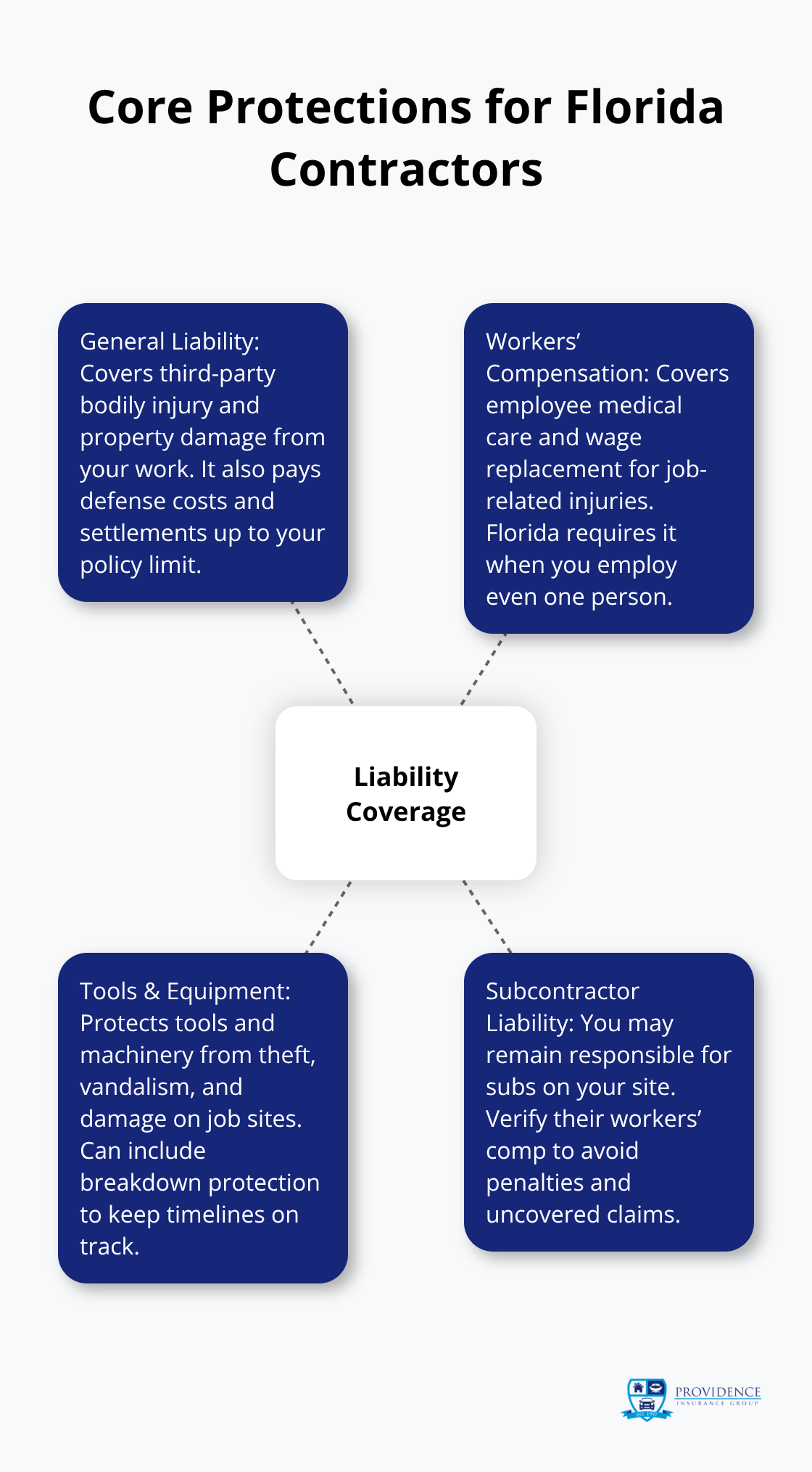
Three main insurance types address contractor liability. General liability insurance protects you against third-party claims for bodily injury and property damage. Workers’ compensation covers your employees’ medical expenses and lost wages if they suffer injury on the job-and Florida law requires it if you employ even one person. Tools and equipment coverage protects your assets from theft, damage, or loss on the job site.
Your liability extends beyond your direct employees. Subcontractors, material suppliers, and even pedestrians near your work zone can file claims against you. In Florida, if you don’t carry workers’ compensation insurance, you lose immunity from civil lawsuits and face potential stop-work orders and felony prosecution.
The Real Cost of Inadequate Coverage
A construction accident requiring hospitalization, surgery, and ongoing rehabilitation can easily exceed $100,000 in medical costs alone. Add legal fees, lost project time, and potential settlement payments, and your business can face bankruptcy. Contractors who underestimate their liability exposure often carry limits that are far too low for the actual risks they take. A $300,000 general liability limit sounds substantial until a serious injury claim arrives.
Florida’s modified comparative negligence rule also matters-if you’re found 50 percent or less at fault, you can recover damages, but any recovery is reduced by your percentage of fault under HB 837. This means even partial responsibility for an accident can devastate your finances.
How Claims Damage Your Business Beyond Money
Liability claims damage your reputation and ability to bid on future projects. Clients and bonding companies check your claims history. Multiple claims signal poor safety practices and higher risk to potential clients. The right coverage isn’t just protection-it’s a business necessity that keeps your operations running and your team secure.
Understanding what contractor liability actually covers is the first step. Next, we’ll look at the specific types of coverage available and how each one protects different aspects of your Florida construction business.
Types of Contractor Liability Coverage Available
General Liability: Your First Line of Defense
General liability insurance forms the foundation of contractor protection in Florida, covering third-party bodily injury and property damage claims that arise from your work. If a client, subcontractor, or bystander suffers injury at your job site or your work damages someone’s property, general liability pays their medical bills, legal defense costs, and settlements up to your policy limit. Most Florida contractors carry limits between $300,000 and $1,000,000 depending on project size and scope. The cost varies by trade and claims history, but you can obtain online quotes within minutes to compare rates from multiple carriers.
Workers’ Compensation: Protecting Your Team
General liability does not cover your own employees-that responsibility falls to workers’ compensation. Florida law mandates workers’ compensation coverage if you employ even one person, and the penalty for operating without it is severe. Uninsured employers face stop-work orders and potential felony prosecution as a second-degree crime. Workers’ comp covers medical treatment, partial wage replacement at roughly two-thirds of weekly wages for temporary disability, and vocational rehabilitation if an injured worker cannot return to their previous job. The statute of limitations for filing a claim is two years from the injury date according to Florida Statutes, so prompt reporting and documentation matter.
Tools and Equipment: Protecting Your Assets
Tools and equipment coverage protects your most valuable job-site assets from theft, vandalism, and damage-a critical gap in many contractors’ protection plans. Construction sites attract theft, and replacing stolen power tools, generators, or specialized equipment can drain tens of thousands of dollars from your budget. Equipment breakdown coverage extends protection to mechanical failures of your tools and machinery, keeping project timelines on track. You can assess which assets need coverage based on your typical projects and storage practices to build a policy that matches your actual exposure.
Subcontractor Liability: Your Ongoing Responsibility
Workers’ compensation also matters for subcontractors you hire-you remain liable for their safety and compliance even though they carry their own policies. If a subcontractor suffers injury on your site and you failed to verify their workers’ comp coverage, you could face claims and penalties. Always request certificates of insurance from subcontractors before they start work and verify the coverage is active and adequate for the tasks they will perform on your projects. This verification step protects both your business and the workers on your site.
The right combination of these coverage types creates a safety net for your operations, but selecting the correct limits and deductibles for your specific situation requires careful assessment of your project risks and business structure.
How to Choose the Right Liability Coverage for Your Florida Construction Business
Selecting Limits That Match Your Real Exposure
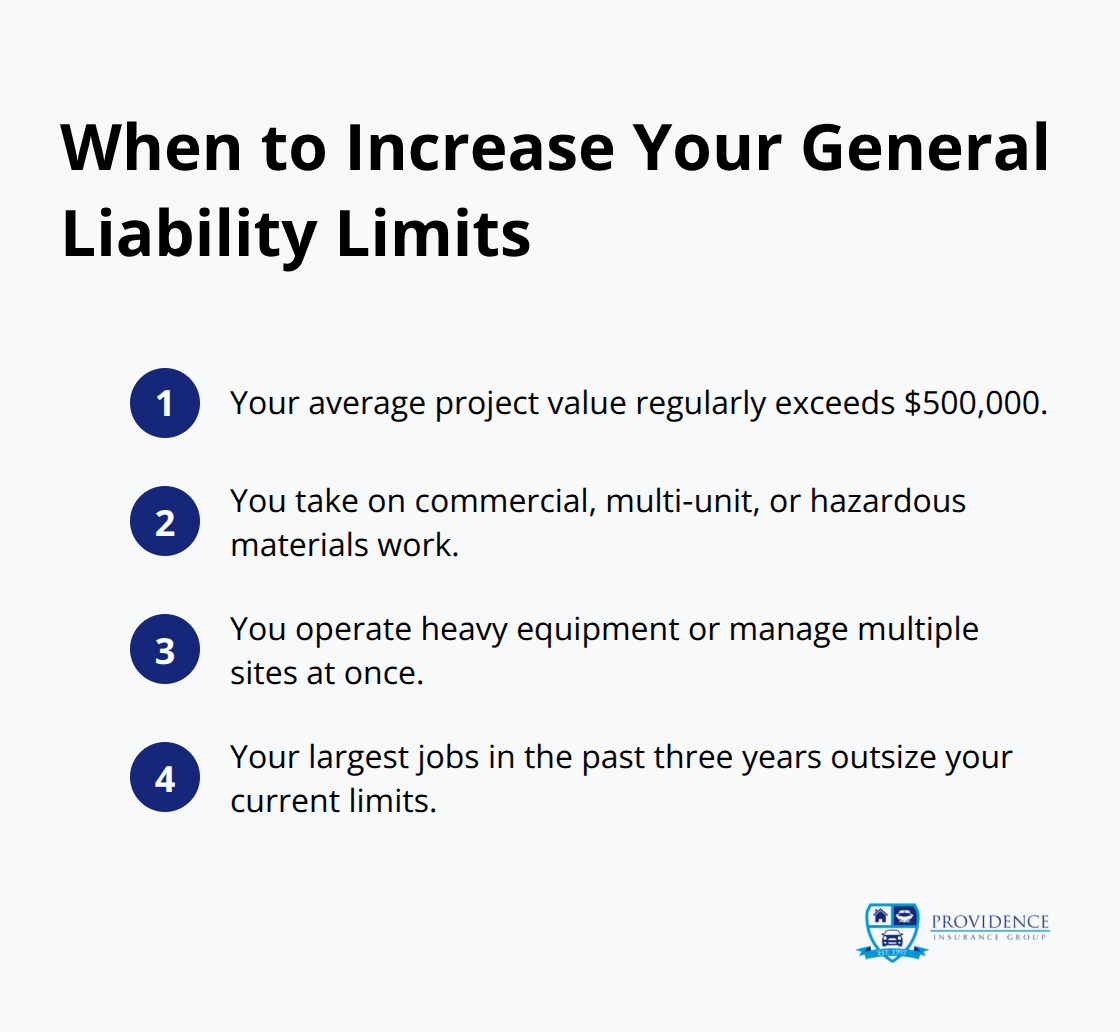
Your liability limits must reflect the actual dollar exposure you face on your projects. A $300,000 general liability limit works for small residential projects and handyman jobs, but it falls short for commercial construction, multi-unit residential work, or projects involving heavy equipment or hazardous materials. If your average project value exceeds $500,000, your general liability limit should typically sit between $1,000,000 and $2,000,000 to cover potential claims without depleting your business reserves. The cost difference between a $500,000 limit and a $1,000,000 limit often amounts to just 15 to 25 percent more in annual premium-yet the protection difference proves substantial. Review your past three years of project contracts and identify the highest-value jobs you completed; your general liability limit should reflect at least that amount, and preferably exceed it.
Understanding Deductibles and Premium Trade-Offs
Workers’ compensation limits are set by Florida law and do not vary-you pay based on your payroll and trade classification, not on a chosen limit. However, your deductible choice for general liability and equipment coverage directly impacts your premium costs and out-of-pocket expenses when claims occur. A $1,000 deductible costs significantly less than a $500 deductible, but it also means you absorb the first $1,000 of every claim yourself. Contractors with strong safety records and low claims history can safely carry higher deductibles and reduce premiums by 10 to 20 percent. Contractors with previous claims or working in higher-risk trades like roofing or electrical work should stick with lower deductibles to protect cash flow when accidents happen.
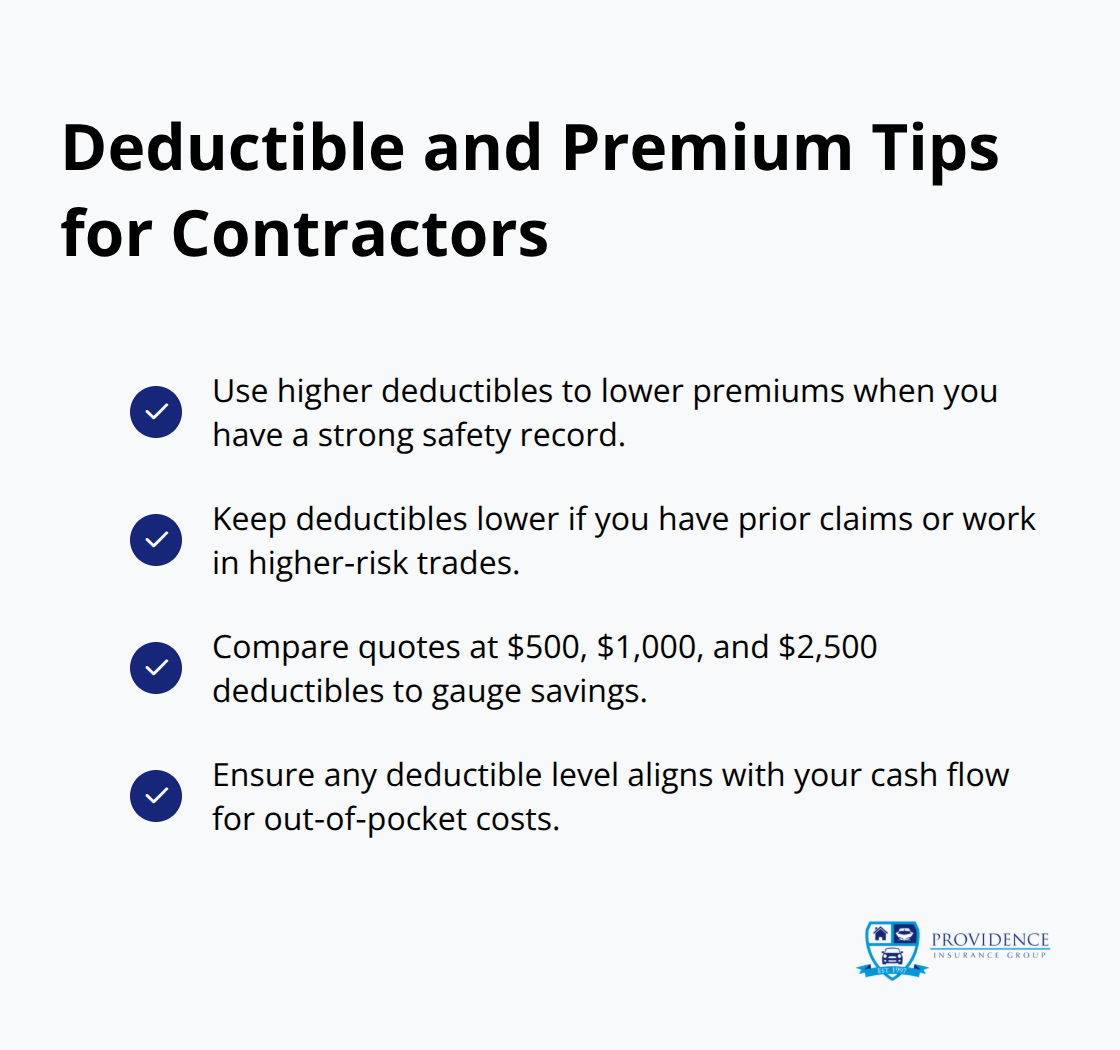
Request quotes at multiple deductible levels-$500, $1,000, and $2,500-and compare the total annual cost against your typical project margins to determine what you can actually afford to pay out-of-pocket if a claim arises.
Assessing Your Actual Job Site Conditions
Your coverage choices must reflect how you actually operate, not how you wish you operated. If you regularly work on multiple job sites simultaneously, your exposure to general liability claims increases significantly compared to single-project contractors. If you employ subcontractors rather than just direct employees, you need higher limits because you remain liable for their actions even though they carry their own policies. If you work in high-risk trades like roofing-where falls accounted for 38.5 percent of construction fatalities in 2023-your limits need to reflect that elevated danger. Contractors who reduce their coverage to save money on premiums often discover too late that their limits do not cover actual claim costs, forcing them to pay the difference from business accounts or face uncovered liability.
Working with an Independent Agent to Identify Coverage Gaps
An independent insurance agent who specializes in construction coverage understands Florida’s specific requirements and identifies gaps in your protection that you might miss. Unlike captive agents who represent one carrier, independent agents compare policies from multiple Florida insurers and help you avoid overpaying for coverage you do not need while protecting you from underpaying and leaving yourself exposed. An experienced agent will verify that your subcontractor certificates of insurance meet your policy requirements and help you understand how your workers’ compensation coverage interacts with your general liability policy. They can also identify opportunities to bundle policies-combining general liability, workers’ comp, equipment coverage, and commercial auto insurance-which often generates discounts of 10 to 20 percent compared to purchasing coverage separately. As an independent agency established in 1997, we at Providence Insurance Group take the time to understand your specific trade, project types, and business structure to recommend appropriate limits and deductibles that fit your actual operations.
Final Thoughts
Contractor liability protection forms the foundation that keeps your Florida construction business operating safely and legally. The coverage you carry determines whether an accident becomes a manageable claim or a financial catastrophe that forces you to close your doors. General liability, workers’ compensation, and equipment coverage work together to protect your team, your assets, and your bottom line from the real risks that exist on every job site.
Review your current policies against the actual scope of your work and compare your general liability limits to your largest project values from the past three years. Verify that your workers’ compensation coverage matches your current payroll and employee count, and check whether your equipment coverage reflects the tools and machinery you actually have on job sites. If gaps exist between your coverage and your exposure, you operate with unnecessary risk that a single accident can expose.
An independent agent completes this assessment quickly and identifies opportunities to strengthen your protection without overpaying. Contact Providence Insurance Group to discuss your specific projects, trades, and business structure-we recommend appropriate limits and deductibles that match your actual operations, not generic industry standards. Your team and your business deserve Florida contractor liability protection that fits your real exposure.
Disclaimer: The information provided in this blog is for general informational purposes only and does not constitute legal, financial, or insurance advice. Coverage options, terms, and availability may vary. Please consult with a licensed professional for advice specific to your situation