
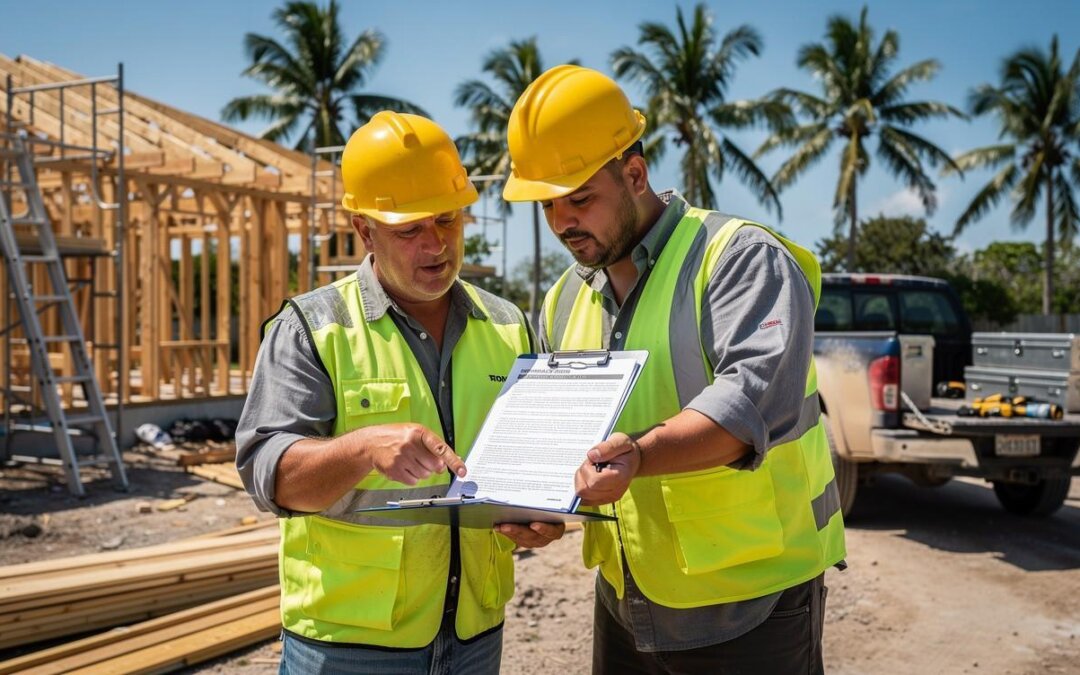
Running a contracting business in Florida means managing multiple risks on every project. From liability claims to property damage, the stakes are high-and one incident can derail your entire operation.
At Providence Insurance Group, we know that contractor insurance in Florida isn’t optional. It’s the foundation that keeps your business protected and compliant with state requirements.
Why Contractors Need Insurance in Florida
Florida’s construction industry operates under strict regulatory frameworks that make insurance non-negotiable. The state requires general contractors to carry workers compensation insurance if they have employees, and most project owners demand proof of liability coverage before work begins. The Florida Department of Business and Professional Regulation enforces these requirements, and operating without proper coverage exposes you to license suspension, fines, and legal action. A single liability claim can cost between $50,000 and $500,000 depending on the severity of injuries or property damage. Construction workers face injury rates higher than workers in other industries, according to the Bureau of Labor Statistics. One uninsured incident wipes out years of profit and can force a contractor out of business entirely.
The Real Cost of Liability Exposure
Property damage claims on construction sites occur frequently. A contractor accidentally damages a client’s existing structure, a worker injures a third party, or equipment causes unexpected harm. Without commercial general liability insurance, you personally absorb these costs. Florida courts award damages generously, and judgments often exceed $100,000 for moderate incidents.
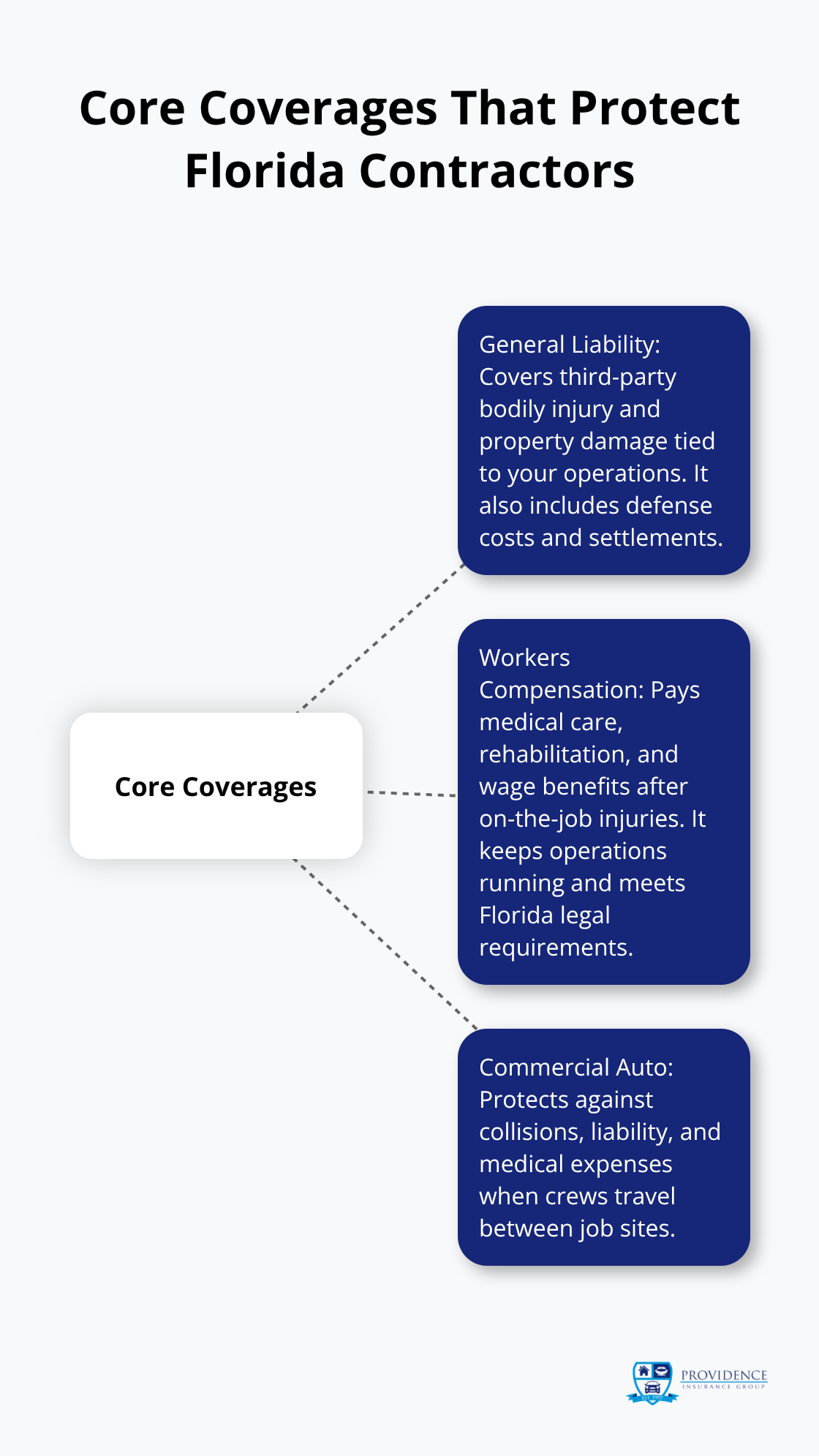
Workers compensation claims drain resources faster than most contractors anticipate-a single serious injury can trigger medical bills exceeding $250,000 plus ongoing wage replacement obligations. Commercial auto insurance protects against vehicle-related incidents when your crew travels between job sites, covering collision, liability, and medical expenses. These three coverage types form the foundation that separates contractors who survive setbacks from those who collapse under financial pressure.
Building Financial Resilience
Insurance creates predictable, manageable costs instead of catastrophic, unpredictable ones. Your monthly premium becomes a known business expense you budget for, while an uninsured claim becomes an existential threat. Clients increasingly verify insurance status before hiring, making coverage a competitive advantage that attracts larger projects and repeat business. An independent insurance agent gives you access to multiple carriers and the ability to customize coverage for your specific operation-whether you specialize in residential remodeling, commercial construction, or specialty trades. The agent compares options across Florida’s top carriers and identifies discounts you’d miss shopping alone.
What Coverage Protects Your Bottom Line
General liability insurance covers bodily injury and property damage claims that arise from your work. Workers compensation insurance protects your employees and satisfies Florida’s legal requirements. Commercial auto insurance covers vehicle-related incidents when your team travels between job sites. Together, these policies transfer financial risk away from your personal assets and business bank account. The right coverage combination depends on your project type, crew size, and operational scope-factors that vary significantly across the contracting industry. An independent agent takes the time to understand your specific risks and customizes a package that matches your actual needs, not a one-size-fits-all template.
Essential Coverage Types for Contractors
General Liability Insurance Protects Your Business
General liability insurance stands as the non-negotiable foundation for any contracting business in Florida. This coverage protects you when your work causes bodily injury or property damage to third parties-a client’s guest trips on your equipment, your crew damages a neighboring property, or a subcontractor gets hurt on site. Florida contractors face liability claims that average between $50,000 and $500,000 in total costs, and without coverage, these expenses come directly from your business bank account or personal assets. Your insurance carrier handles legal representation and settlement negotiations rather than forcing you to navigate the court system alone, and policies typically include defense costs, medical payments, and liability judgments. Coverage limits matter significantly-most project owners require minimum limits of $1 million per occurrence, and larger commercial projects demand $2 million or higher.
Workers Compensation Insurance Keeps Operations Running
Workers compensation insurance isn’t just legally required in Florida when you have employees-it’s the policy that keeps your business operational when injuries happen. Medical costs for serious construction injuries frequently exceed $250,000, and without workers compensation, you face both the medical bills and wage replacement obligations that can cripple cash flow for months. Florida’s Division of Workers Compensation enforces strict compliance, and operating without coverage results in license suspension, substantial fines, and personal liability for unpaid claims. The policy covers medical treatment, rehabilitation, and wage benefits for injured workers, eliminating the financial catastrophe that derails most uninsured contractors.
Commercial Auto Insurance Covers Vehicle-Related Risks
Commercial auto insurance completes your core protection by covering vehicle-related incidents when your crew travels between job sites-collision damage, liability claims from accidents, and medical expenses for injured occupants. Contractors who operate multiple vehicles or use personal vehicles for business purposes face significant exposure; a single serious accident can generate liability claims exceeding $100,000. These three coverage types work together to transfer financial risk away from your personal wealth and onto predictable, manageable monthly premiums that professional contractors budget as a standard business expense. An independent agent can review your specific project types and recommend appropriate limits based on your contract requirements and risk profile (ensuring you meet client demands while avoiding over-insurance). The right coverage combination depends on your project type, crew size, and operational scope-factors that vary significantly across the contracting industry.
How to Choose the Right Coverage for Your Contracting Business
Match Coverage to Your Actual Project Scope
Contractors often make the mistake of either over-insuring against unlikely scenarios or under-insuring to save money on premiums. The right approach involves matching your coverage to your specific project types, crew size, and contract requirements rather than purchasing a generic package designed for every contractor in Florida. Start with documentation of your typical project scope: residential remodeling, commercial construction, specialty trades, and equipment used all create different risk profiles. A roofing contractor operating at heights faces different exposures than a general contractor managing ground-level renovations, and your insurance package should reflect this distinction.
Review Your Contract Requirements First
Your clients define your insurance needs more accurately than any industry standard. Review your existing contracts and client requirements carefully-most project owners specify minimum liability limits, and commercial clients frequently demand $1 million or $2 million per occurrence. Your insurance needs aren’t theoretical; they’re defined by the actual work you perform and the specific demands your clients place on you. Large commercial projects often require higher limits than residential work, making contract review essential before you request quotes from carriers.
Compare Quotes Across Multiple Carriers
Comparing quotes from multiple carriers reveals significant price variations for identical coverage. Three Florida insurers might quote $2,400, $1,800, and $2,100 annually for the same general liability and workers compensation package, making comparison shopping worth hundreds of dollars in annual savings. Insurance agents who represent only one carrier or a small subset limit your options to whatever they offer. An independent agent works with many of Florida’s top carriers simultaneously, enabling side-by-side rate and coverage comparisons that captive agents simply cannot provide.
Request Apples-to-Apples Quotes
When you request quotes, specify your exact project types, annual revenue, crew size, and contract requirements so comparisons remain apples-to-apples rather than mixing different coverage limits or deductibles. Contractors who shop annually often discover that rates shift significantly year to year, sometimes making a switch to a different carrier worthwhile despite the administrative hassle of transferring policies. Many carriers offer 10 to 25 percent reductions for bundling policies, maintaining loss-free records, or installing safety equipment on job sites (discounts that an independent agent identifies and applies to your specific situation).
Work with an Independent Agent
An independent agent takes the time to understand your specific risks and customizes a package that matches your actual needs. These agents handle policy transitions seamlessly while maximizing available discounts across multiple carriers. At Providence Insurance Group, we work with many of Florida’s top insurance carriers and compare rates, coverages, and payment options side by side to maximize your discounts and find the right coverage for your contracting business.
Final Thoughts
Contractor insurance Florida protects your business from the financial devastation that follows a single liability claim, property damage incident, or employee injury. General liability insurance, workers compensation insurance, and commercial auto insurance form the foundation that separates contractors who weather setbacks from those who collapse under unexpected costs. These three coverage types transfer financial risk away from your personal assets and onto predictable monthly premiums that professional contractors budget as a standard business expense.
The right coverage combination depends on your specific project types, crew size, and client requirements rather than generic industry standards. Your contracts define your minimum coverage needs more accurately than any agent recommendation, making contract review the logical starting point before you request quotes from carriers. Contractors who match their insurance to their actual operations avoid both the waste of over-insurance and the exposure of under-insurance.
An independent insurance agent gives you access to multiple Florida carriers and the ability to compare rates, coverages, and payment options side by side. These agents identify discounts you’d miss shopping alone, handle policy transitions seamlessly, and customize coverage that matches your actual needs. Contact Providence Insurance Group today to compare quotes across multiple carriers and find the contractor insurance coverage that protects your Florida projects.
Disclaimer: The information provided in this blog is for general informational purposes only and does not constitute legal, financial, or insurance advice. Coverage options, terms, and availability may vary. Please consult with a licensed professional for advice specific to your situation