

Contractor insurance Florida rates vary wildly depending on your specific business profile. We at Providence Insurance Group know that most contractors overpay simply because they don’t understand what drives their premiums.
The difference between a cheap quote and the right coverage can cost you thousands in uncovered losses. This guide walks you through exactly how rates are calculated, how to compare quotes properly, and where contractors typically leave money on the table.
How Contractor Insurance Rates Are Calculated in Florida
Safety Record and OSHA Certifications
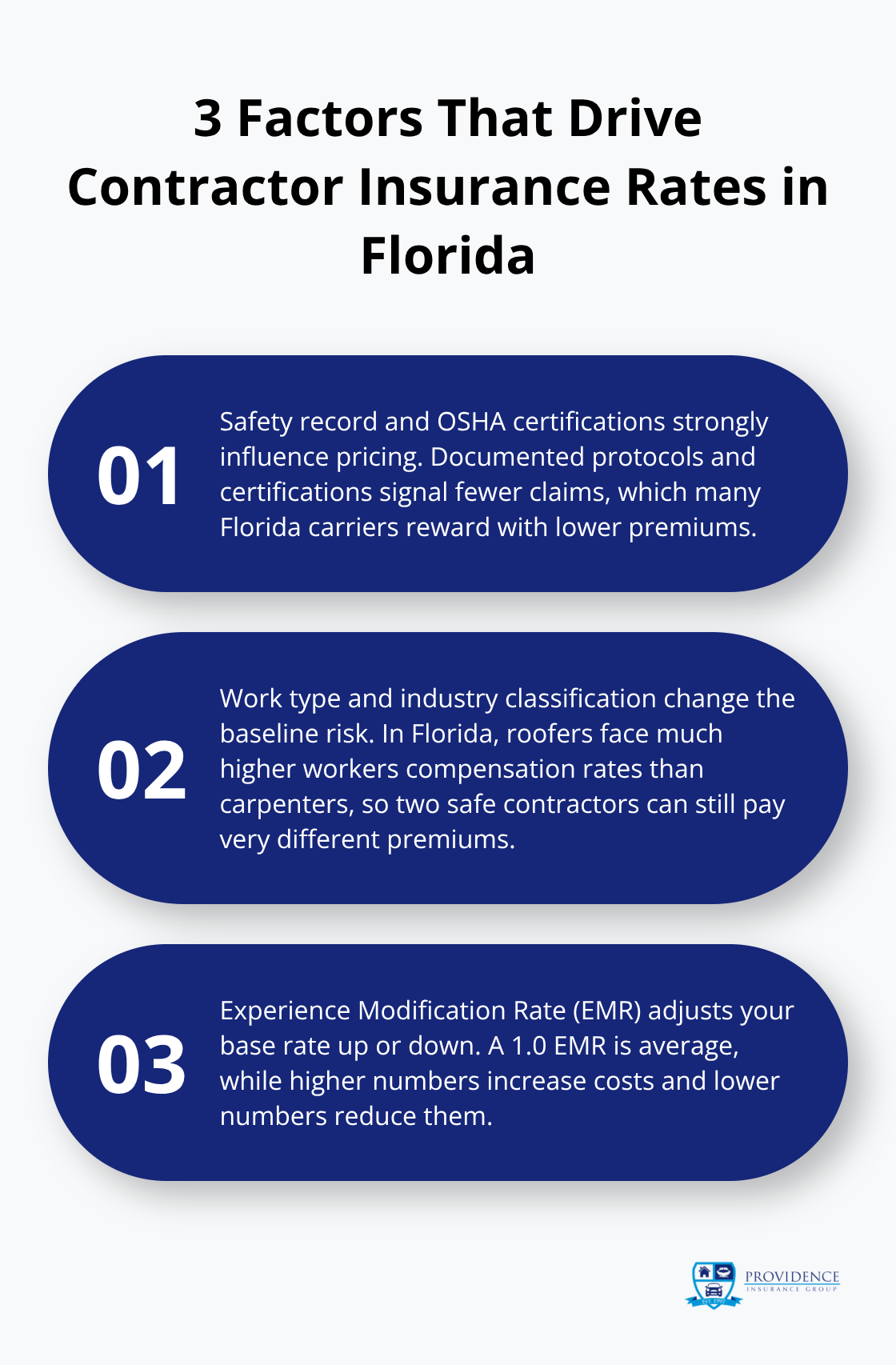
Insurance companies calculate your contractor rates using three primary factors, and understanding each one helps you identify where you can actually reduce what you pay. Your safety record and OSHA certifications sit at the top of most insurers’ evaluation criteria because contractors with documented safety practices file fewer claims. Florida insurers typically reduce premiums for contractors who maintain OSHA certifications, implement documented safety protocols, or work with safety consultants. If your business has remained claim-free for three or more years, you hold a strong negotiating position with independent agents.
Work Type and Industry Classification
The type of work you perform matters enormously-roofing contractors in Florida pay significantly more than general contractors due to higher injury rates and exposure to weather-related losses. According to the National Council on Compensation Insurance, roofers in Florida face workers compensation rates roughly three times higher than carpenters, which directly impacts your overall insurance costs. This classification difference means two contractors with identical safety records can pay vastly different premiums based solely on their trade.
Experience Modification Rate and Claims History
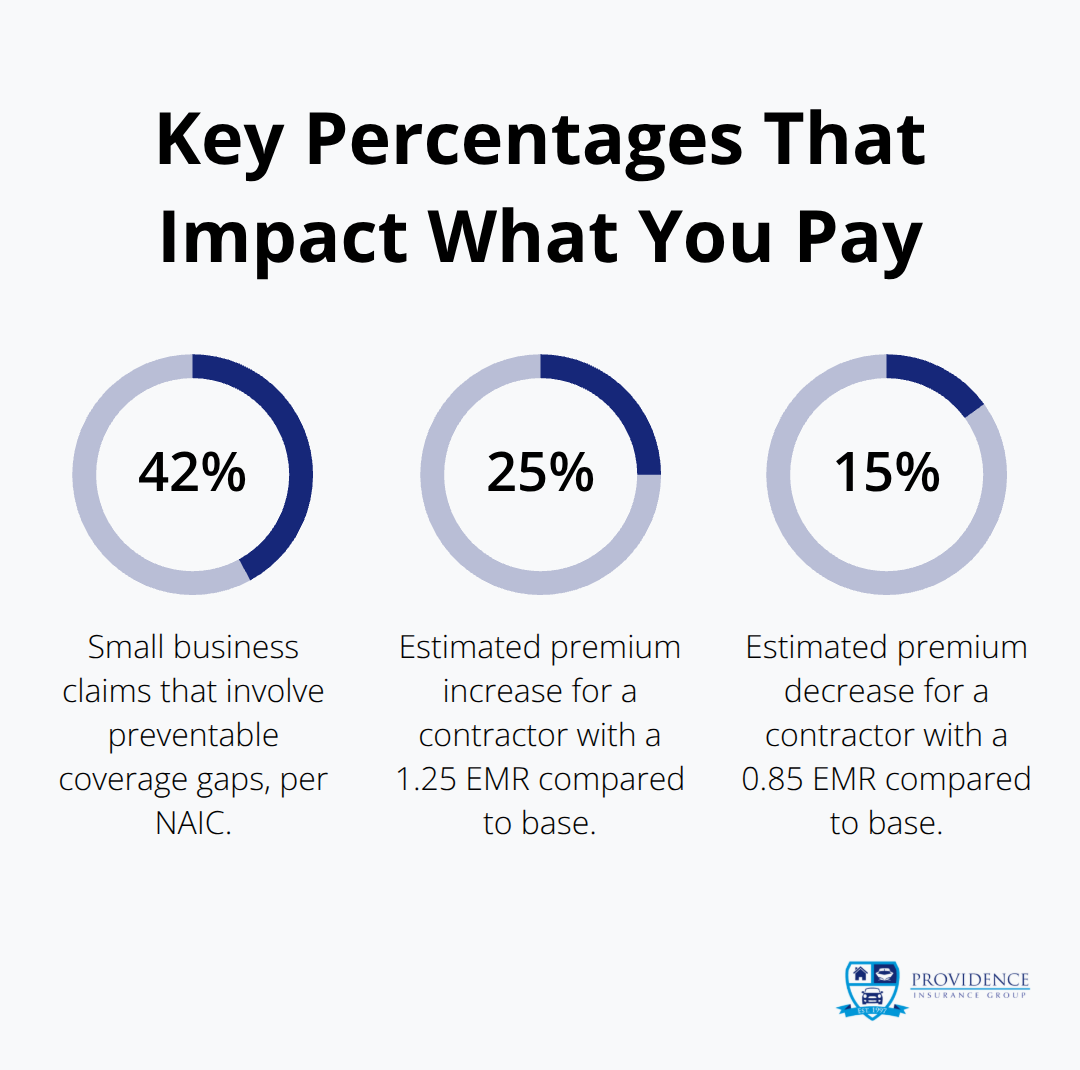
Your experience modification rate, or EMR, functions as your insurance report card and typically carries the most weight in final pricing decisions. This number, calculated by your state’s rating bureau using your actual claims history over the past three to five years, directly multiplies your base rate up or down. An EMR of 1.0 means you pay average rates; anything above 1.0 increases your costs, while below 1.0 decreases them. A contractor with an EMR of 1.25 might pay 25% more than the base rate, while someone at 0.85 pays 15% less.
Florida contractors often don’t realize they can challenge inaccurate claims data on their EMR record, which occasionally includes claims that weren’t actually work-related. When you shop for quotes, ask independent agents to pull your current EMR because some carriers apply stricter multipliers than others for the same rate. An agent who knows how to work with carriers that offer better pricing for contractors in your specific industry classification can save you thousands annually on premiums. This is where comparing quotes from multiple independent agents becomes your most powerful tool for reducing what you actually pay.
Strategies to Compare Contractor Insurance Quotes Effectively
Gather Quotes from Multiple Independent Agents
Multiple quotes are non-negotiable, but most contractors waste this opportunity by comparing only the final premium numbers. When you request quotes from independent agents, ask each one to provide a detailed breakdown showing your base rate, the EMR multiplier applied, any discounts subtracted, and the specific coverage limits included. Without this transparency, you’re comparing apples to oranges because two quotes at $3,500 might include completely different liability limits, equipment coverage, or workers compensation thresholds.
Independent agents have access to multiple carriers and can show you exactly how different insurers price your specific risk profile, which direct online quotes or captive agents cannot do. Request quotes with the same liability limits, the same deductibles, and the same coverage types so you can actually see where the real price differences exist.
Understand Coverage Types and Limits
Your coverage limits directly impact both your protection and your premium. Two contractors might receive vastly different quotes simply because one carries $1 million in general liability coverage while the other carries $2 million. Ask your independent agent to explain what each coverage type protects (general liability covers bodily injury and property damage claims, workers compensation covers employee injuries, commercial property covers your tools and equipment). The agent should also clarify which coverages Florida law requires for your specific trade and which ones protect your business from gaps that could bankrupt you.
Many contractors assume higher limits always cost proportionally more, but this isn’t always true. Some carriers offer better pricing on higher limits because they attract contractors with stronger safety records. Your agent can show you the actual cost difference between a $1 million and $2 million liability limit so you make an informed decision rather than guessing.
Identify Available Discounts and Bundle Opportunities
Most contractors ignore available discounts because they assume insurers automatically apply them, but this assumption costs thousands annually. Ask your independent agent specifically about safety program discounts (often 5-15% for documented protocols), multi-policy bundling discounts (typically 10-25% when combining general liability with workers compensation and commercial property), and claims-free discounts that reward your good history. Some Florida carriers offer equipment maintenance discounts or participation in loss control programs that reduce your rate by another 5-10%.
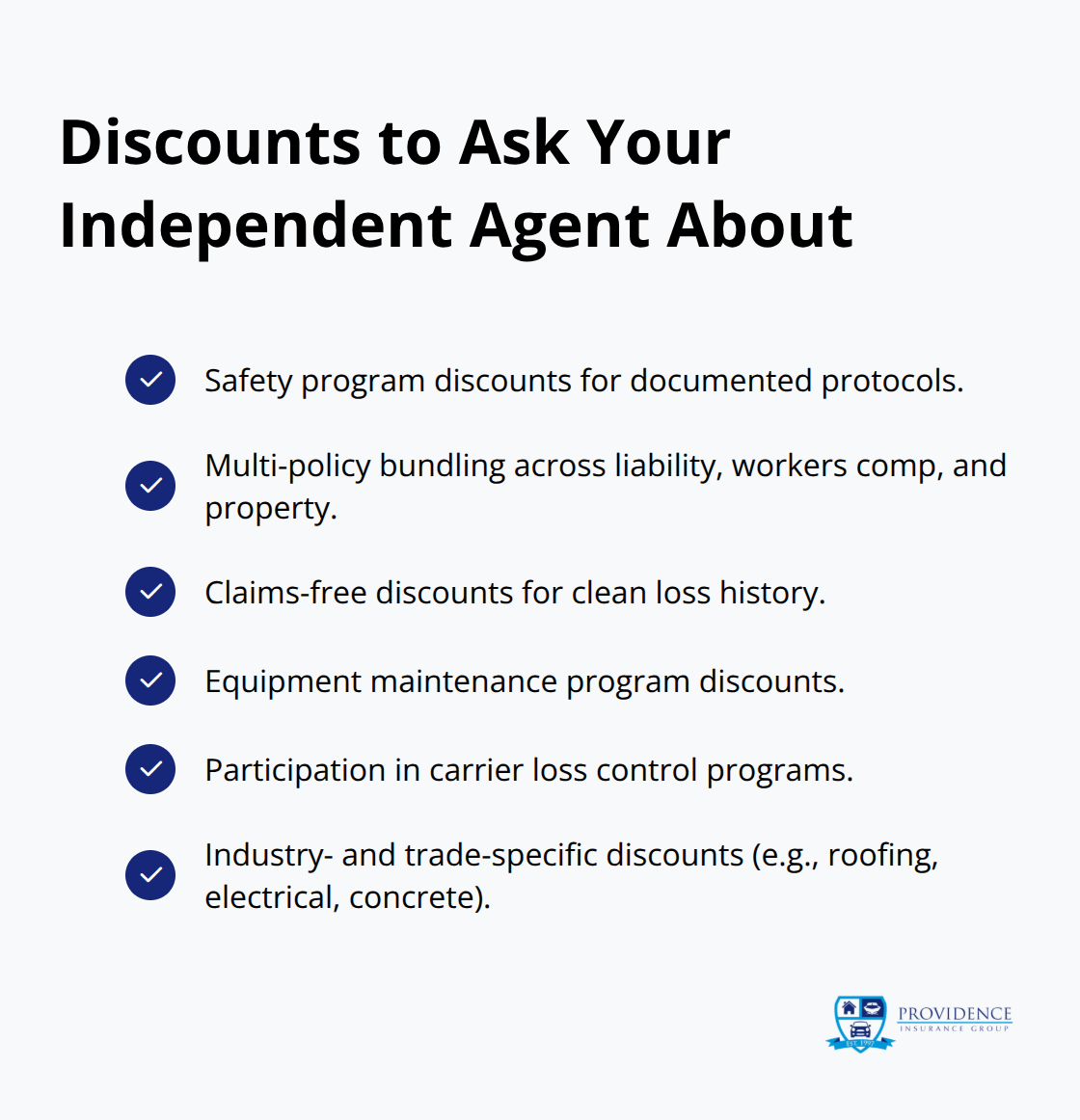
Your agent should also ask whether your industry classification qualifies for any specialized contractor discounts that general insurers won’t know about. The difference between accepting the first quote and spending an hour with an independent agent to identify all available discounts frequently exceeds $1,000 per year on contractor policies. This groundwork directly leads to the next critical step: recognizing which shopping mistakes actually cost you the most money.
Common Mistakes Contractors Make When Shopping for Insurance
Choosing Coverage Based on Price Alone
Contractors frequently sabotage their own insurance costs by selecting coverage purely on price, which creates a false economy that evaporates the moment a claim occurs. A contractor who chooses a $2,800 annual policy over a $3,200 option because it costs less may discover the cheaper quote includes only $500,000 in general liability coverage instead of $1 million, or carries a $5,000 deductible instead of $2,500. When a jobsite accident happens and liability exposure exceeds coverage limits, that $400 annual savings transforms into a six-figure personal liability. According to the National Association of Insurance Commissioners, 42% of small business claims involve coverage gaps that could have been prevented with proper limit selection. An independent agent can show you the actual cost difference between adequate and inadequate coverage, which often proves smaller than contractors assume when they compare quotes honestly.
Failing to Review Coverage Annually
The second critical mistake involves abandoning your policy after purchase and assuming nothing changes for three to five years. Your experience modification rate shifts annually based on claims filed during the prior years, meaning your premium should decrease if you maintain a clean record. Contractors who never revisit their policies miss rate reductions worth 5-15% annually on policies with strong safety performance. Additionally, Florida’s insurance market experiences significant carrier exits and rate adjustments each year, meaning your current insurer may no longer offer competitive pricing compared to alternatives available through independent agents. An annual policy review with an independent agent takes minimal time but frequently identifies substantial savings opportunities that contractors leave unclaimed.
Not Asking About Industry-Specific Discounts
The third expensive mistake involves failing to ask about industry-specific discounts that apply only to your trade classification. Roofing contractors qualify for fall protection equipment discounts and roof safety certification discounts that general insurers never mention. Concrete contractors access specialized equipment discounts, and electrical contractors receive training certification discounts that reduce premiums substantially (often 10-20% annually). Most contractors accept their first quote without requesting a detailed discount analysis, leaving significant savings on the table. An independent agent who specializes in contractor insurance knows which carriers reward your specific trade with the deepest discounts and can structure your policy to capture every available reduction.
Final Thoughts
Shopping for contractor insurance Florida rates requires you to understand three fundamental truths: what drives your premiums, how to compare quotes accurately, and where most contractors waste money. The contractors who pay the least aren’t necessarily those with the cheapest quotes-they’re the ones who understand their experience modification rate, request detailed breakdowns from multiple agents, and systematically identify every available discount. Your safety record, work classification, and claims history determine your baseline costs, but your shopping strategy determines whether you pay fairly or overpay by thousands annually.
Request quotes from at least three independent agents using identical coverage limits and deductibles. Ask each agent to show you the base rate, your EMR multiplier, applied discounts, and the specific coverage included so you can see where real price differences exist rather than comparing misleading bottom-line numbers. After you receive quotes, spend time reviewing coverage types with your agent to confirm you’re not sacrificing protection for savings, and schedule an annual policy review to capture rate reductions from your clean safety record.
We at Providence Insurance Group work with Florida’s top carriers to compare rates and coverages side by side while maximizing your available discounts. When you’re ready to reduce what you pay while securing proper protection, contact Providence Insurance Group to discuss your contractor insurance needs with agents who know your industry.
Disclaimer: The information provided in this blog is for general informational purposes only and does not constitute legal, financial, or insurance advice. Coverage options, terms, and availability may vary. Please consult with a licensed professional for advice specific to your situation