
Florida drivers overpay for car insurance every single day. Most people accept the first quote they receive without realizing they could save hundreds of dollars annually by comparing options.
At Providence Insurance Group, we’ve helped countless Floridians find better coverage at lower rates. Getting car insurance quotes in Florida takes just minutes, but the savings can be substantial when you know what to compare.
How Car Insurance Quotes Work in Florida
Understanding Florida’s Minimum Coverage Requirements
Florida requires minimum liability coverage of 10/20/50, meaning $10,000 bodily injury per person, $20,000 per accident, and $50,000 property damage. This baseline is non-negotiable, but most drivers need significantly more protection. Your actual needs depend on your assets, driving habits, and risk tolerance-not on what the law mandates.
What Information You Need to Provide for Accurate Quotes
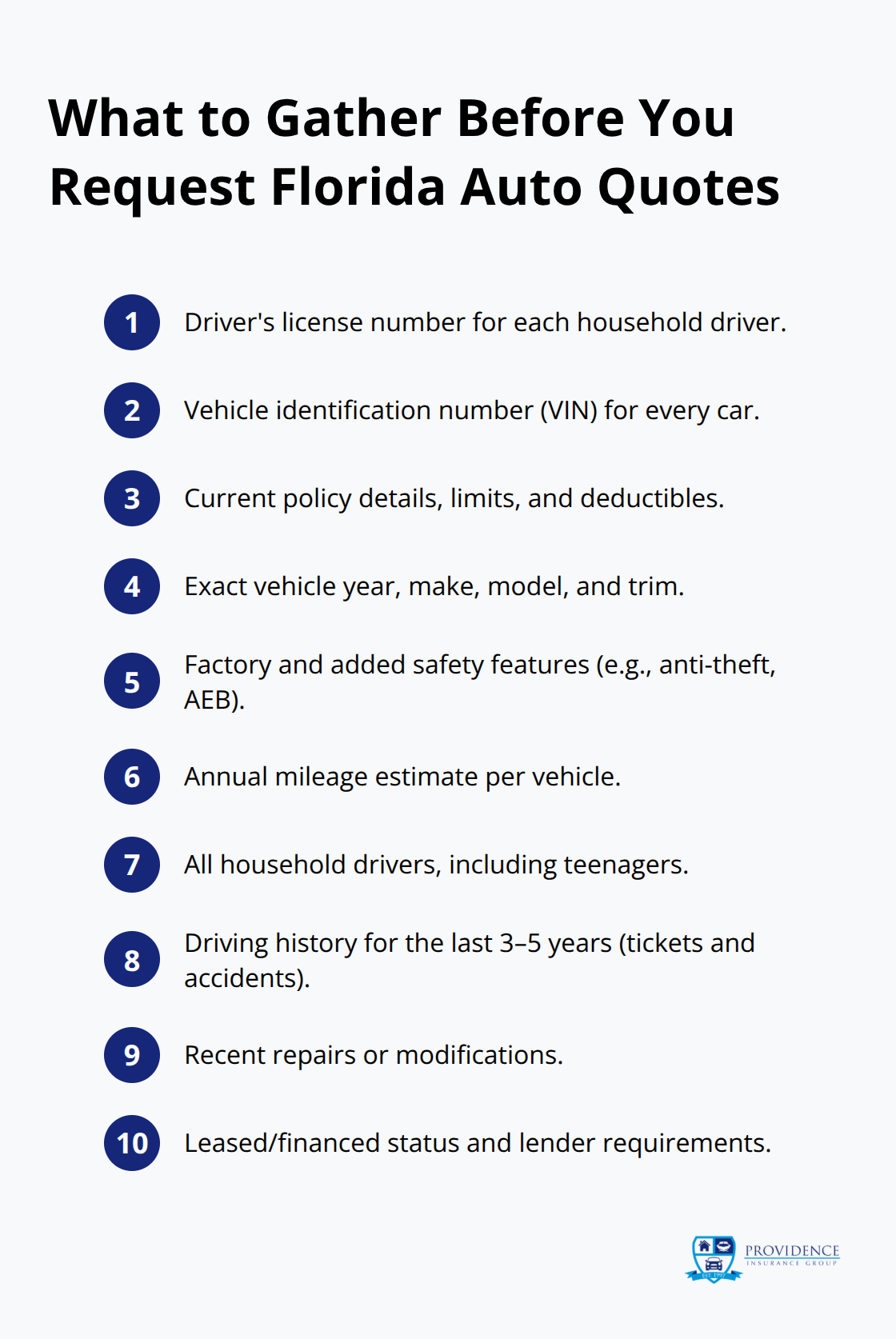
Insurers will ask for your driver’s license number, vehicle identification number, driving history, and current coverage details when you request quotes. Providing accurate information matters tremendously because estimates based on wrong data will mislead you. If you list the wrong year or omit a household driver, your actual premium could be hundreds of dollars higher than the quote suggested.
Many Floridians make the mistake of estimating their annual mileage incorrectly or forgetting to mention a teenage driver, then receive shocks when the policy arrives. Take time to gather your vehicle’s details before contacting agents-include the exact trim level, safety features, and any recent repairs or modifications. Your driving record significantly impacts pricing, so be honest about any tickets or accidents from the past three to five years.
How Comparison Shopping Saves You Money
Comparison shopping in Florida isn’t optional if you want reasonable rates. A 2023 analysis by the National Association of Insurance Commissioners found that premiums for identical coverage varied by over 200 percent between insurers in some states. Florida’s competitive market means the difference between the cheapest and most expensive quote for the same person can easily exceed $800 annually.
Most independent agents pull quotes from multiple carriers simultaneously, showing you side-by-side comparisons of premiums, deductibles, and coverage limits. This process typically takes 15 to 20 minutes and reveals which insurers value your specific situation favorably. Some carriers reward safe drivers heavily while others focus on bundling discounts; some specialize in drivers with accidents while others penalize them harshly.
Getting three to five quotes from different sources gives you a realistic picture of your market value. An independent agent familiar with Florida’s insurance landscape understands which carriers offer the best rates for different driver profiles and navigates these variations efficiently without wasting your time. Once you’ve compared your options, you’ll want to understand the specific types of coverage available to you.
Types of Coverage to Compare When Getting Quotes
Liability coverage protects you when you’re at fault in an accident, covering the other driver’s medical bills and property damage up to your policy limits. Florida’s minimum of 10/20/50 leaves you dangerously exposed-a serious accident can easily generate $100,000 in damages, leaving you personally liable for amounts exceeding your coverage. Most drivers should carry at least 100/300/100 coverage, which costs roughly 15 to 25 percent more than minimum but protects your assets from lawsuits. A single hospitalization following a serious crash can exceed $50,000 within days, and medical expenses accumulate quickly.
Collision and Comprehensive Coverage Options
Collision coverage pays for damage to your vehicle when you hit another car or object, while comprehensive covers theft, weather, and animal strikes. If you financed or leased your vehicle, your lender requires both coverages. For owned vehicles paid in full, the decision depends on your car’s value and your financial cushion-if repairs would strain your budget, these coverages warrant the premium. A 2024 Insurance Information Institute report showed that comprehensive claims average around $1,200 and collision claims around $3,500, so comparing deductible options across quotes matters significantly. Raising your deductible from $500 to $1,000 typically reduces your premium by 10 to 15 percent, which works only if you can actually afford that deductible when needed.
Uninsured and Underinsured Motorist Protection
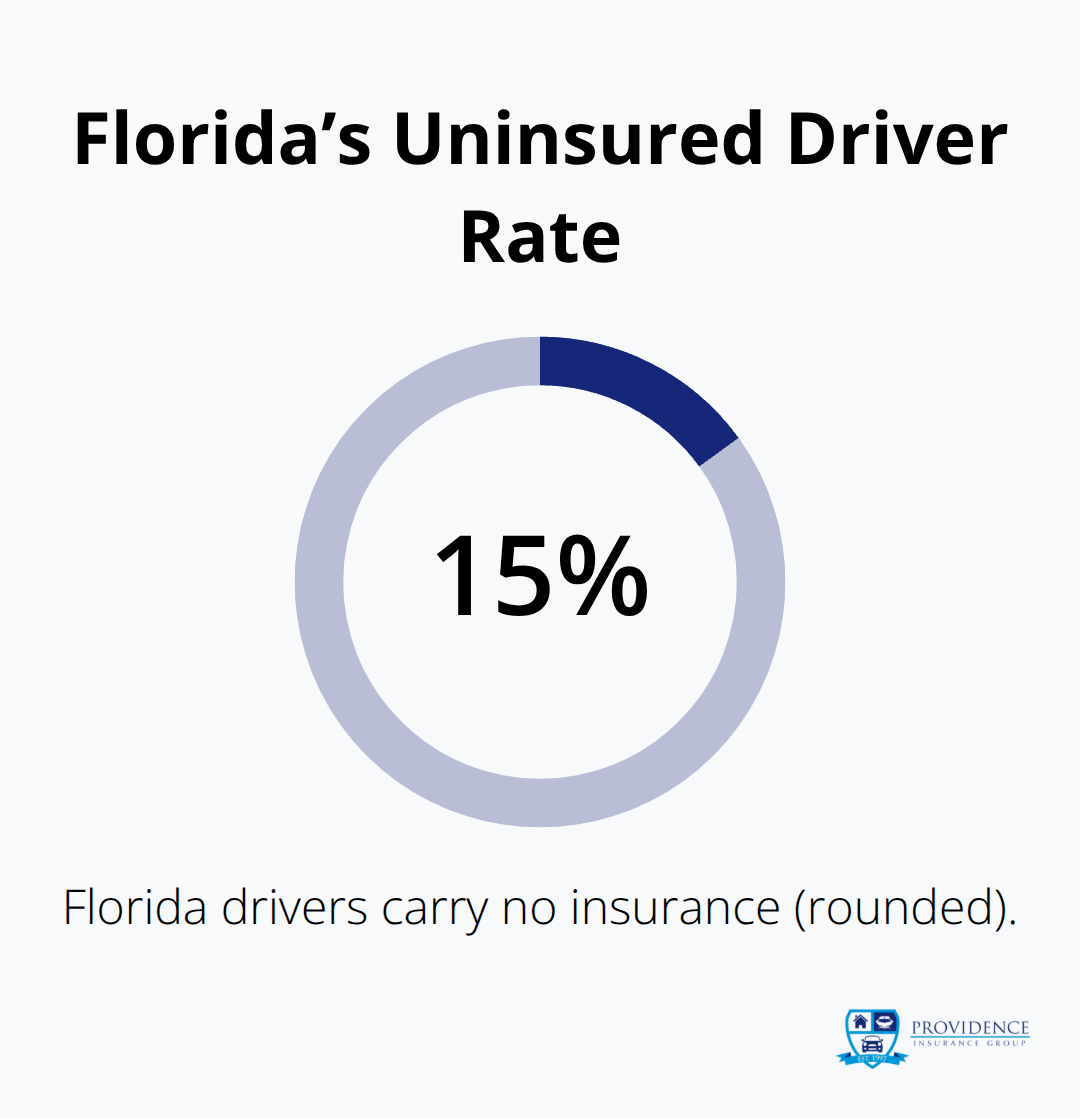
15.9% of Florida drivers carry no insurance, meaning uninsured and underinsured motorist coverage protects you against them. If an uninsured driver hits you, this coverage pays your medical bills and vehicle damage up to your limits, protecting you from absorbing costs yourself. Underinsured motorist protection covers the gap when another driver’s liability limits fall short of your actual damages. Florida law doesn’t require these coverages, but skipping them is reckless-you could end up paying thousands out of pocket for injuries caused by someone else’s negligence.
When comparing quotes, verify that each estimate includes these protections at reasonable limits, typically matching or exceeding your liability coverage amounts.
Understanding which coverage types fit your situation positions you to make smarter choices when reviewing quotes. The next step involves identifying the discounts and strategies that lower your overall costs without sacrificing the protection you need.
How to Cut Your Car Insurance Costs in Florida
Multi-Policy Bundling Delivers Real Savings
Bundling your auto policy with homeowners or renters insurance typically reduces your premium by 15 to 25 percent according to the National Association of Insurance Commissioners. If you carry home, auto, and umbrella policies separately, you’re leaving hundreds of dollars on the table annually. Most Florida insurers offer bundling discounts that apply immediately when you consolidate coverage, and the savings compound year after year. A driver paying $1,200 annually for auto insurance alone might drop to $900 or less when adding a homeowners policy to the same carrier.
The key is comparing bundled rates across multiple insurers because some carriers offer aggressive bundling discounts while others barely move the needle. An independent agent pulls quotes for your complete insurance picture, showing you exactly how much bundling saves with each carrier rather than forcing you to call multiple companies yourself.
Discounts That Actually Matter and How to Qualify
Florida insurers offer discounts for safety features like anti-theft devices and automatic braking systems that reduce your premium by 5 to 10 percent. Low-mileage discounts apply if you drive under 7,500 miles annually, saving around 10 to 15 percent on your policy. Good driver discounts reward three to five years of clean driving records, typically worth 10 to 20 percent off your premium.
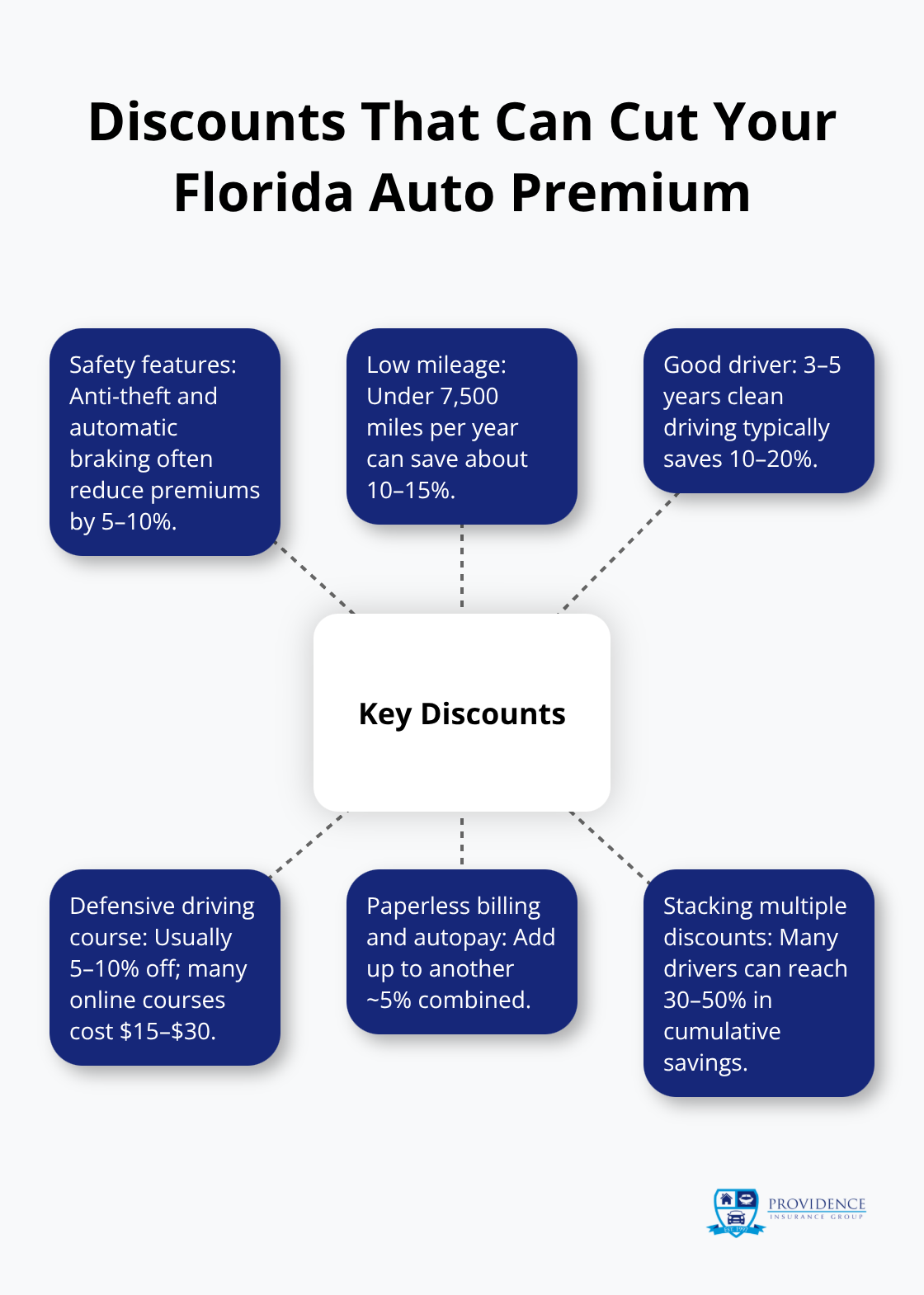
Defensive driving course completion qualifies you for discounts ranging from 5 to 10 percent with most carriers, and the courses cost $15 to $30 online. Paperless billing and automatic payment discounts add up to another 5 percent combined. Most drivers qualify for multiple discounts simultaneously but never ask about them, missing out on cumulative savings of 30 to 50 percent.
How Your Credit Score Impacts Your Rate
Your credit score directly impacts your rate because insurance companies view payment history as a predictor of claims likelihood. Improving your credit score from 620 to 720 can reduce your premium by 20 to 30 percent with many carriers, making it one of the highest-impact moves you can make. This takes time but matters far more than most drivers realize (sometimes even more than your driving record itself). Working to raise your credit score produces tangible results on your insurance costs that persist across multiple policy years.
Final Thoughts
Comparing car insurance quotes in Florida isn’t just about finding the lowest price-it’s about identifying the right coverage at a rate that matches your actual risk profile. The difference between accepting the first quote and shopping around can easily save you $800 to $1,200 annually, money that compounds significantly over years of driving. Understanding what coverage types protect you adequately, identifying every discount you qualify for, and comparing multiple quotes side by side form the most effective approach.
Your credit score matters as much as your driving record, bundling policies delivers substantial savings, and defensive driving courses provide quick wins (sometimes reducing your premium by 5 to 10 percent). Most Florida drivers leave money on the table simply because they never ask about available discounts or compare options across carriers. An independent agent pulls quotes from multiple carriers simultaneously, showing you exactly how premiums, deductibles, and coverage options compare without requiring you to contact five different insurance companies yourself.
Contact Providence Insurance Group to compare your car insurance quotes in Florida and discover how much you could save on your next policy. We understand which carriers offer the best rates for different driver profiles across Florida and take time to customize coverage to your actual needs. When you need to file a claim, you’ll be grateful you invested time upfront to get this decision right.
Disclaimer: The information provided in this blog is for general informational purposes only and does not constitute legal, financial, or insurance advice. Coverage options, terms, and availability may vary. Please consult with a licensed professional for advice specific to your situation