

Florida’s car insurance requirements are stricter than most states, and choosing the wrong policy can leave you underprotected or overpaying for coverage you don’t need. At Providence Insurance Group, we help drivers navigate the complex landscape of Florida car insurance options to find policies that actually match their lives.
Whether you’re a new driver, own multiple vehicles, or have a spotty driving record, this guide walks you through what you’re legally required to carry and how to build a policy that protects your finances without unnecessary costs.
Understanding Florida’s Unique Car Insurance Requirements
Mandatory Coverage Types in Florida
Florida law mandates that every driver carry Personal Injury Protection (PIP) and Property Damage Liability coverage. These minimums sound reasonable until you realize that a single accident with serious injuries can easily exceed 20,000 dollars in medical bills alone. The average injury claim in Florida exceeds these minimums significantly, yet most drivers stick with the legal minimum because they don’t understand the real financial exposure.
How Florida’s No-Fault System Works
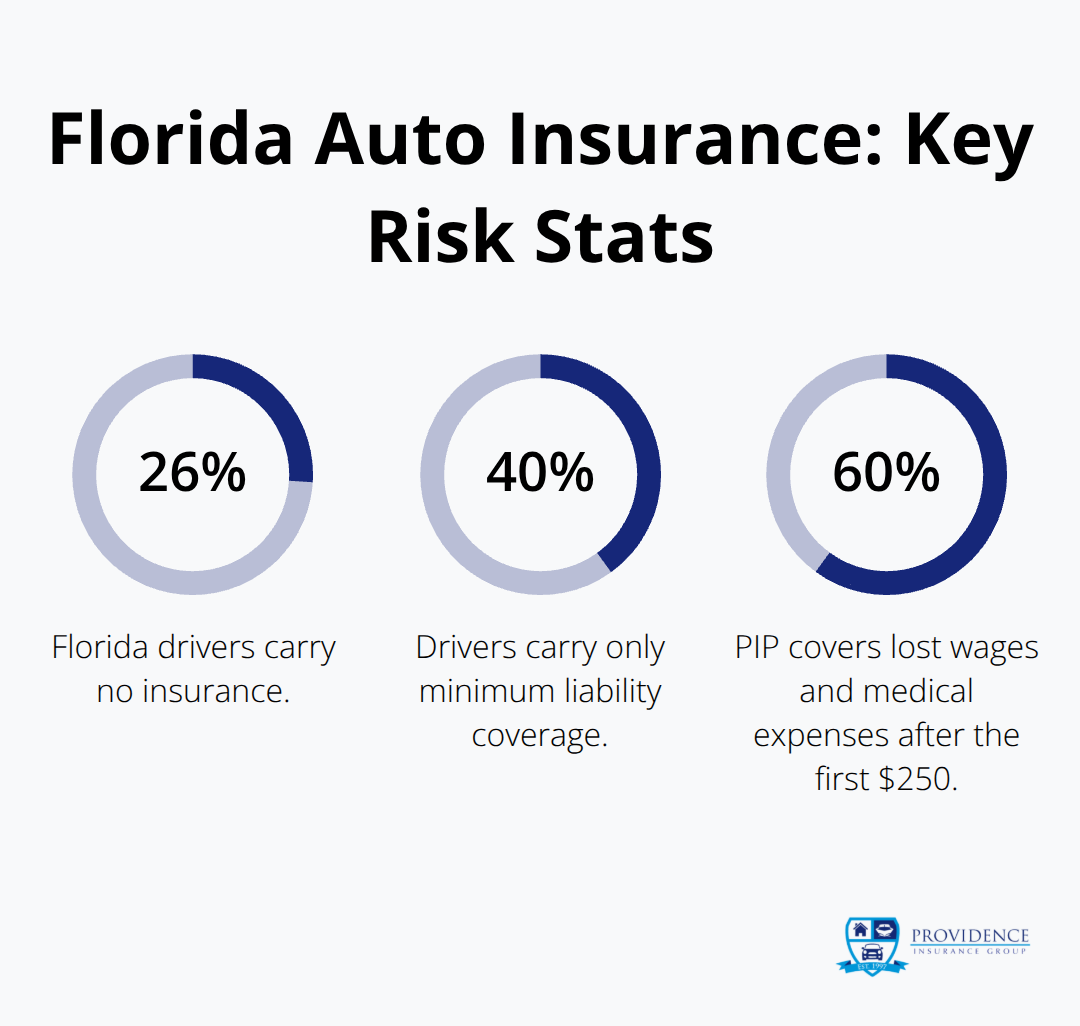
Florida’s no-fault system means your own insurance pays your medical bills regardless of who caused the accident, which sounds protective but creates a false sense of security. Your personal injury protection only covers 60 percent of lost wages and medical expenses after the first 250 dollars, so a serious injury leaves you covering substantial costs out of pocket. This system exists because Florida eliminated traditional fault-based lawsuits for most accidents, but the trade-off is that you’re responsible for your own recovery costs unless injuries exceed a specific threshold.
Why Standard Coverage May Not Be Enough
The real problem with Florida’s minimum coverage appears when you own assets worth protecting. If you cause an accident and someone sues for damages beyond your liability limits, they can pursue your savings, home equity, and wages through a judgment. A Florida resident with a home worth 300,000 dollars and a judgment against them for 150,000 dollars faces years of wage garnishment and potential lien placement on their property.
Carrying at least 100/300/100 coverage for homeowners and 250/500/100 for anyone with significant assets costs roughly 15 to 30 dollars more monthly than minimum coverage. Uninsured and underinsured motorist coverage deserves equal attention since roughly 26 percent of Florida drivers carry no insurance according to state data, meaning you need protection against drivers who can’t pay for damages they cause. Standard liability policies leave you exposed to catastrophic financial loss in a single accident, yet many drivers never adjust their coverage after purchasing their first policy (the difference between minimum coverage and adequate coverage amounts to a few dollars monthly but protects hundreds of thousands in assets).
Understanding these gaps in protection sets the stage for evaluating which specific policy options actually fit your financial situation and driving patterns.
Comparing Car Insurance Options Available to Florida Drivers
Full Coverage vs. Minimum Liability Coverage
The gap between minimum liability coverage and comprehensive protection reveals itself the moment you file a claim. Florida’s minimum requirements of $10,000 in Property Damage Liability leave homeowners and anyone with substantial assets dangerously exposed, yet roughly 40 percent of Florida drivers carry only minimum coverage according to insurance industry data. Full coverage policies that include Collision and Comprehensive protection cost significantly more upfront, but the actual difference depends entirely on your vehicle’s age and value.
A driver with a 2015 vehicle worth $12,000 might pay $80 to $120 monthly for full coverage compared to $40 for liability-only, but that extra investment protects against theft, weather damage, and accidents where you’re at fault. The math changes dramatically for drivers with vehicles worth under $5,000, where Collision and Comprehensive premiums sometimes exceed the vehicle’s replacement cost, making liability-only coverage the smarter financial choice. Your vehicle’s actual market value should drive this decision, not what you originally paid for it.
Specialized Policies for High-Risk Drivers
High-risk drivers and those with multiple violations face substantially higher premiums across the board, but several specific policy structures can reduce those costs. Florida insurers typically increase rates 20 to 50 percent for drivers with recent accidents or violations, and a second violation within three years can trigger a rate increase of 100 percent or more according to state filing data.
Specialized policies designed for high-risk drivers often include telematics programs that monitor your actual driving habits through your phone or a device. Insurers with Arity-enabled programs have shown that safe drivers can earn 10 to 30 percent discounts within six months of enrollment. These programs track acceleration, braking, and speed patterns to reward genuinely safer driving behavior.
Discount Opportunities and How to Maximize Savings
Bundling your auto policy with homeowners or renters coverage typically saves 15 to 25 percent on your total premium, making this the single most effective discount available to most Florida drivers. Low mileage discounts apply if you drive under 7,500 miles annually, while completing a defensive driving course approved by Florida’s Department of Highway Safety and Motor Vehicles qualifies you for a mandatory 10 percent discount that most carriers honor for three years.
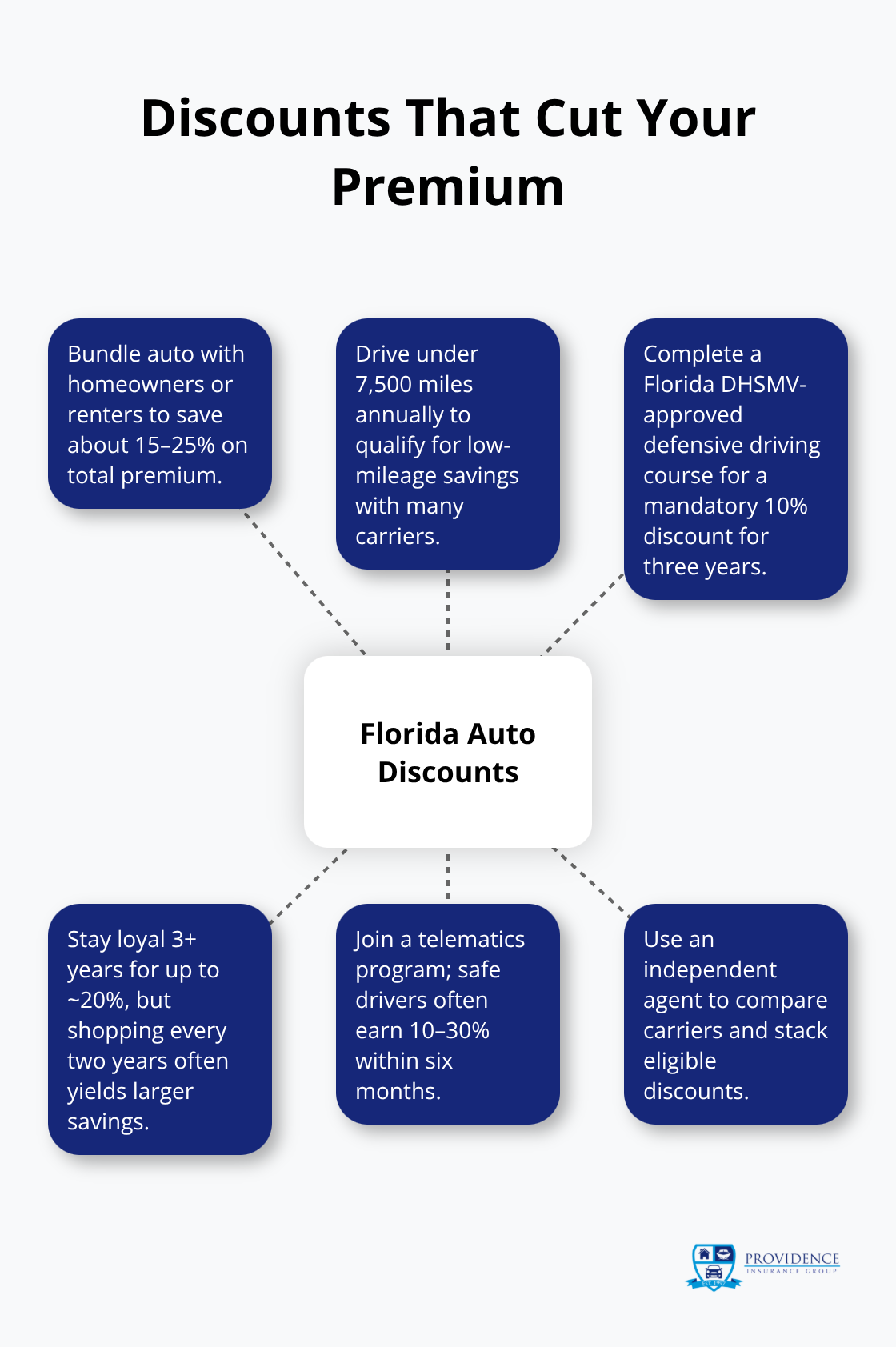
Loyalty discounts for staying with the same insurer for three or more years often reach 20 percent, though shopping rates every two years typically yields larger savings than remaining with your current company. An independent agent can compare these discounts across multiple carriers simultaneously, identifying which combination of discounts and coverage options produces the lowest total cost for your specific situation.
How to Choose the Right Car Insurance Policy for Your Situation
Assessing Your Driving Habits and Risk Factors
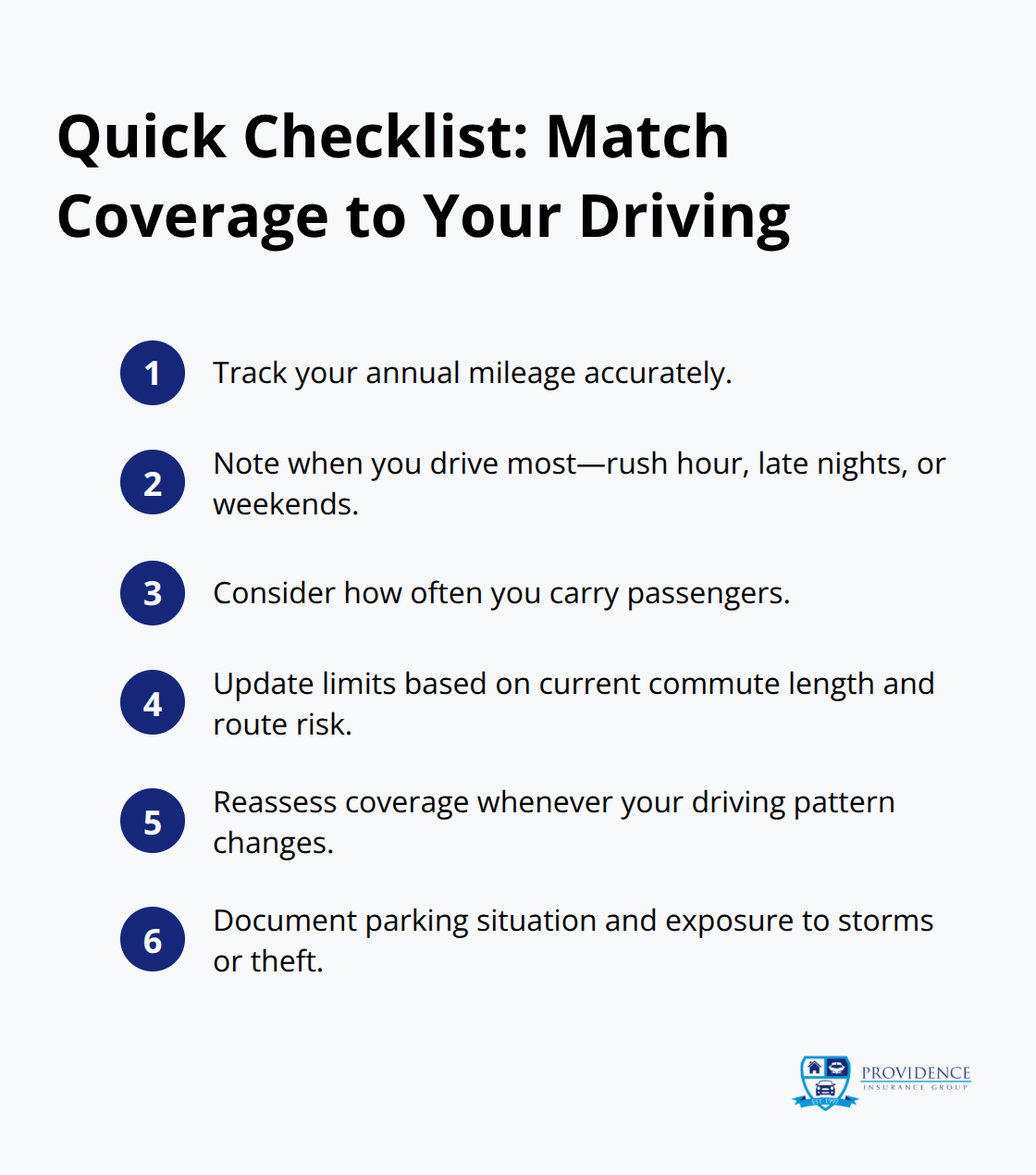
Your actual driving patterns matter far more than generic risk categories when selecting coverage limits. A driver who commutes 45 minutes each way on Florida highways faces different risks than someone who drives 10 minutes to a local office, yet most drivers select coverage based on what they purchased five years ago rather than their current situation. Track your annual mileage, note whether you drive during rush hour or late at night, and consider whether you transport passengers regularly. These factors directly influence which coverage options protect you adequately and which ones represent unnecessary expense.
Your driving record shapes your premium more than any other factor, but it doesn’t lock you into inadequate coverage. A single accident or violation increases your rates substantially, yet accepting minimum coverage to offset that increase creates far greater financial exposure. Instead, maintain the liability limits your assets require while exploring specialized programs that reward safer driving behavior going forward.
Evaluating Coverage Limits Based on Your Assets
Calculate your total net worth honestly, including your home equity, savings, retirement accounts, and any other assets you own. If you own a home worth $350,000 with $150,000 in equity, a $50,000 savings account, and a reliable income, your liability exposure is substantial. A judgment against you for $200,000 from a serious accident you caused means creditors can pursue your wages and potentially place liens on your property for years.
This reality should dictate your liability limits far more than the legal minimum. Most drivers with homeownership or significant savings should carry at least $100,000 per person and $300,000 per accident in bodily injury liability, which costs roughly $20 to $35 more monthly than Florida’s minimum coverage. The difference between minimum coverage and adequate protection amounts to a few dollars weekly but protects hundreds of thousands in assets.
Selecting Deductibles That Match Your Budget
Your vehicle’s actual market value, not your emotional attachment to it, determines whether full coverage makes financial sense. A 2020 Honda Civic worth $18,000 justifies comprehensive and collision coverage because repair costs after an accident could easily exceed $5,000, while a 2010 vehicle worth $6,000 might have collision premiums around $90 monthly that exceed the actual replacement value. Check your vehicle’s current market value on Kelley Blue Book or NADA Guides, then calculate whether your annual collision and comprehensive premiums exceed 10 percent of that value. If they do, liability-only coverage becomes the smarter choice.
Your deductible selection directly impacts both your premium and your out-of-pocket risk. Selecting a $1,000 deductible instead of $500 typically saves $15 to $25 monthly, but only makes sense if you can actually pay $1,000 without financial strain when a claim occurs. Drivers with stable emergency savings of at least $2,000 can safely select higher deductibles, while those living paycheck to paycheck should stick with $500 deductibles despite the higher premium cost. Your financial cushion determines your deductible strategy more than any other consideration.
Final Thoughts
Selecting the right Florida car insurance options requires honest assessment of your assets, driving patterns, and financial capacity to handle unexpected costs. The gap between minimum coverage and adequate protection often amounts to just a few dollars monthly, yet that difference determines whether a single accident depletes your savings or leaves your home vulnerable to creditors. Your liability limits should reflect what you actually own, your deductible should match your emergency fund, and your full coverage decision should depend on your vehicle’s current market value rather than what you paid for it years ago.
An independent agent transforms this process from overwhelming to straightforward. We at Providence Insurance Group compare rates and coverages across multiple carriers simultaneously, identifying which combination of discounts and protection actually fits your life. Our team maximizes every discount you qualify for, whether that’s bundling savings, loyalty rewards, or telematics programs that reward safer driving.
Contact Providence Insurance Group to review your current coverage against your actual assets and driving situation. We’ll identify gaps in your protection, show you exactly how much you’re overpaying or underprotected, and build a policy that matches your financial reality. Don’t wait for an accident to reveal that your coverage was inadequate or that you’ve been paying for protection you didn’t need.
Disclaimer: The information provided in this blog is for general informational purposes only and does not constitute legal, financial, or insurance advice. Coverage options, terms, and availability may vary. Please consult with a licensed professional for advice specific to your situation