
Florida camper insurance protects your RV and travel gear from the unique risks you’ll face on the road. At Providence Insurance Group, we know that standard auto policies won’t cut it-you need coverage designed specifically for mobile living.
Weather, theft, and accidents happen more often than most campers expect. The right policy keeps your investment safe so you can focus on enjoying your adventures.
What Coverage Types Do Campers Actually Need?
Liability Coverage: Your Legal Foundation
Liability coverage forms the foundation of any camper insurance policy, and Florida’s liability requirements make this non-negotiable. Florida’s liability requirements mandate minimum limits of $10,000 in PIP and $10,000 in PDL coverage. However, we recommend carrying at least $100,000 in liability coverage because a single accident involving another vehicle or injuries to someone at a campground can easily exceed Florida’s minimum limits.
Medical payments coverage typically costs between $5 and $15 per month and covers immediate medical expenses for you and your passengers regardless of fault. This protection becomes especially valuable when you’re far from home and need quick access to medical care.
Comprehensive and Collision Coverage: Protecting Your Investment
Comprehensive and collision coverage protects your actual camper investment, and these two work differently. Collision coverage pays for damage when your camper hits another vehicle or object, while comprehensive covers theft, weather damage, vandalism, and animal strikes. In Florida, where hurricane season runs from June through November, comprehensive coverage isn’t optional if you financed your RV.
The National Association of Insurance Commissioners reports that comprehensive claims in Florida increase dramatically during hurricane season, with average claims reaching $8,000 to $15,000 for weather-related damage. This data shows why Florida campers can’t afford to skip this protection.
Personal Belongings Coverage: Protecting Your Gear
Personal belongings coverage protects your camping gear, electronics, and equipment inside the camper, typically covering up to $2,500 to $5,000 depending on your policy. Most standard policies exclude high-value items like jewelry or cameras, so document everything you carry and consider adding scheduled personal property coverage if you travel with expensive gear.
Deductible Strategy: Balancing Cost and Protection
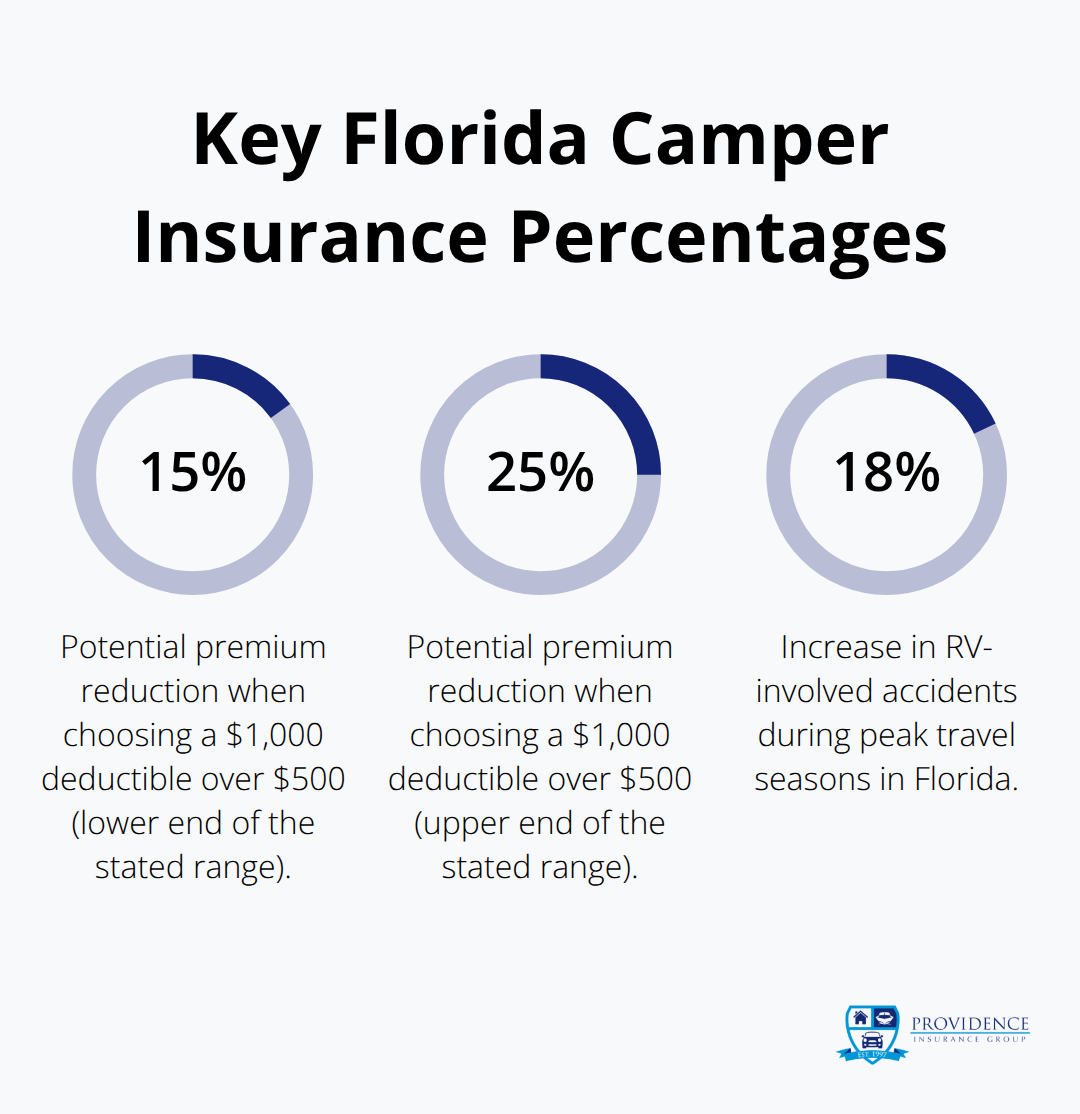
Choosing the right deductible directly impacts your premium and your financial security. A $1,000 deductible instead of $500 can reduce your premium by 15 to 25 percent, but only makes financial sense if you can actually afford that deductible when you need it. Your deductible choice should reflect both your budget and your comfort level with out-of-pocket expenses.
With these coverage types in mind, the next step involves comparing specific policies and identifying which carriers offer the best combination of protection and price for your situation.
What Risks Threaten Your Camper in Florida
Hurricane and Storm Damage
Florida’s climate creates specific dangers that standard vehicle insurance ignores. Hurricanes, tropical storms, and intense afternoon thunderstorms cause the majority of weather-related camper damage in the state. According to the National Hurricane Center, an average Atlantic hurricane season has 14 named storms, 7 hurricanes, and 3 major hurricanes, and when these systems hit, RV damage claims spike dramatically. Comprehensive coverage protects against this reality, but many campers underestimate how quickly hurricane season damage accumulates.
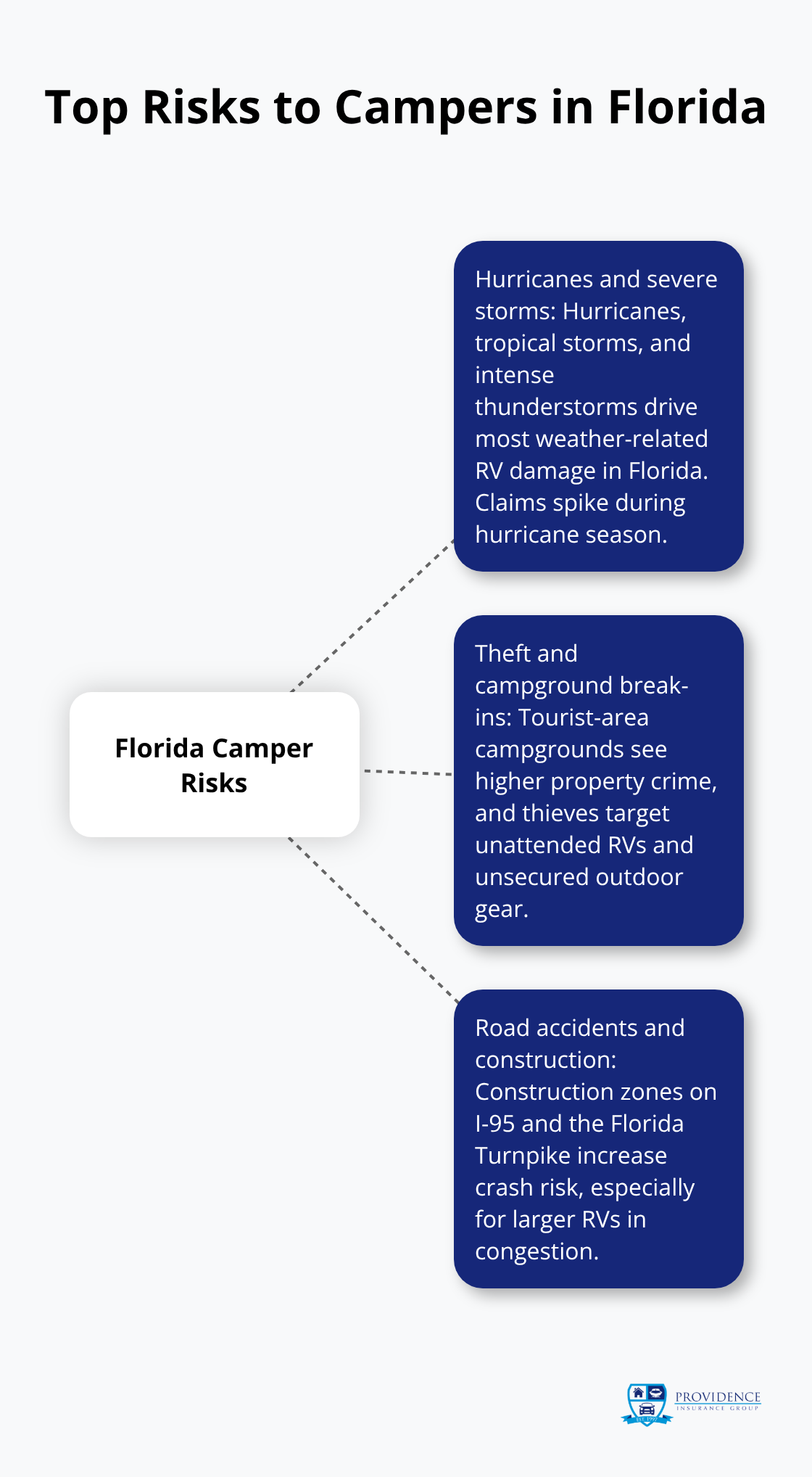
A single hurricane can destroy awnings, damage roofs, and cause water intrusion that costs $8,000 to $15,000 to repair.
Theft and Break-Ins at Campgrounds
Theft at Florida campgrounds remains a persistent problem that catches unprepared campers off guard. The Florida Department of Law Enforcement reports property crime rates at tourist destinations significantly exceed state averages, and campgrounds rank among the most targeted locations. Thieves specifically target RVs because campers often leave their sites unattended for hours while exploring attractions, and many owners fail to secure expensive outdoor equipment like generators and bikes. Personal belongings coverage becomes critical here because standard homeowner’s policies exclude coverage for items stored in RVs.
Road Accidents and Construction Hazards
You face unique road hazards in Florida that increase accident risk compared to other states. Construction zones on Interstate 95 and the Florida Turnpike create congestion where large RVs struggle to maneuver safely. Statistics from the Florida Highway Patrol show RV-involved accidents increase 18 percent during peak travel seasons like winter months when snowbirds migrate south. Liability coverage protecting you against injury claims and property damage to other vehicles should be your absolute priority, not an afterthought.
Why Florida’s Minimum Coverage Falls Short
Florida’s minimum liability requirements are dangerously low, and one accident involving another driver’s vehicle or injuries at a crowded campground can expose you to lawsuit costs exceeding $100,000. These risks make selecting the right policy more than just a financial decision-it determines whether you travel with confidence or constant worry. Understanding your specific exposure helps you identify which coverage options actually matter for your camping style and travel patterns.
Selecting the Right Policy for Your Florida Camper
Know Your Camper’s True Value
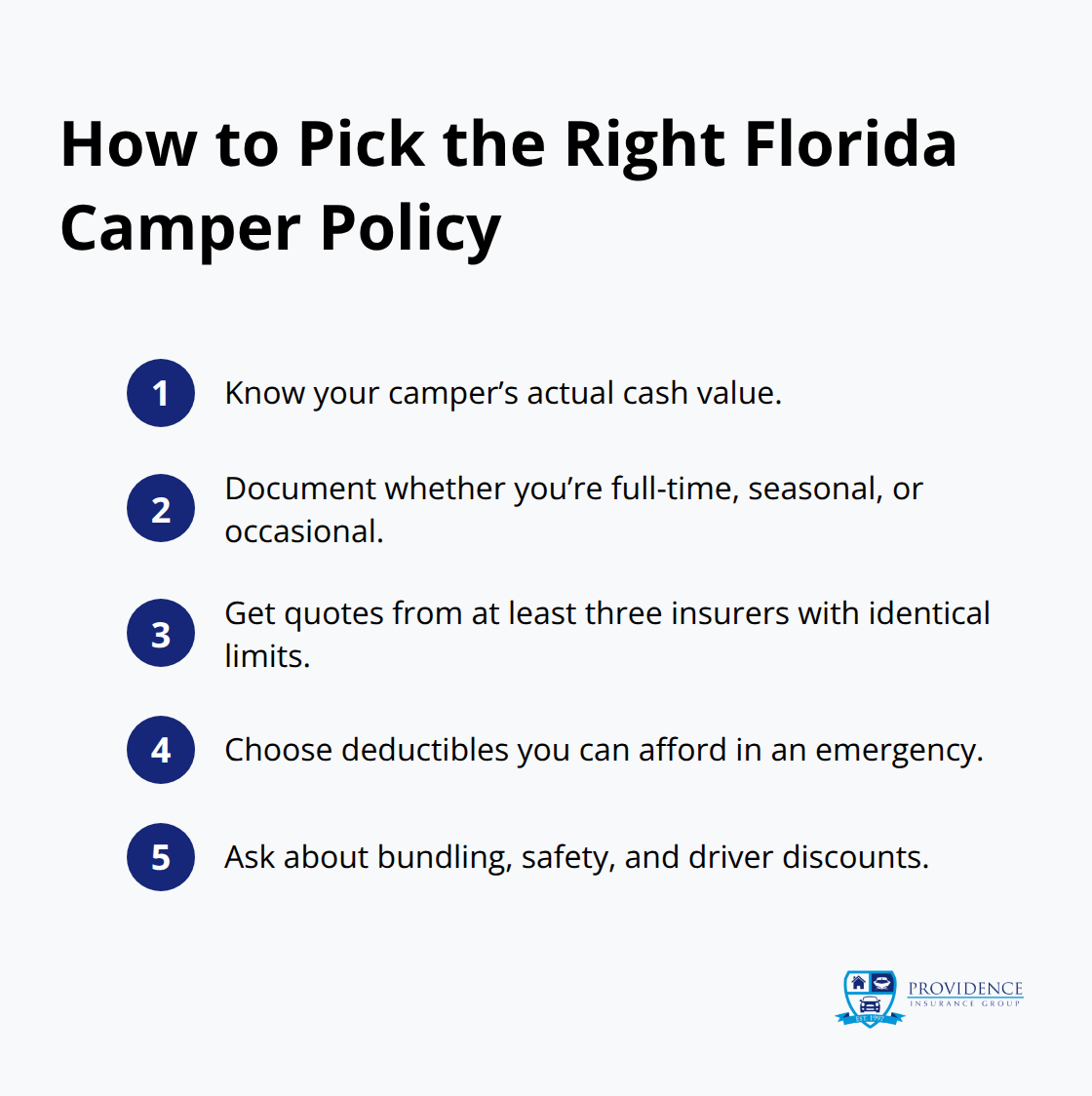
Start by knowing exactly what your camper is worth, because this number drives every coverage decision you’ll make. Pull your purchase receipt, check recent market listings for similar models, and get an independent appraisal if your RV is older or heavily customized. Your camper’s actual cash value determines your comprehensive and collision limits, and underestimating this cost creates a false sense of savings that vanishes the moment you file a claim.
Document Your Actual Usage Patterns
Next, document how you actually use your camper. Do you live in it full-time, use it seasonally during winter months, or take occasional weekend trips? Full-time residents face different risks than seasonal travelers, and your usage pattern directly affects which coverage options matter most. Carriers adjust premiums based on whether your camper stays parked most of the year or travels constantly, so be honest about your habits when requesting quotes.
Compare Policies Across Multiple Carriers
Comparing policies across multiple carriers reveals massive price variations that most campers never discover. Request quotes from at least three insurers and ask each one for the same coverage limits so you’re comparing apples to apples.
Focus on Deductibles and Premium Swings
Focus on deductibles because this choice creates the biggest premium swings. A $2,500 deductible instead of $500 might cut your annual premium by $400 to $600, but only choose this if you have emergency funds available when you need them. This decision directly impacts both your monthly costs and your financial security when claims happen.
Identify Discounts That Apply to Your Situation
Look specifically for discounts that apply to your situation. Multi-policy bundling with your homeowner’s or auto insurance typically saves money, while safety features like GPS tracking systems or anti-theft devices can reduce premiums. Some carriers offer discounts for completing RV safety courses or maintaining a clean driving record, so ask what each company offers before finalizing your decision.
Final Thoughts
Florida camper insurance protects your RV investment against weather, theft, and accidents that standard auto policies simply don’t cover. Liability coverage shields you from lawsuit costs when accidents happen, while comprehensive and collision coverage handles weather damage and collisions. Personal belongings coverage protects your gear and equipment, and together these layers create a safety net that lets you enjoy Florida’s camping opportunities without constant financial worry.
A single hurricane season or theft incident can wipe out years of savings and leave you responsible for thousands in repairs or legal claims. The right policy ensures your camper investment stays protected throughout your travels. Your coverage choices directly determine whether you travel with confidence or constant financial anxiety.
Contact Providence Insurance Group to discuss your Florida camper insurance needs and receive personalized quotes that match your specific camper and travel patterns. We’ll walk you through your options and identify every discount you qualify for, whether that’s bundling with homeowner’s insurance, safety features, or your driving record. We’ll make sure you have the right protection before you hit the road.
Disclaimer: The information provided in this blog is for general informational purposes only and does not constitute legal, financial, or insurance advice. Coverage options, terms, and availability may vary. Please consult with a licensed professional for advice specific to your situation