
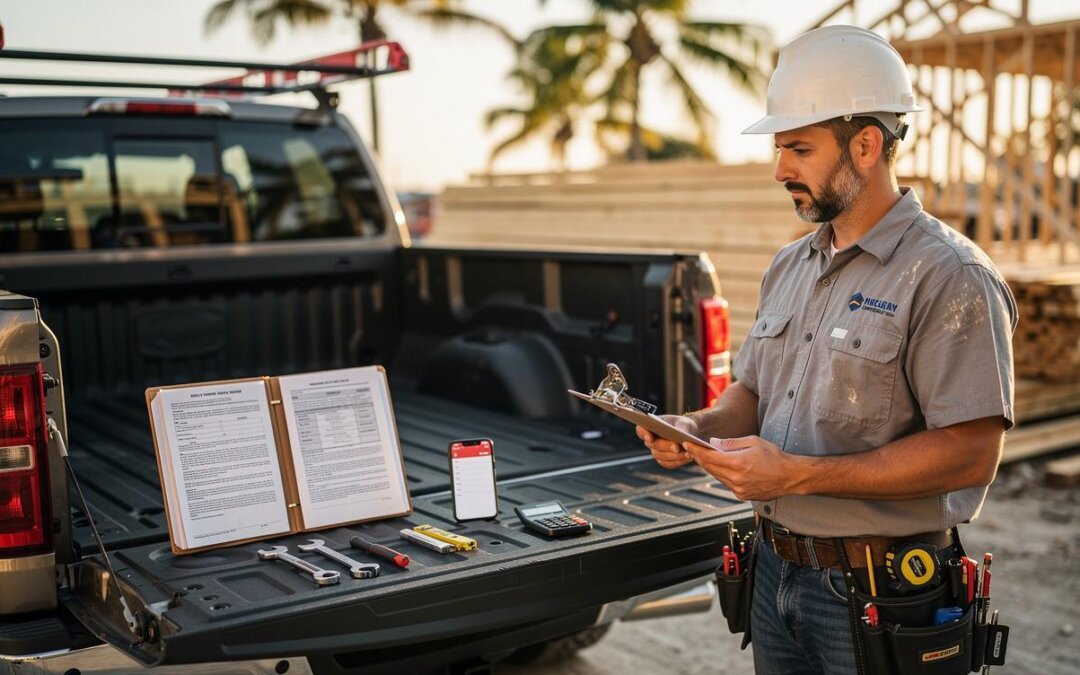
Running a contracting business in Florida means managing real risks every day. At Providence Insurance Group, we know that small contractor Florida insurance isn’t just a legal box to check-it’s what stands between your business and financial disaster.
The right coverage protects your employees, your equipment, and your bottom line when accidents happen. This guide walks you through the essential policies every Florida contractor needs.
Workers Compensation Insurance for Florida Contractors
Legal Requirements in Florida
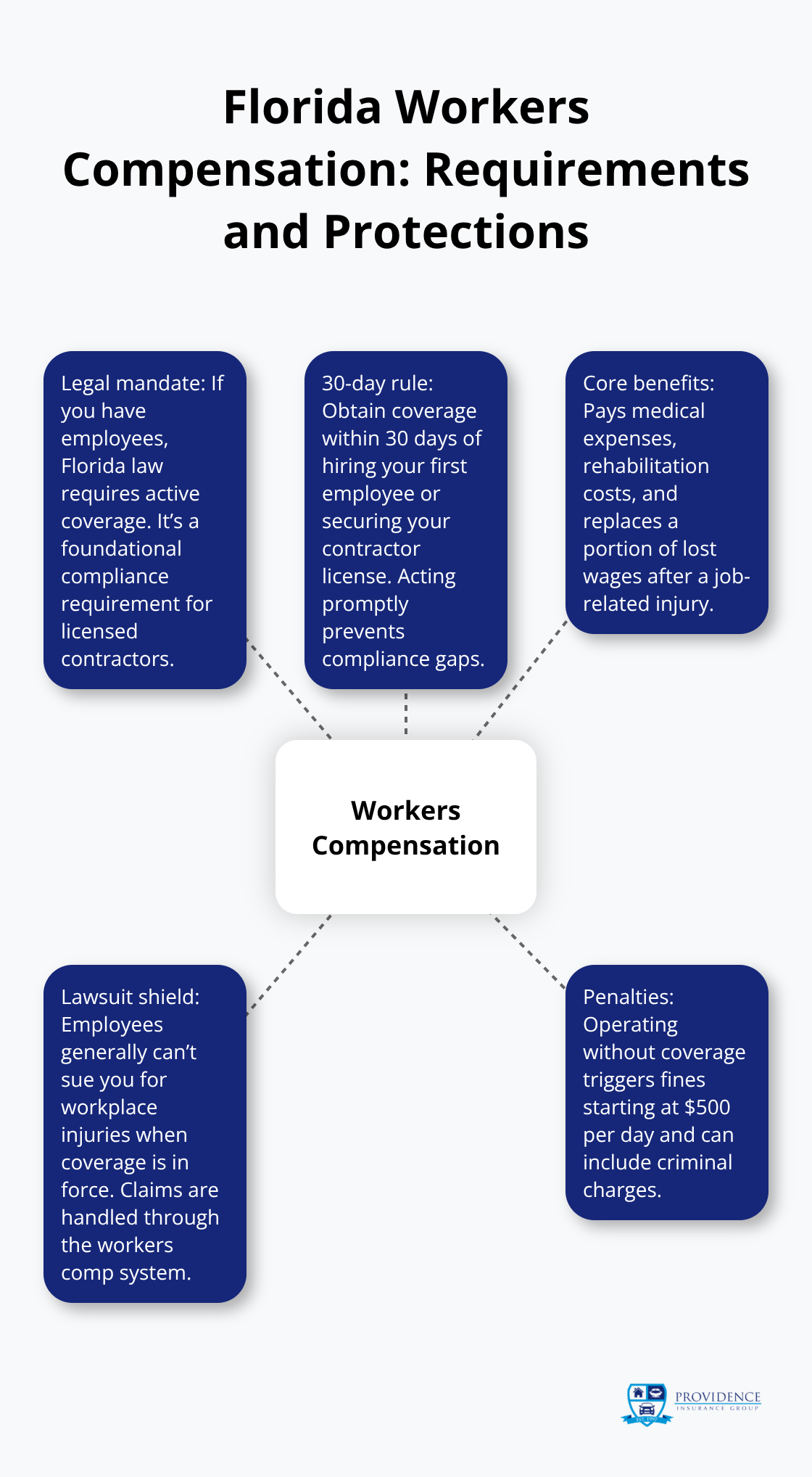
Florida law requires workers compensation insurance if you have employees, and there’s no way around it. The state mandates coverage that pays medical expenses, rehabilitation costs, and wage replacement when an employee gets hurt on the job. You must obtain this coverage within 30 days of hiring your first employee or obtaining your contractor license, whichever comes first. If you operate without it, you face fines starting at $500 per day plus potential criminal charges. The coverage protects your business from lawsuits because employees can’t sue you directly for workplace injuries when workers comp is in place-instead, they file a claim with your insurance carrier.
This legal shield matters enormously because a single serious injury could otherwise drain your cash reserves or force you to shut down.
What Workers Comp Covers on Job Sites
Workers compensation pays for immediate medical care, ongoing treatment, and lost wages while an employee recovers. If an electrician gets shocked and needs surgery plus three months off work, the policy covers the hospital bills and a percentage of his wages during recovery. The coverage also includes rehabilitation services and, if the injury is permanent, disability benefits. Florida requires specific minimums based on your license class. General and building contractors must carry workers compensation that meets state standards, and failure to maintain active coverage voids your license. Many contractors underestimate the cost of a serious injury claim. A severe back injury or broken leg can easily exceed $50,000 in medical costs plus lost wages, and without proper coverage, you’re paying that out of pocket. The policy also covers legal defense if an injured employee disputes the claim or files additional lawsuits, which protects your business reputation and finances when disputes arise.
How Coverage Protects You From Liability Exposure
Workers compensation eliminates the risk that an injured employee sues you personally for negligence or unsafe conditions. Once you have active coverage, the employee’s remedy is limited to the workers comp benefit system-they can’t pursue a civil lawsuit against you for the same injury in most cases. This legal protection is worth far more than the premium you pay. Without it, a preventable accident could result in a lawsuit where a jury awards damages beyond medical costs, including pain and suffering, which can reach hundreds of thousands of dollars. Contractors in high-risk trades like roofing, electrical work, and plumbing face steeper premiums because injury rates are higher, but the coverage is still far cheaper than self-insuring or facing an uninsured claim. Florida’s construction environment-with heat stress, hurricane cleanup work, and tight deadlines-creates real hazards that drive claims. When you maintain active workers compensation with no lapses, you show clients and licensing boards that you take workplace safety seriously, which strengthens your reputation and helps you win bigger contracts.
Your employees represent your business’s most valuable asset, and protecting them with proper coverage also protects your bottom line. The next section covers general liability insurance, which shields your business from third-party claims that workers compensation doesn’t address.
General Liability Insurance for Florida Contractors
What General Liability Actually Covers
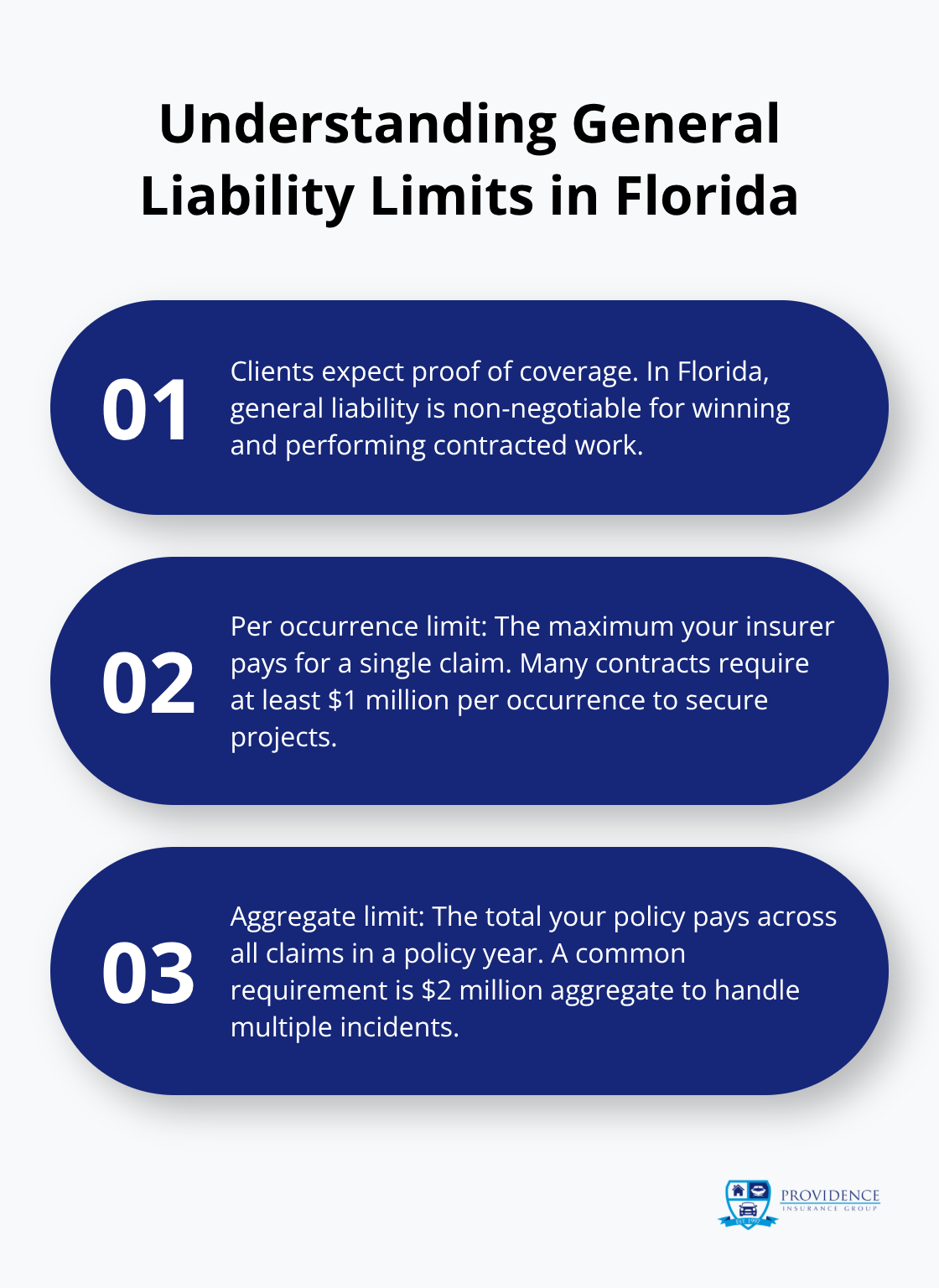
General liability insurance protects your business when a third party claims you caused them bodily injury or property damage. Unlike workers compensation, which covers your employees, general liability covers injuries or damage to clients, property owners, or bystanders. In Florida, this coverage is non-negotiable. Most clients won’t award you a contract without proof of coverage, and many require you to carry at least $1 million per occurrence and $2 million aggregate. The difference between these limits matters: per occurrence is the maximum paid for a single claim, while aggregate is the total your policy pays across all claims in a year.
Why Aggregate Limits Matter on Multiple Job Sites
If you manage multiple job sites simultaneously, the aggregate limit can disappear quickly. A client trips over your equipment at their home and sues for $500,000 in medical bills and pain and suffering-that claim burns through half your aggregate on a $1 million aggregate policy. Without adequate aggregate limits, you’ll have zero coverage for subsequent claims that year. Florida’s construction environment makes this real. Hurricanes, aging infrastructure, and high property values mean claims tend to be expensive, and juries award larger damages than in other states.
Three Main Coverage Categories
General liability covers three main categories: bodily injury (medical costs and lost wages when someone gets hurt), property damage (repairs to a client’s home or belongings you damaged), and personal injury (defamation or advertising injury claims). The policy also pays for legal defense, which is critical because even frivolous lawsuits cost thousands to defend. Many contractors don’t realize that coverage includes defense costs outside the policy limits, meaning your insurer covers attorney fees and court costs separately from the claim payout.
Real-World Claim Scenarios
A roofing contractor accidentally damages a client’s air conditioning unit during a repair and faces a property damage claim. If the unit costs $8,000 to replace, that’s a straightforward claim. But if the client claims the damaged unit caused mold growth and demands $50,000 in remediation, your coverage limits and deductible determine whether you’re protected or paying out of pocket. This is why higher limits are worth the extra premium in Florida. Roofing contractors, electricians, and plumbers typically pay more because their work creates higher exposure, but that cost is far cheaper than a single uninsured claim.
Affordability and Risk Protection
General liability for Florida contractors averages around $104 per month according to Insureon data, a manageable cost compared to the financial devastation of a $100,000 claim with no coverage. The next section covers commercial property and equipment coverage, which protects the tools, machinery, and materials that keep your jobs running.
Commercial Property and Equipment Coverage
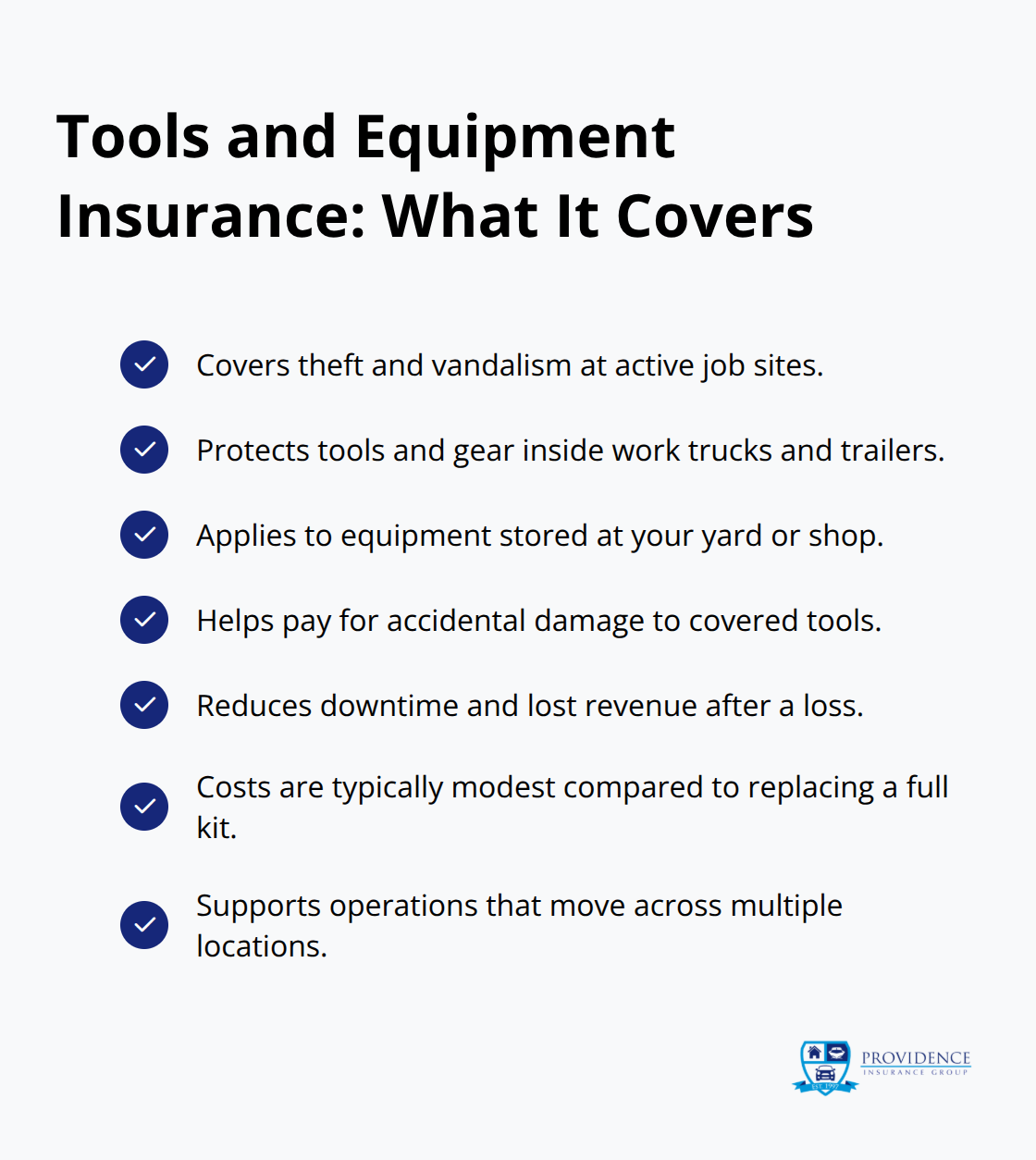
Your tools and equipment form the backbone of your contracting business, yet most Florida contractors overlook coverage gaps that leave them vulnerable. General liability and workers compensation won’t replace a stolen generator, a truck damaged at a job site, or materials destroyed by weather. Tools and equipment insurance fills this gap by covering hand tools, power tools, and larger equipment like scissor lifts or compressors if theft, vandalism, or damage strikes at the job site. For a contractor with $15,000 in tools, a single theft can halt operations for weeks while you replace equipment and lose revenue from delayed projects. The cost of tools and equipment coverage stays minimal compared to the financial impact of replacing an entire kit. Most policies cover equipment at job sites, in your truck, or stored at a yard, which matters because tools disappear at multiple locations throughout your work year.
Job Site Materials and Weather Exposure
Job site materials present a different risk altogether. Lumber, drywall, electrical wire, and other materials sitting at a project face damage from weather, theft, or vandalism before installation. Builders risk insurance covers materials and structures under construction against fire, theft, vandalism, and certain weather events, which is essential if you handle renovation projects or new builds where materials accumulate over weeks. For a remodeling job with $25,000 in materials staged on site, a single theft or hurricane damage event without coverage means you absorb the loss and likely absorb the cost to the client as well. Florida’s hurricane exposure makes this coverage especially practical because storms damage or destroy materials faster than contractors can install them.
Commercial Vehicle Coverage Requirements
Commercial vehicles used for contracting require separate auto insurance because personal auto policies explicitly exclude business use. Florida requires Personal Injury Protection (PIP) and Property Damage Liability (PDL) before you register a vehicle, but most contractors need higher limits because a work truck accident involving client property or a third party can easily exceed state minimums. If your team drives employee-owned vehicles for work, hired and non-owned auto coverage protects you when those vehicles are involved in job-related accidents.
Building a Coordinated Coverage Strategy
A comprehensive contractor insurance strategy bundles general liability, workers compensation, tools and equipment coverage, builders risk for materials, and commercial auto into one coordinated plan rather than treating each as separate purchases. This approach reduces gaps where claims fall through the cracks and often qualifies you for multi-policy discounts that lower your overall premium. An independent agent who understands Florida contractor operations can review your current equipment, projects, and vehicle usage to identify exactly what you need.
Final Thoughts
Small contractor Florida insurance protects your business when accidents happen, and the cost of proper coverage stays far lower than the financial impact of an uninsured claim. A serious injury, property damage lawsuit, or equipment theft without coverage forces you to pay thousands or tens of thousands out of pocket, delays projects, and damages your reputation with clients. Florida’s construction environment sharpens this reality because hurricane exposure, high property values, and aggressive litigation drive claim severity higher than in most states.
Bundling policies typically reduces your overall premium, so combining general liability, workers compensation, and commercial auto under one agent qualifies you for multi-policy discounts that lower your total cost. Maintaining a clean claims history also reduces premiums over time, which means safe practices on the job site pay dividends in lower insurance costs. An independent agent reviews your current coverage, identifies gaps, and compares rates across multiple carriers to find the best combination of protection and affordability for your specific trade and operation size.
We at Providence Insurance Group specialize in helping Florida contractors build the right coverage strategy for their operations. Contact us today to review your current small contractor Florida insurance and confirm you have the right protection in place.
Disclaimer: The information provided in this blog is for general informational purposes only and does not constitute legal, financial, or insurance advice. Coverage options, terms, and availability may vary. Please consult with a licensed professional for advice specific to your situation