

Hiring independent contractors can expose your business to serious liability risks in Florida. If a contractor gets injured on the job or causes damage to a client’s property, your business could face expensive lawsuits and settlements.
At Providence Insurance Group, we’ve seen too many business owners caught off guard by independent contractor liability in Florida because they assumed their standard business policy would cover these situations. It won’t. That’s why understanding your coverage options now can save your bottom line later.
Understanding Independent Contractor Liability in Florida
How Florida Defines Contractor Liability
In Florida, independent contractor liability refers to the legal responsibility your business holds when a contractor you hire causes injury, property damage, or other losses. Florida courts treat independent contractors differently than employees, which creates a specific liability exposure that most business owners underestimate. The state follows what’s known as the ABC test to determine worker classification-a worker is presumed to be an employee unless the hiring business proves the worker is free from control, performs work outside the usual business operations, and operates an independently established trade. This distinction matters enormously because it directly affects which insurance policies protect you. If Florida’s Department of Revenue or a court determines a worker should have been classified as an employee rather than a contractor, your business faces back taxes, penalties, and uninsured liability claims that can devastate cash flow.
Where Contractor Liability Problems Occur
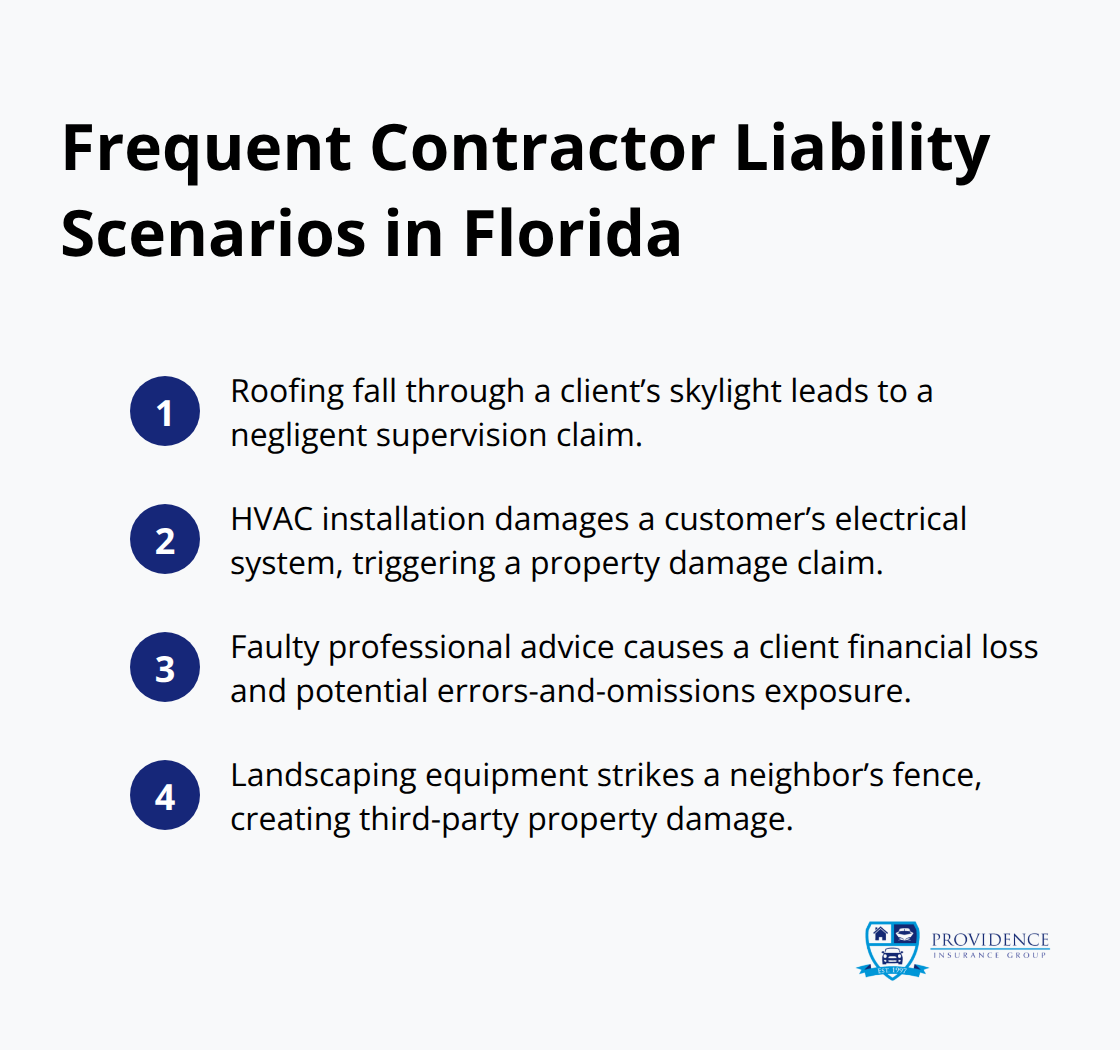
Contractor liability problems emerge in predictable ways across Florida industries. A roofing contractor falls through a client’s skylight and sues your business for negligent supervision. An HVAC contractor damages a customer’s electrical system during installation, creating a property damage claim. A freelance consultant gives faulty advice that costs a client thousands in lost revenue. A landscaper’s equipment strikes a neighbor’s fence. These scenarios happen regularly because contractors work on client property, interact with the public, and operate with less direct oversight than employees.
Why Your Standard Policy Leaves You Exposed
Your standard commercial general liability policy specifically excludes coverage for contractors you hire, which is why business owners who think their existing policy protects them face catastrophic gaps. Insurance carriers view contractor-related claims as fundamentally different from your own business operations because you don’t control how contractors perform their work, the methods they use, or the safety standards they follow. This lack of control is exactly why insurers exclude them from standard policies and why you need specialized coverage specifically designed for contractor liability.
Understanding these gaps in your current coverage is the first step toward protecting your business. The types of coverage available to address contractor liability vary significantly depending on your industry and the specific risks contractors create for your operation.
Types of Coverage Independent Contractors Need
General Liability Insurance for Contractors
General liability insurance designed specifically for contractors operates differently than standard coverage because it accounts for the unique exposures contractors create. This type of policy covers bodily injury and property damage claims that arise from contractor work, including injuries sustained by the contractor themselves or damage they cause to client property. Most general liability policies for contractors in Florida include completed operations coverage, which protects you for up to two years after a project finishes-important because many property damage claims surface weeks or months later when hidden defects emerge.
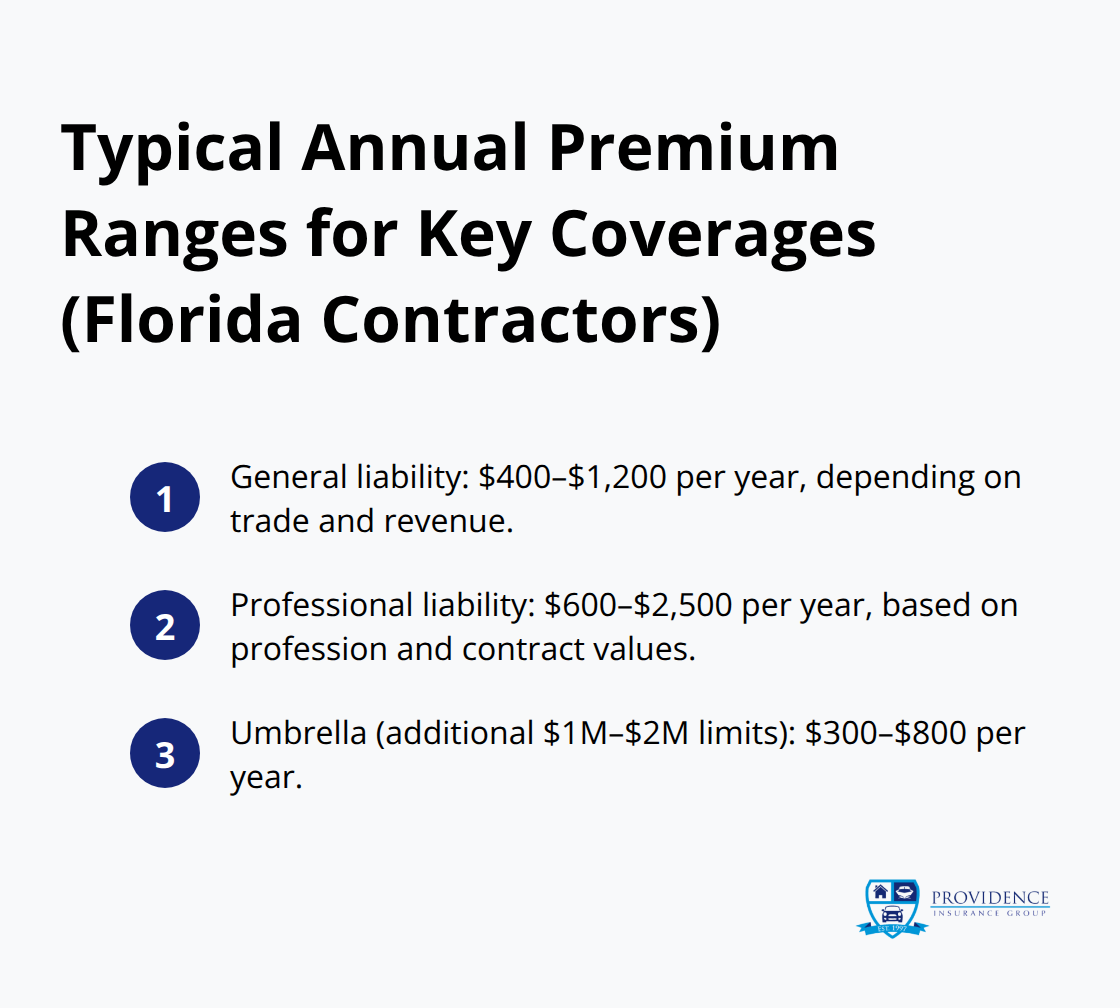
Contractors working in construction, roofing, plumbing, and HVAC need this coverage as a baseline. Costs typically range from $400 to $1,200 annually depending on the contractor’s trade and revenue.
Professional Liability Insurance
Professional liability insurance addresses a completely different exposure that general liability misses: claims arising from negligent advice, errors, or omissions in professional services. If you hire a consultant, engineer, accountant, or designer whose mistake costs a client money, general liability won’t cover it because the loss stems from poor judgment rather than physical injury or property damage.
This coverage becomes non-negotiable if contractors provide recommendations that influence client decisions. Premiums generally run between $600 and $2,500 per year based on the profession and contract values involved.
Workers Compensation and Additional Protections
Workers compensation insurance creates confusion for many business owners because Florida law treats independent contractors as a gray area. While independent contractors technically don’t require workers compensation under Florida statute, the state’s ABC test can reclassify them as employees, leaving you liable for unpaid workers compensation premiums plus penalties if a claim occurs.
You should carry workers compensation coverage for all contractors, or alternatively, verify that each contractor maintains their own policy with proof of current coverage before work starts. Requesting certificates of insurance from contractors costs nothing and protects you from catastrophic gaps. A contractor injured on your client’s property without their own coverage could name your business in a lawsuit, making their medical bills and lost wages your financial responsibility.
Umbrella coverage adds a second layer of defense and typically costs $300 to $800 annually for one to two million dollars in additional limits. This protection shields your business when contractor-related claims exceed your underlying policy limits, which is why identifying the right coverage combination matters so much before you hire your first contractor.
How to Protect Your Business from Contractor-Related Claims
Establish Clear Contracts and Agreements
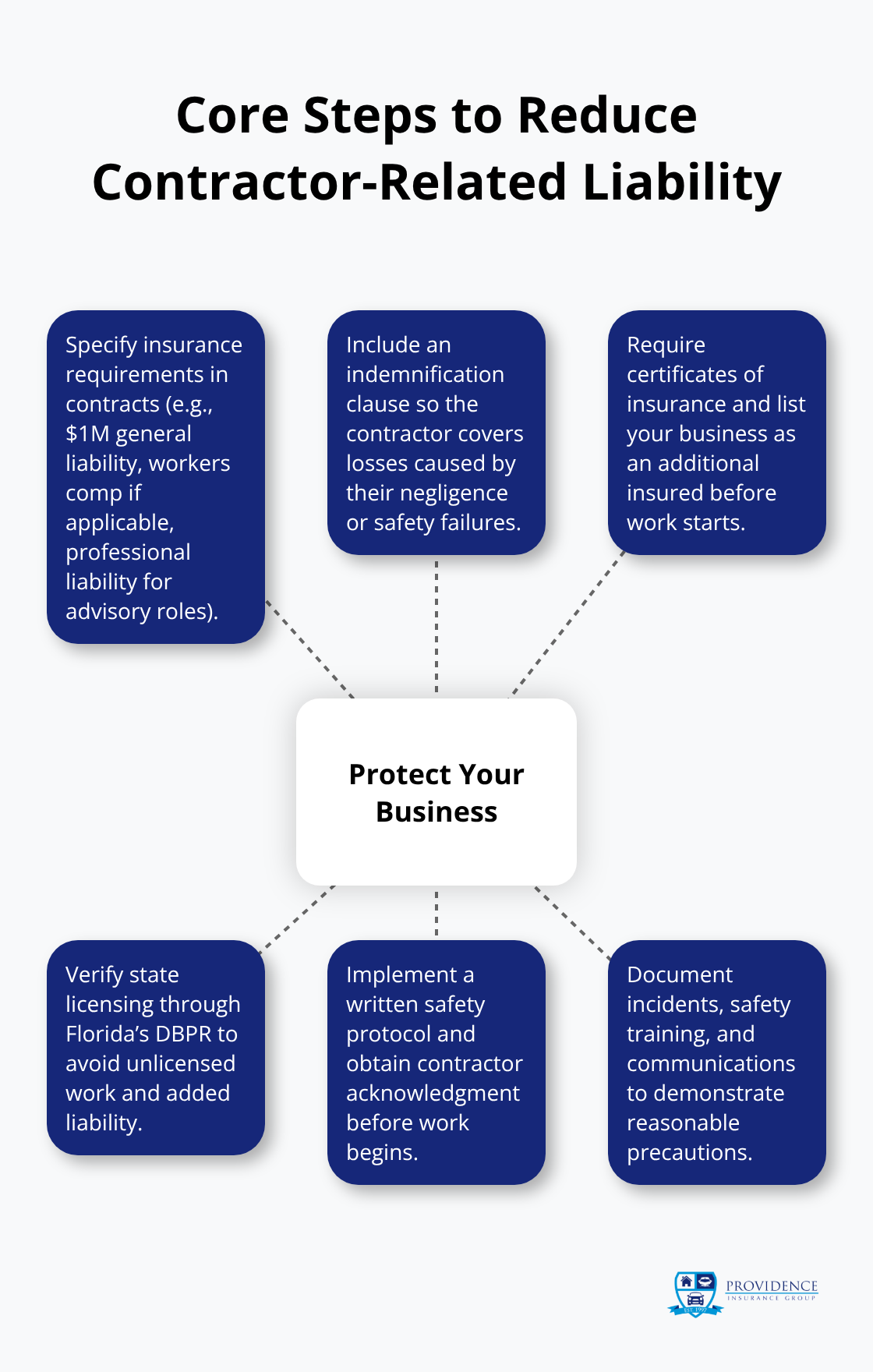
Your contracts with contractors must specify who carries liability insurance, what coverage limits apply, and what happens if someone gets injured. A vague agreement stating that contractors are responsible for their own insurance creates endless disputes when claims arise. Instead, your contract should name specific coverage requirements: general liability with minimum limits of $1 million, workers compensation if applicable in your situation, and professional liability if the contractor provides advice or recommendations.
The contract must also include an indemnification clause requiring the contractor to cover losses caused by their negligence or failure to follow safety procedures. Florida courts enforce these clauses regularly, which means a well-drafted agreement becomes your strongest defense when contractor-related problems surface. Many business owners skip this step because they assume verbal agreements are sufficient, but insurance carriers will deny claims if your contract doesn’t clearly establish contractor responsibility.
Verify Insurance and Licensing Requirements
Before any contractor starts work on a client’s property, you need current proof of insurance in hand. Request a certificate of insurance showing the contractor’s general liability policy, coverage limits, and expiration date, then verify the certificate lists your business as an additional insured. This takes fifteen minutes but prevents catastrophic exposure.
Florida contractors must maintain active licenses in their respective trades, so verify licensing status through the Florida Department of Business and Professional Regulation website before hiring. A contractor without a valid license exposes you to additional liability because unlicensed work violates state law and creates enforcement problems if disputes emerge. You should also confirm that the contractor’s insurance policy hasn’t lapsed by checking the expiration date on every certificate you receive-insurance lapses happen constantly when contractors forget to renew, leaving your business exposed the moment work begins.
Implement Safety Protocols and Training
Establish a safety protocol specific to your client’s property and require contractors to acknowledge these requirements in writing before work starts. This protocol should cover equipment storage, site access restrictions, communication procedures for incidents, and emergency contact information. When a contractor injures themselves or damages property because they ignored your safety requirements, documentation of that protocol strengthens your defense against liability claims.
Final Thoughts
Independent contractor liability in Florida demands attention before problems arise, not after. Start by auditing your current contractor relationships and reviewing existing contracts to confirm they specify insurance requirements and include indemnification clauses. Request certificates of insurance from every active contractor, verify coverage limits meet your needs, and check licensing status through Florida’s regulatory database-these steps take a few hours but eliminate the most common gaps that lead to expensive claims.
Establish your safety protocols in writing and require contractor acknowledgment before work starts. Document everything: incident reports, safety training records, and contractor communications about requirements (this documentation becomes invaluable if disputes arise because it demonstrates your business took reasonable precautions to prevent losses). An independent insurance agent who understands independent contractor liability in Florida specifically can help you navigate these exact exposures and customize coverage that actually protects your bottom line.
Contact Providence Insurance Group today to review your contractor liability exposure and find the right combination of coverage for your situation. A conversation now prevents costly surprises later.
Disclaimer: The information provided in this blog is for general informational purposes only and does not constitute legal, financial, or insurance advice. Coverage options, terms, and availability may vary. Please consult with a licensed professional for advice specific to your situation