

Florida businesses face rising insurance costs and complex coverage decisions. When you compare insurance quotes from multiple carriers, you uncover real savings and spot gaps that could leave your business exposed.
At Providence Insurance Group, we’ve seen too many business owners settle for the first quote they receive-a costly mistake. Getting quotes side-by-side reveals the true differences in price, coverage, and value that matter for your operation.
Why Florida Businesses Need Multiple Quotes
Florida’s Insurance Market Works Differently
Florida’s business insurance market operates differently than most states. Hurricane risk, coastal property exposure, and specific liability requirements mean your coverage needs are distinct. A quote that works for a business in Ohio won’t address what your Florida operation actually faces.
Insurance carriers price risk differently based on location, business type, and local claims history. When you request quotes from multiple carriers, you see how each one evaluates your specific situation. Some carriers specialize in hurricane-prone areas and offer better rates for coastal businesses, while others focus on inland operations or particular industries.
Coverage Gaps Hide in Single Quotes
A quote from one carrier might exclude flood coverage entirely, while another includes it as standard. Without comparing, you’d never know which carrier understands your market. One carrier might offer lower premises liability limits than your actual exposure requires. Another might exclude equipment breakdown, which could devastate a manufacturing operation. These gaps only surface when you place quotes side-by-side.
Why First Quotes Rarely Represent Your Best Rate
Accepting the first quote you receive is financially dangerous. Most business owners don’t realize that initial quotes rarely reflect your lowest available rate or best coverage options. Carriers structure their first offers to test your price sensitivity, not to give you their competitive best.
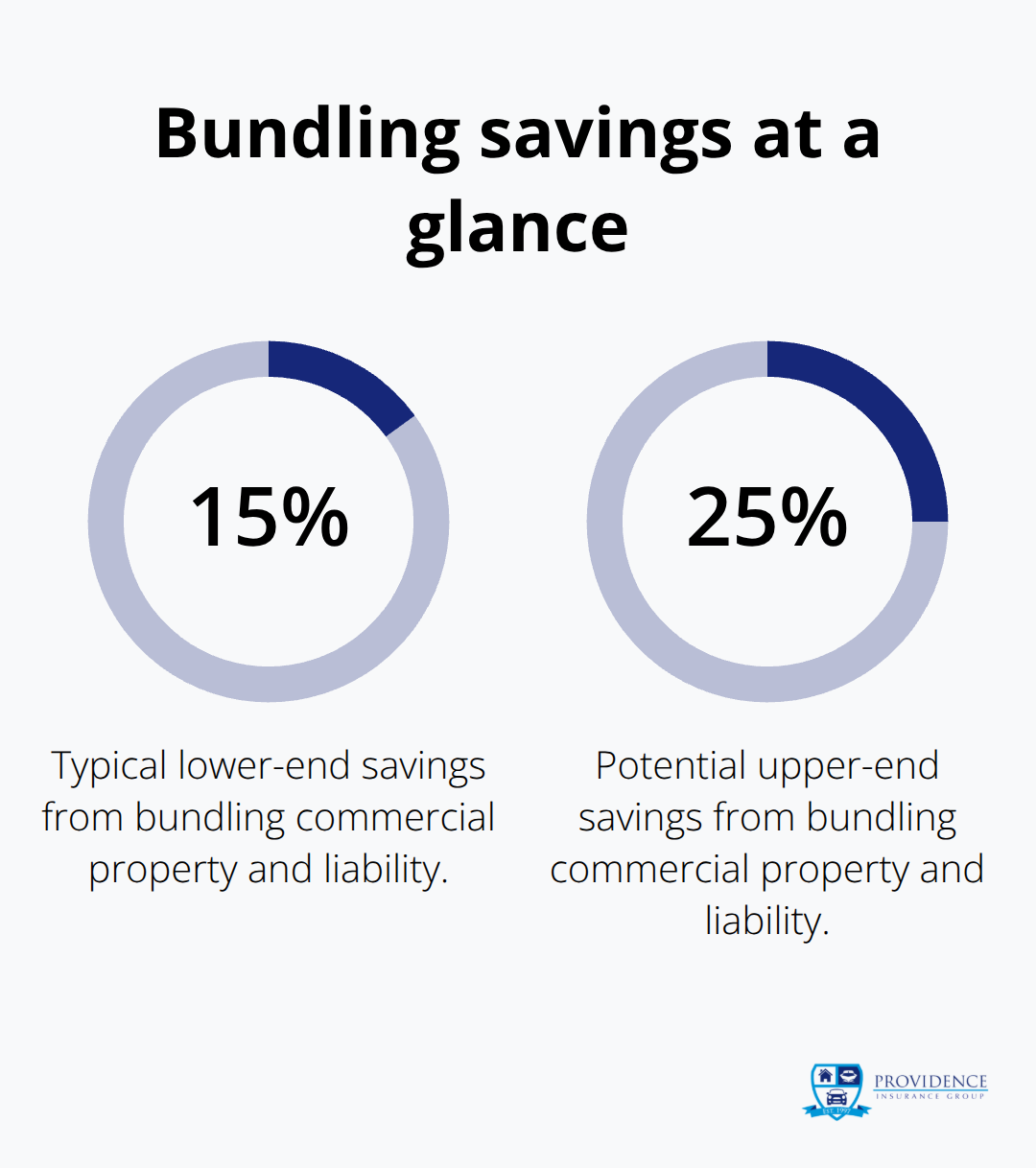
Discount stacking is where real savings happen, and you only spot these opportunities through comparison. You might qualify for safety equipment discounts, claims-free discounts, bundling discounts, or industry-specific discounts that individual carriers won’t volunteer. A business that bundles commercial property and liability coverage typically saves 15 to 25 percent compared to purchasing policies separately.
Payment Options and Deductible Structures Matter
Payment options create hidden costs that compound throughout the year. One carrier offers monthly payments with no fee, while another charges three percent for that convenience. Over twelve months, this difference adds up to meaningful expense variations.
Deductible levels also shift between carriers. Your cash flow situation might not support a $5,000 deductible, even if it lowers your premium. A business without adequate commercial general liability coverage faces personal asset exposure if a customer is injured on your property. Without comparing quotes, you won’t know if your deductibles are too high for your cash flow or if your coverage limits match your actual revenue.
Moving Forward with Multiple Quotes
The hidden cost of skipping comparisons isn’t just overpaying your premium-it’s operating with coverage gaps that could damage your business after a claim. Getting accurate quotes from multiple carriers requires preparation and the right questions.
Getting Accurate Quotes from Multiple Carriers
Information You Need to Gather Before Requesting Quotes
Requesting quotes without preparation wastes everyone’s time and produces incomplete comparisons. You need specific business information organized before contacting carriers. Start with your business structure: Are you a sole proprietor, LLC, S-corp, or C-corp? This classification affects liability exposure and coverage requirements. Document your annual revenue, number of employees, and payroll amount. Carriers use these figures to calculate exposure and premium rates.
List every location where your business operates, including home-based offices or satellite locations. Florida carriers specifically need to know if any operations occur in coastal areas or flood zones, as this dramatically impacts pricing. Gather your current insurance policies if you have them, including policy numbers, coverage limits, deductibles, and expiration dates. This historical information helps carriers understand what you currently carry and identify gaps.
Questions That Separate Real Quotes from Generic Ones
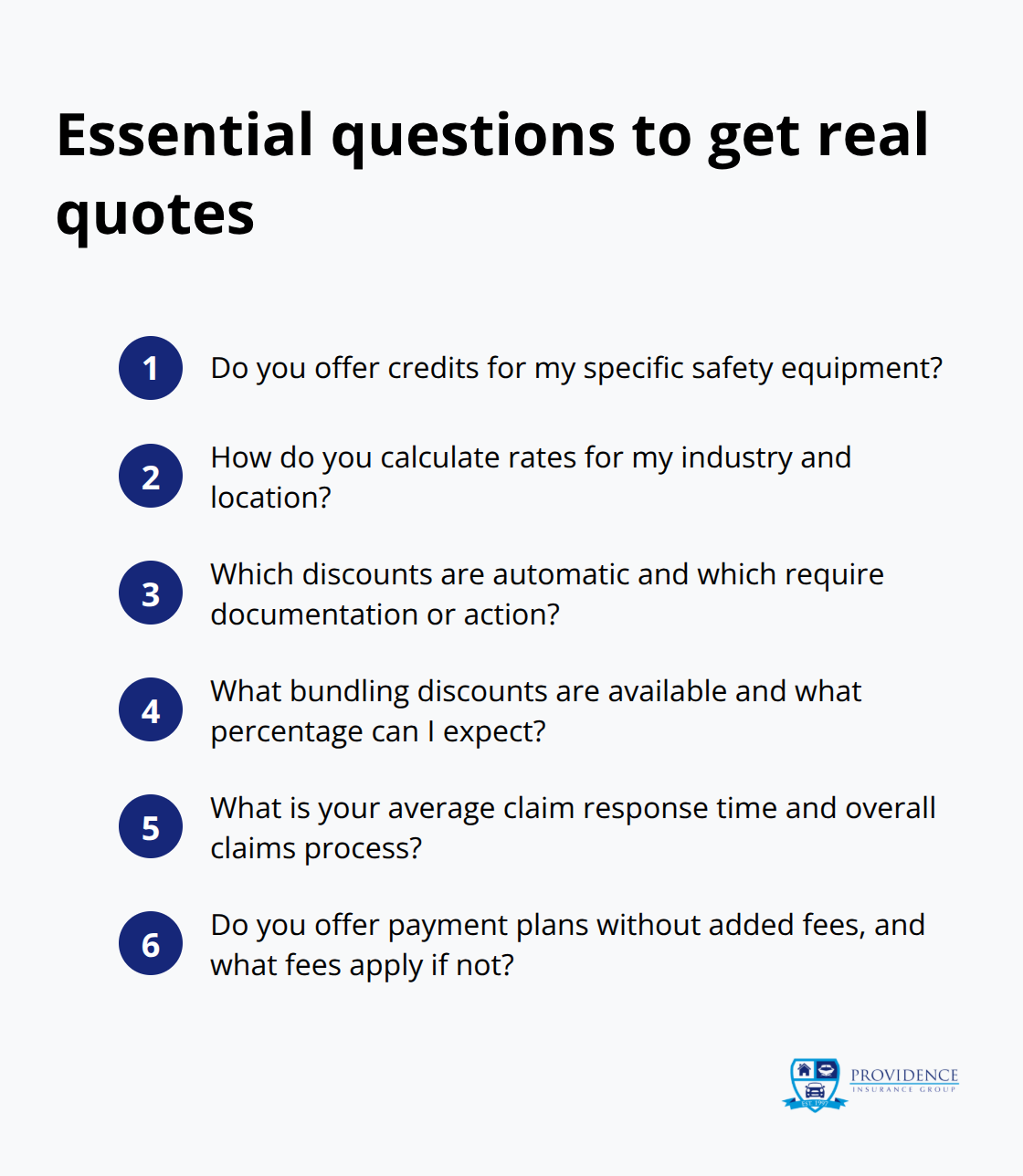
Don’t ask carriers generic questions. Ask specific ones that reveal how they evaluate your operation. Ask whether they offer credits for specific safety equipment your business uses, such as fire suppression systems, security cameras, or alarm monitoring. Ask each carrier how they calculate rates for your specific industry and location. A restaurant in Tampa faces different risk assessment than one in rural North Florida. Ask what discounts you automatically qualify for versus which ones require documentation or action on your part. Ask whether they offer bundling discounts if you combine multiple policies, and what percentage savings you can expect. Ask about their claims process and average claim response time. A carrier with a 48-hour response time differs significantly from one taking two weeks. Ask if they offer payment plans without additional fees or what fees apply for monthly billing.
Decoding What Each Quote Actually Covers
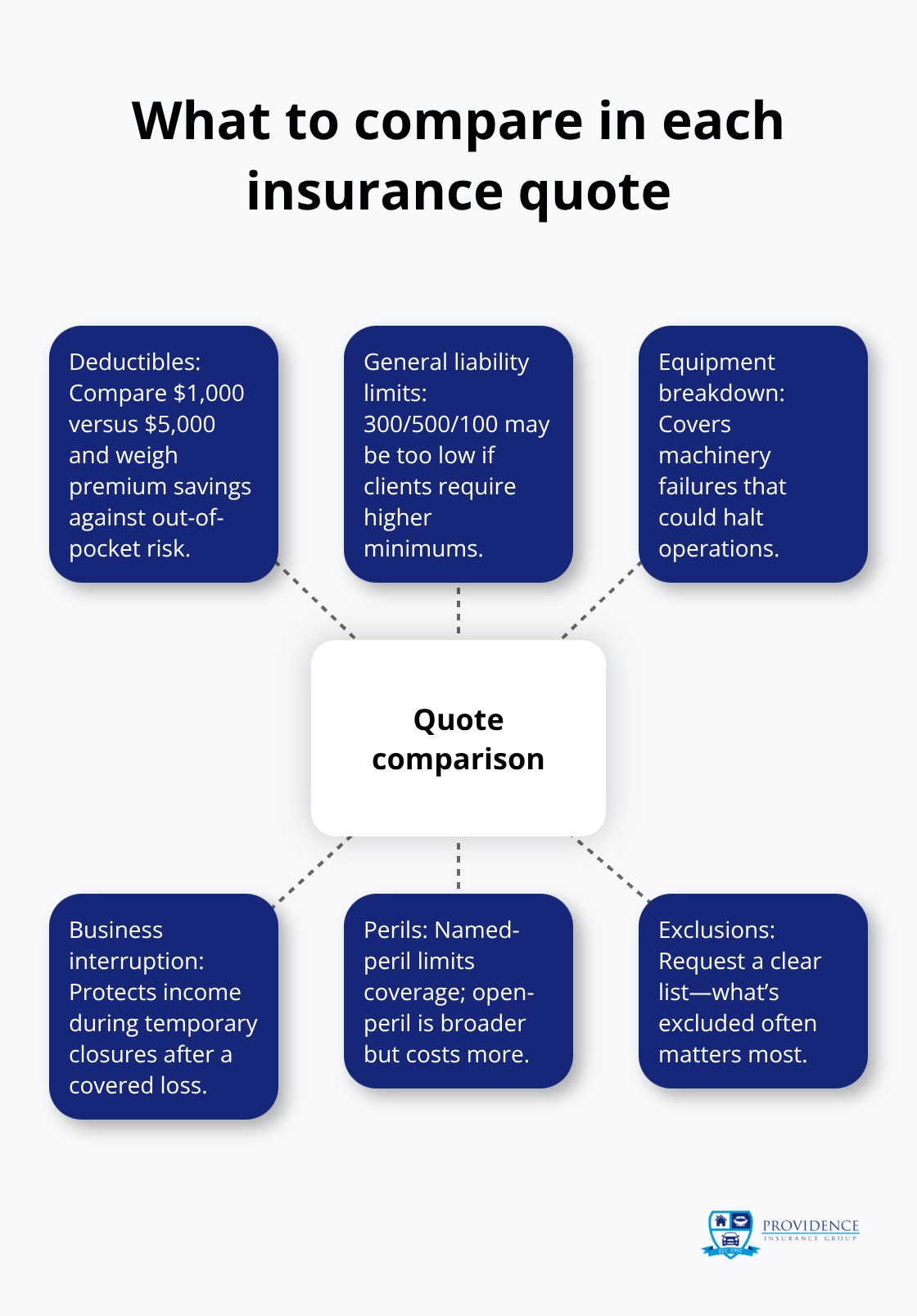
Quotes contain confusing language that hides critical differences. Coverage A represents your building replacement cost, while Coverage B covers other structures on your property. These amounts must match your actual property values, not what you hope they’re worth. Carriers often quote different deductibles, and a $1,000 deductible versus a $5,000 deductible creates substantial annual savings but increases your out-of-pocket exposure after a loss.
General liability limits typically show as 300/500/100, meaning $300,000 per occurrence, $500,000 aggregate, and $100,000 property damage. Your actual business exposure might require higher limits, especially if you work with larger clients who demand specific coverage minimums. Check whether quotes include equipment breakdown coverage, which covers your machinery and equipment when mechanical failure occurs. A manufacturing business without this coverage faces thousands in losses from a single equipment failure.
Verify whether the quote includes business interruption coverage, protecting your income if a covered loss forces you to close temporarily. Compare the list of covered perils across quotes. Some carriers use named-peril policies, covering only specific risks listed in the policy. Others use open-peril policies, covering everything except what’s specifically excluded. Open-peril policies cost more but provide broader protection. Request that each carrier specify what’s excluded from their quote, as these gaps matter more than what they do cover.
Once you’ve collected quotes and understand what each one covers, the real work begins: placing them side-by-side to spot the differences that impact your bottom line and your protection.
Evaluating Quotes Side-By-Side
Create a Spreadsheet to Track Every Quote
A spreadsheet forces you to see what carriers actually offer instead of relying on memory or gut feelings. Set up columns for each carrier’s name, annual premium, monthly payment cost with fees included, deductible amounts for property and liability, coverage limits for building and contents, general liability limits, and any exclusions they list. This visual comparison reveals patterns immediately. You might notice that Carrier A quotes $2,400 annually with a $500 deductible while Carrier B quotes $2,100 with a $2,500 deductible. That $300 annual savings disappears if you need to file a claim and face a $2,000 higher out-of-pocket cost. The real decision depends on your cash flow and claims history, not just the premium number.
Match Deductibles to Your Cash Flow
Deductible selection matters more than most business owners realize. If your business has $3,000 in emergency reserves, a $5,000 deductible creates financial stress you don’t need. A $1,000 deductible costs more monthly but protects your cash flow when something goes wrong.
Coverage limits deserve the same scrutiny as premiums. A quote showing $300,000 general liability coverage means you’re personally liable for anything exceeding that amount. If your business generates $2 million in annual revenue and you work with corporate clients, that $300,000 limit is dangerously low. Many construction companies and contractors face client demands for $1 million or $2 million in general liability limits as contract requirements.
Spot Discount Opportunities Across Carriers
Discounts hide throughout quotes, and most carriers won’t highlight savings you don’t specifically ask about. Ask each carrier what discount percentage applies to your specific bundle. Some carriers offer 10 percent for bundling while others offer 25 percent, creating thousands in annual differences.
Safety equipment discounts apply if your business maintains fire suppression systems, security cameras, alarm monitoring, or sprinkler systems. A manufacturing facility with automated sprinklers might qualify for a 5 to 15 percent discount that another facility without those systems won’t receive. Claims-free discounts reward businesses with clean loss histories, typically ranging from 5 to 10 percent annually. A business that hasn’t filed a claim in five years should ask whether each carrier offers multi-year discount stacking.
Evaluate Payment Options and Hidden Fees
Payment options create hidden costs that most business owners overlook. One carrier might offer monthly payments with no additional fee, while another charges 3 percent for monthly billing. That 3 percent on a $2,400 annual premium adds $72 yearly. Over five years, you’ve paid an extra $360 for the convenience of monthly payments.
Ask each carrier whether they offer annual payment discounts for paying the full premium upfront. Many carriers offer 3 to 5 percent discounts for annual prepayment, effectively reversing the monthly payment fee and saving you money.
Identify Red Flags in Quote Comparisons
Red flags appear when quotes seem too low or when carriers exclude standard coverage without explanation. A quote significantly lower than others might indicate the carrier is using different coverage definitions or lower limits than competitors. Before celebrating the savings, verify that coverage limits and deductibles match across all quotes. If they don’t, you’re comparing apples to oranges.
Another red flag appears when a carrier can’t clearly explain their underwriting decisions. If you ask why their premium is higher and receive vague answers about risk assessment, that carrier might be applying outdated information or making assumptions about your business. The best carriers can specifically articulate why they price your operation the way they do.
Exclusions matter more than inclusions. A carrier might offer a lower premium but exclude equipment breakdown, business interruption, or water damage. These exclusions might not matter for your business, or they might represent the exact coverage you need most. Ask each carrier to list what’s excluded rather than what’s included. This reverses the conversation and forces transparency. A restaurant might discover that one carrier excludes spoilage coverage while another includes it as standard.
That exclusion could cost thousands after a refrigeration failure.
Final Thoughts
Comparing insurance quotes in Florida requires more than spreadsheets and premium numbers. You need someone who understands your specific business, your local market, and how different carriers evaluate risk in your region. Independent agents make the real difference because we work with many of Florida’s top carriers and can compare rates, coverages, and payment options side by side for your operation.
At Providence Insurance Group, we represent your interests, not one carrier’s agenda. When you compare insurance quotes Florida through our team, we handle the information gathering, ask the right questions, and decode what each quote actually means for your business. We take time to understand your operation, your cash flow situation, and your actual exposure so we identify which discounts apply to your circumstances and which coverage gaps matter most.
Contact Providence Insurance Group to start comparing quotes today. We’ll handle the complexity so you can focus on running your business, and when a claim happens, you’ll have an agent who knows your policy inside and out.
Disclaimer: The information provided in this blog is for general informational purposes only and does not constitute legal, financial, or insurance advice. Coverage options, terms, and availability may vary. Please consult with a licensed professional for advice specific to your situation