

Running a contracting business in Florida means managing multiple risks, and workers’ compensation is one you can’t ignore. Without proper coverage, you face serious fines, license suspension, and legal liability that could shut down your operation.
At Providence Insurance Group, we help contractors understand what Florida contractor workers’ comp actually covers and why it’s essential for protecting both your employees and your bottom line. This guide walks you through the legal requirements, coverage options, and how to find a policy that fits your specific business needs.
What Florida Contractor Workers’ Comp Actually Covers
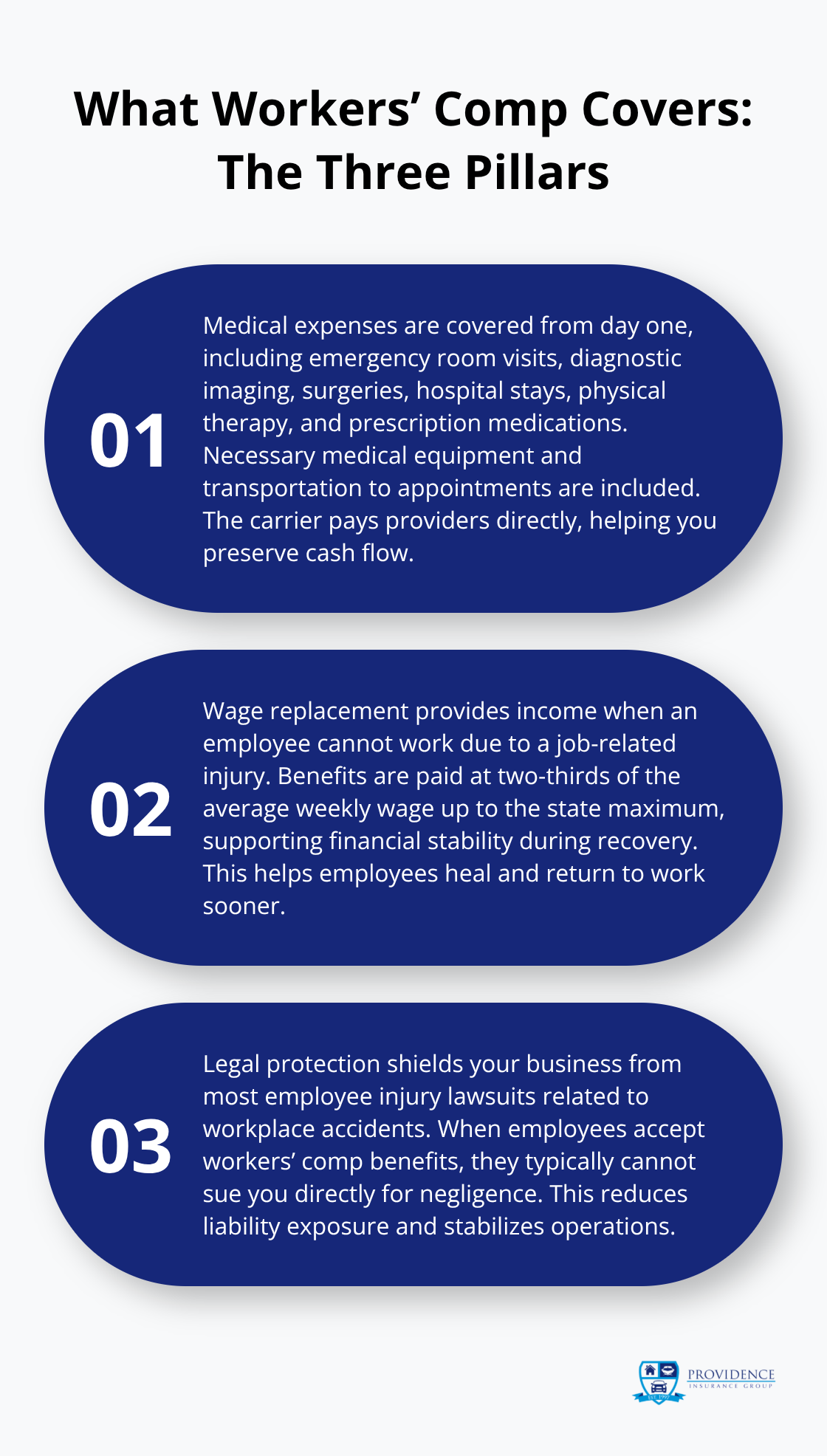
Florida’s workers’ compensation system protects your employees when they suffer job-related injuries, and it protects you from costly lawsuits. The coverage includes three main components that directly impact your business operations. Medical expenses cover everything from emergency room visits to ongoing physical therapy, surgeries, and prescription medications. Wage replacement benefits activate when an employee cannot work due to a work-related injury. Florida law mandates that workers receive two-thirds of their average weekly wage, up to a state maximum, during their recovery period. This matters because it keeps your injured workers financially stable while they heal, which typically results in better recovery outcomes and faster return-to-work timelines.
Medical Coverage That Protects Your Bottom Line
The medical component of Florida workers’ comp is comprehensive, but many contractors overlook what’s included. Your policy covers initial medical exams, diagnostic testing like X-rays and MRIs, surgical procedures, hospital stays, and ongoing treatment for work-related injuries. Prescription medications and medical equipment needed for recovery are covered, along with transportation costs to medical appointments. Here’s what makes this important for your business: you don’t pay these bills out of pocket. The insurance carrier handles the costs directly, which means a serious injury won’t drain your operating budget. With proper coverage, those costs transfer to your insurance carrier, and you maintain your cash flow.
Wage Replacement and Disability Benefits Stabilize Operations
When an employee is injured and cannot work, Florida workers’ comp replaces a portion of their lost wages. This benefit typically runs from the date the injury occurred until the employee returns to work or reaches maximum medical improvement. The replacement rate is two-thirds of the employee’s average weekly wage, capped at Florida’s current maximum weekly benefit amount. If an injury results in permanent disability, your employee receives additional compensation based on the body part affected and the degree of disability. This system protects your employees from financial hardship while also protecting your business from liability claims, since accepting workers’ comp benefits typically prevents employees from suing you directly for negligence.
Why These Benefits Matter for Your Contracting Business
Understanding what workers’ comp covers helps you make informed decisions about your coverage levels. The medical and wage replacement components work together to create a safety net that protects both your workforce and your financial stability. When injuries happen (and in contracting, they do), you need coverage that responds quickly and comprehensively. The next section explains the legal requirements that make this coverage mandatory in Florida, along with the penalties you face if you operate without it.
Legal Requirements and Penalties for Non-Compliance
Florida requires contractors to carry workers’ compensation insurance if they have one or more employees. The state doesn’t care if your employee works full-time, part-time, or seasonal-if you’re paying someone to work on your projects, you need coverage. The only exception is sole proprietors with no employees, though many contractors still purchase coverage for themselves for added protection.
Mandatory Coverage Thresholds in Florida
Florida Statute 440.10 mandates workers’ compensation coverage for all contractors with employees. The law applies regardless of how many hours your workers log or whether they work year-round or seasonally. If you pay someone to perform work, you must carry coverage. The Florida Department of Financial Services actively investigates complaints and conducts audits, particularly in high-risk industries like construction and roofing. This enforcement means violations don’t go unnoticed for long.
Fines and Legal Consequences for Operating Without Coverage
Operating without workers’ compensation insurance triggers immediate financial penalties. The state imposes fines starting at 500 dollars per day of non-compliance. For ongoing violations, fines escalate quickly-the state can impose penalties up to 10,000 dollars or more depending on the severity and duration of non-compliance. These penalties accumulate fast, and contractors often find themselves unable to pay them.
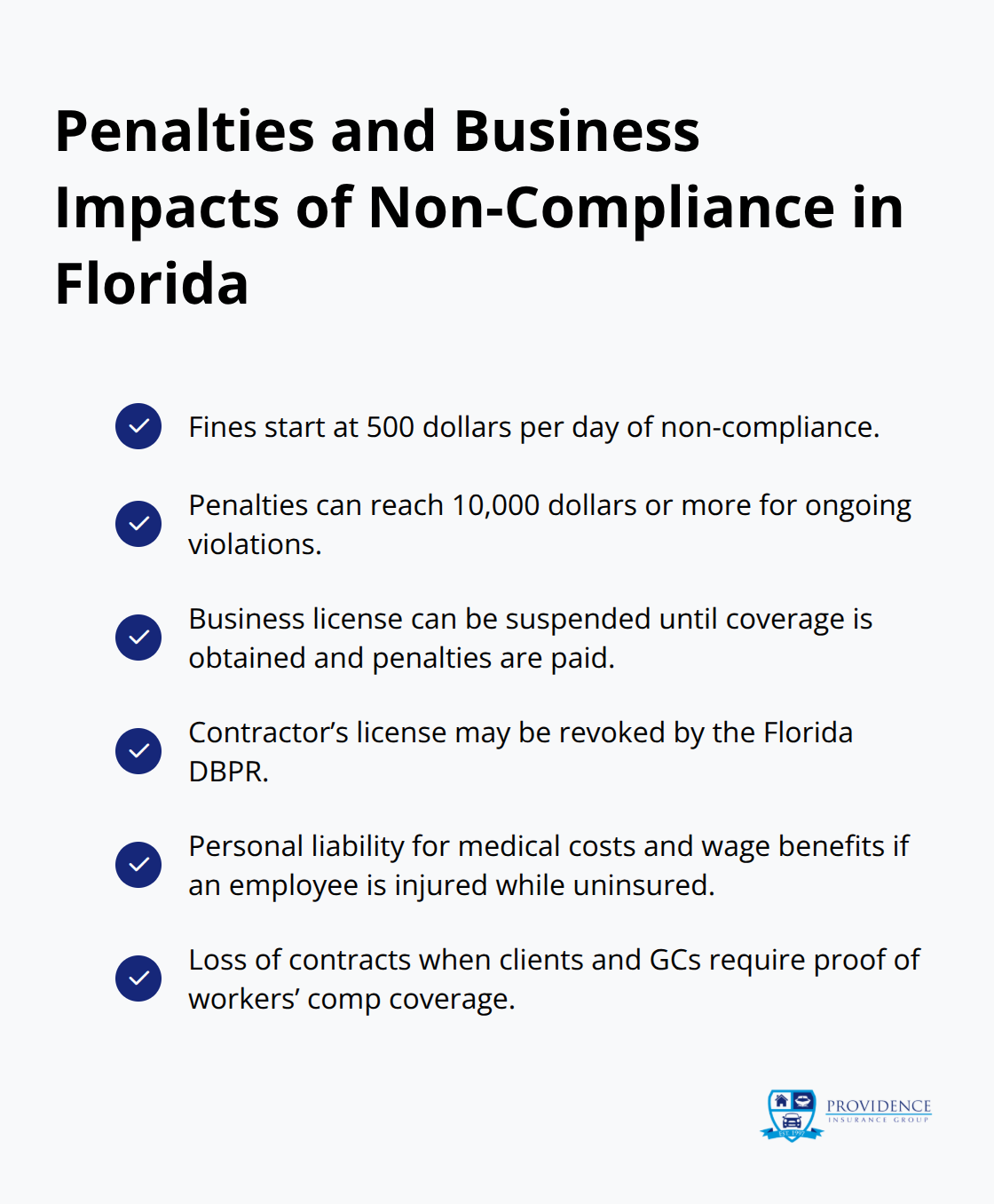
Beyond state fines, personal liability becomes your biggest exposure. If an employee is injured while you’re uninsured, you become personally liable for all medical costs, wage replacement, and potential punitive damages. The injured worker can sue you directly, and you have no insurance carrier to defend you or cover those expenses. This personal liability exposure makes operating without coverage financially reckless for any contractor serious about protecting their business.
Impact on Business Licenses and Contracts
The state can suspend your business license entirely, which means you cannot legally operate until you obtain coverage and pay all outstanding penalties. Your contractors license through the Florida Department of Business and Professional Regulation can also face revocation, making it nearly impossible to bid on projects or secure contracts. Many commercial clients and general contractors won’t hire a subcontractor without proof of workers’ compensation insurance, so operating without it cuts off significant revenue opportunities. These restrictions eliminate your ability to work legally and competitively in the market.
Understanding these requirements and penalties shows why proper coverage isn’t optional-it’s the foundation of a sustainable contracting business. The next section walks you through how to select the right policy for your specific operation and risk profile.
How to Choose the Right Workers’ Comp Policy for Contractors
Assess Your Specific Business Risks
Choosing a workers’ comp policy requires matching your coverage to the actual risks your contracting business faces, not settling for whatever quote comes back first. Start by documenting your payroll, job classifications, and injury history. The National Council on Compensation Insurance classifies contractors into specific risk categories based on the work performed-roofing carries higher rates than general carpentry, for example. Pull your Experience Modification Rate (EMR) from your state records; this number reflects your claims history and directly impacts your premium. Contractors with EMR above 1.0 pay higher premiums because they’ve filed more claims than average, while those below 1.0 receive discounts. If your EMR is high, that information tells you where to focus safety improvements.
Your specific operation determines what matters most. A roofing contractor needs different coverage limits than a general handyman, and seasonal contractors have different needs than year-round operations. Document whether you use subcontractors, your crew size, and the types of projects you handle-all factors that affect both your risk profile and your rates.
Compare Coverage Options and Rates
Compare quotes from multiple carriers because rates vary significantly. A 2024 survey by the National Federation of Independent Business found premium differences of 30 to 50 percent for identical coverage across different insurers in Florida. Don’t assume the lowest quote is best; examine what each policy actually covers, the deductible amounts, and whether additional coverage options like employer’s liability or hired and non-owned auto are included.
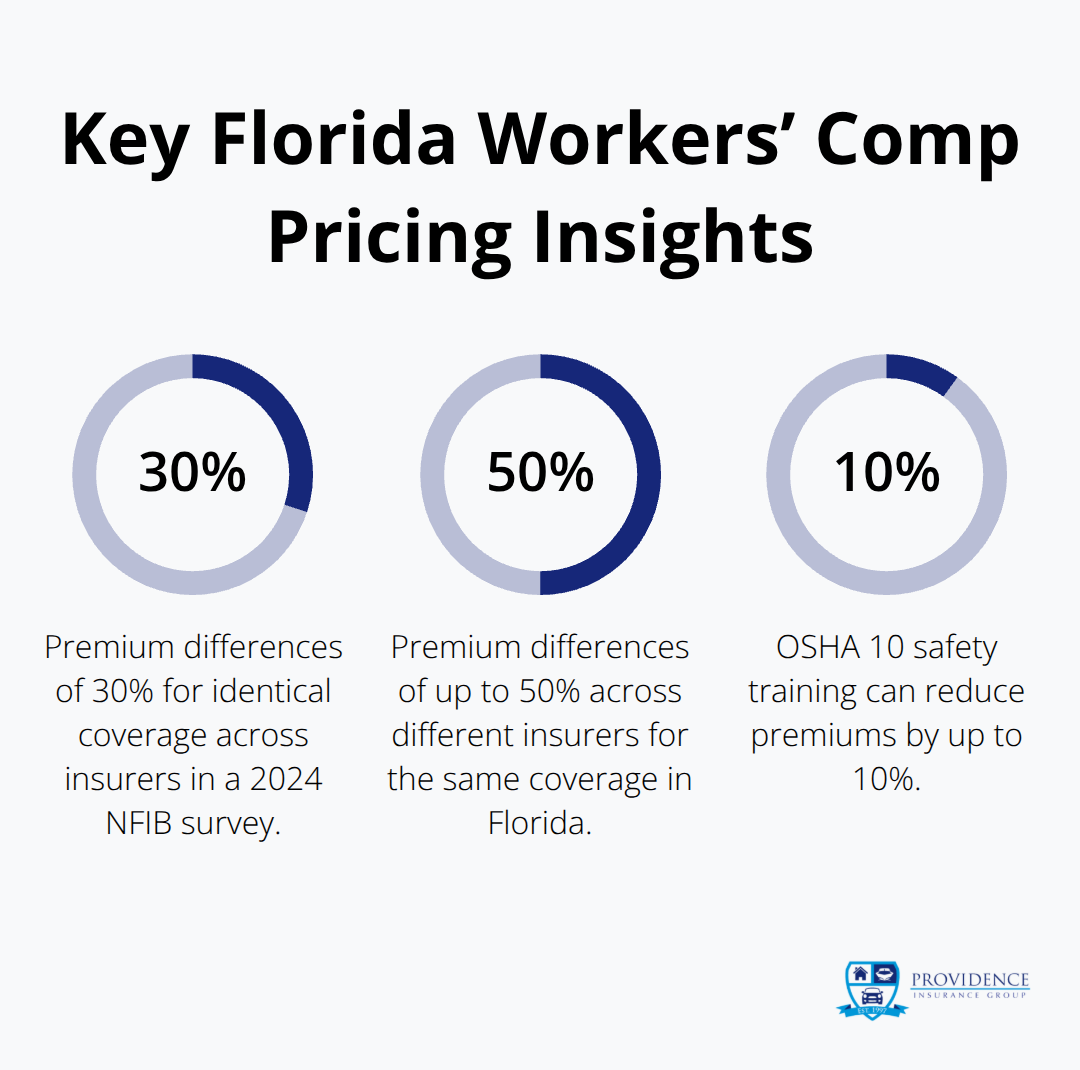
Safety certifications like OSHA 10 typically reduce premiums by 5 to 10 percent, and contractors with strong safety records often qualify for loss control discounts. Identify which discounts apply to your operation and factor those into your comparison. Some carriers offer better coverage for specific injury types or faster claims processing, which directly impacts how quickly your injured workers receive benefits and return to work.
Work with an Independent Agent to Customize Coverage
An independent agent who understands Florida’s contracting industry transforms this process from confusing to actionable. An experienced agent asks about your crew size, the types of projects you handle, whether you use subcontractors, and your safety practices-all factors that affect both your risk profile and your rates. They can identify coverage gaps that generic quotes miss and compare policies across multiple carriers, showing you the actual differences in coverage and cost side by side.
An independent agent also handles policy renewal and adjustments as your business grows or changes, ensuring your coverage stays aligned with your actual operations rather than becoming outdated. This ongoing relationship means your policy adapts to your business instead of remaining static while your operation evolves.
Final Thoughts
Florida contractor workers’ comp protects your business from financial collapse when injuries happen. The coverage pays medical bills directly, replaces employee wages during recovery, and shields you from personal liability that could destroy your operation. Without it, you face escalating fines, license suspension, and the personal liability exposure that comes with operating illegally.
Contractors who understand their coverage requirements and match their policies to their actual business risks operate with confidence and protection. You now know what Florida contractor workers’ comp covers, why the state mandates it, and how to select a policy that fits your specific operation. The next step is taking action before an injury forces your hand.
We at Providence Insurance Group have helped Florida contractors navigate these decisions since 1997, and we work with many of Florida’s top carriers to compare rates, coverages, and payment options side by side. When you contact us, we take time to understand your crew size, the types of projects you handle, your safety practices, and your claims history (all factors that directly impact your coverage needs and rates). Contact Providence Insurance Group to discuss your workers’ compensation needs and get quotes that reflect your actual operation.
Disclaimer: The information provided in this blog is for general informational purposes only and does not constitute legal, financial, or insurance advice. Coverage options, terms, and availability may vary. Please consult with a licensed professional for advice specific to your situation