
Retirement should mean freedom on the road, not stress about whether your car insurance covers you properly. Florida senior car coverage works differently than standard policies, and many retirees miss critical protection gaps that could cost them thousands.
At Providence Insurance Group, we’ve seen firsthand how the right coverage transforms peace of mind for drivers over 65. This guide walks you through exactly what you need.
Why Seniors Need Different Car Insurance Coverage
Drivers over 65 face insurance realities that younger motorists simply don’t encounter. According to the National Highway Traffic Safety Administration, drivers aged 70 and older have higher rates of fatal crashes per mile driven compared to middle-aged drivers. This isn’t about capability-it’s about statistical risk that insurance companies track and price accordingly. Vision changes, medication side effects, and slower reaction times create measurable differences in claims data. Standard policies written for 35-year-old commuters don’t account for these factors, which means you’re either overpaying for irrelevant coverage or missing protection you actually need.
Coverage Gaps That Leave You Exposed
Standard auto policies often leave seniors exposed in ways they don’t anticipate. Medical payments coverage maxes out at $1,000 to $5,000 in many basic plans, but a single emergency room visit after an accident easily exceeds $10,000. Liability limits of 10/20/10 were adequate in 1995 but are dangerously low today when a serious injury judgment routinely reaches $100,000 or more. Uninsured motorist protection is where the real gap appears-nearly one in eight Florida drivers carries no insurance, yet standard policies frequently cap uninsured motorist medical payments below $5,000. If an uninsured driver hits you and you’re hospitalized, that gap becomes catastrophic.
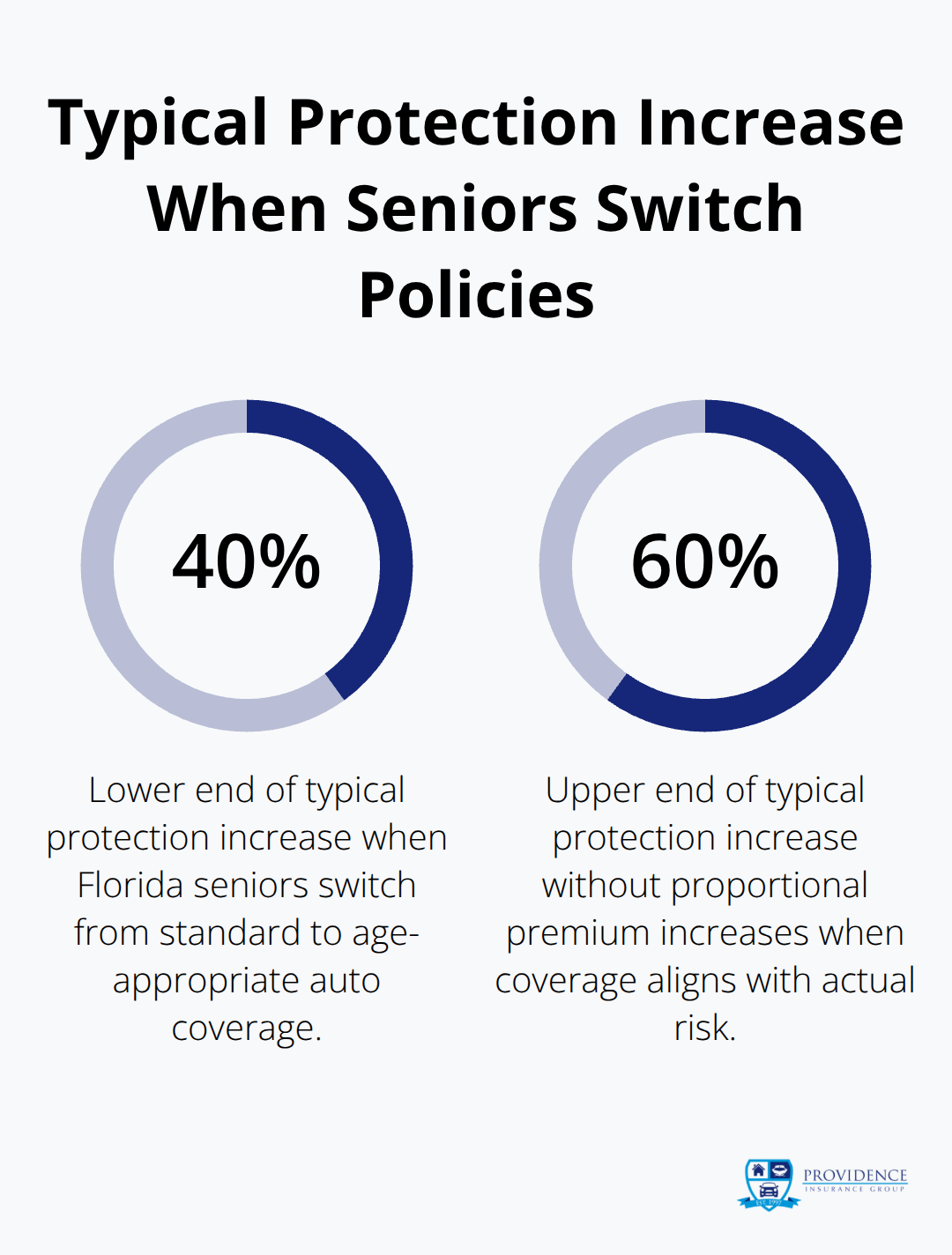
Age-specific policies address these gaps by increasing medical payments to $10,000 or higher and raising uninsured motorist limits to match your liability coverage. Seniors who switch from standard to age-appropriate coverage typically increase their protection by 40 to 60 percent without proportional premium increases, simply because the coverage aligns with actual risk profiles.
How Age Reshapes Your Rates and Available Options
Insurance companies price senior coverage differently because claims patterns differ. The Insurance Institute for Highway Safety shows that drivers 65 and older have lower claim frequencies for collision but higher frequencies for comprehensive claims related to weather and vehicle damage. This data-driven approach means your premium might decrease for collision coverage but increase for comprehensive, creating a net effect that varies by individual driving patterns.
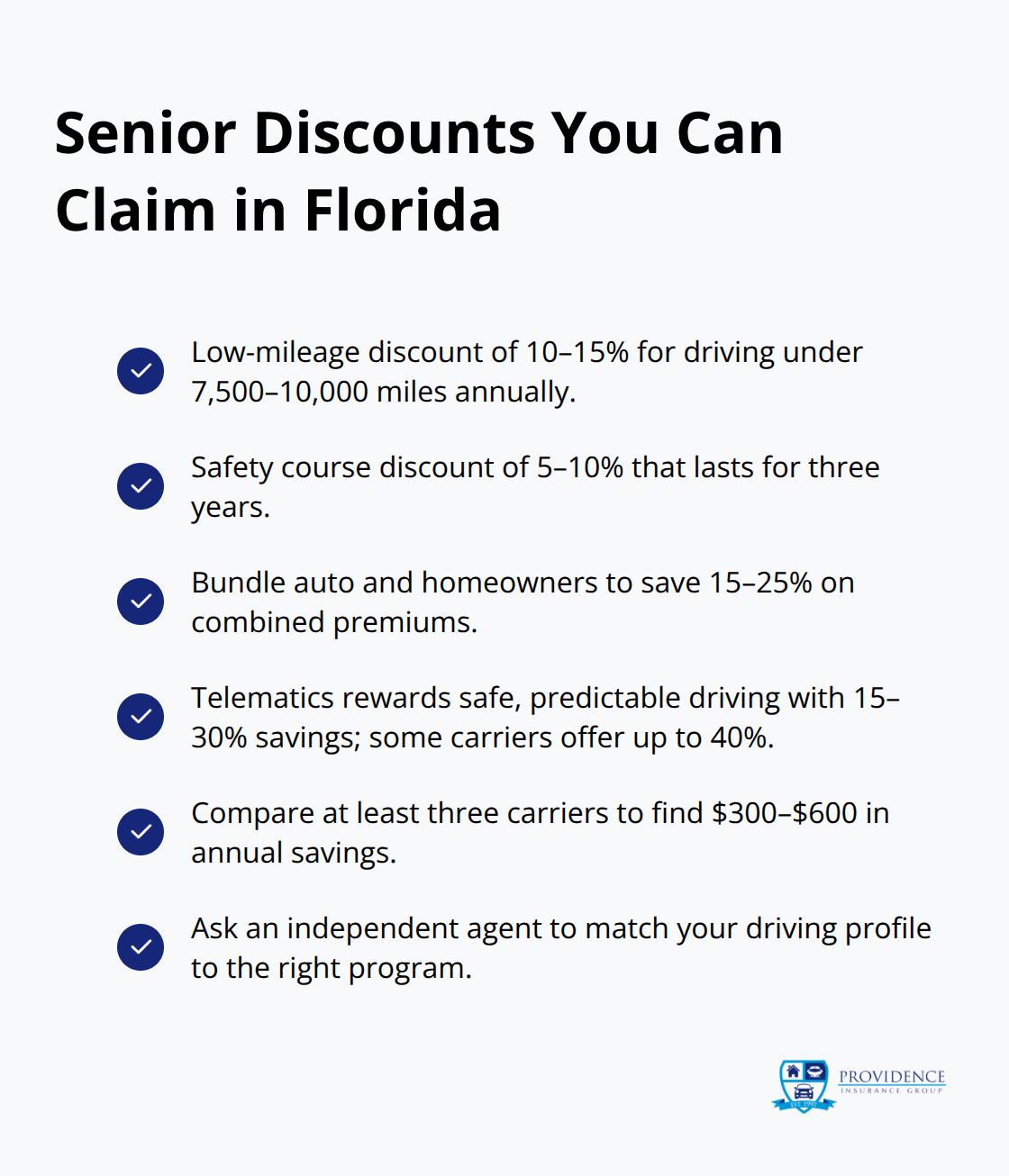
Florida’s competitive insurance market offers age-specific programs from multiple carriers, and rates swing wildly between them-a 70-year-old might pay $950 annually with one company and $1,450 with another for identical coverage. Safety course discounts specifically for seniors can reduce premiums by 5 to 10 percent and remain active for three years in many cases. Telematics programs, which track your actual driving habits through a mobile app, appeal to low-mileage retirees and often generate 15 to 30 percent savings.
The critical move is refusing to accept the first quote you receive. Senior drivers who compare options from at least three carriers typically find savings of $300 to $600 annually simply by matching their actual driving profile to the right policy structure. This comparison process becomes even more valuable when you work with an independent agent who can access multiple carriers at once and identify which companies offer the best rates for your specific situation.
Key Coverage Types for Florida Seniors
Liability Protection: Your First Line of Defense
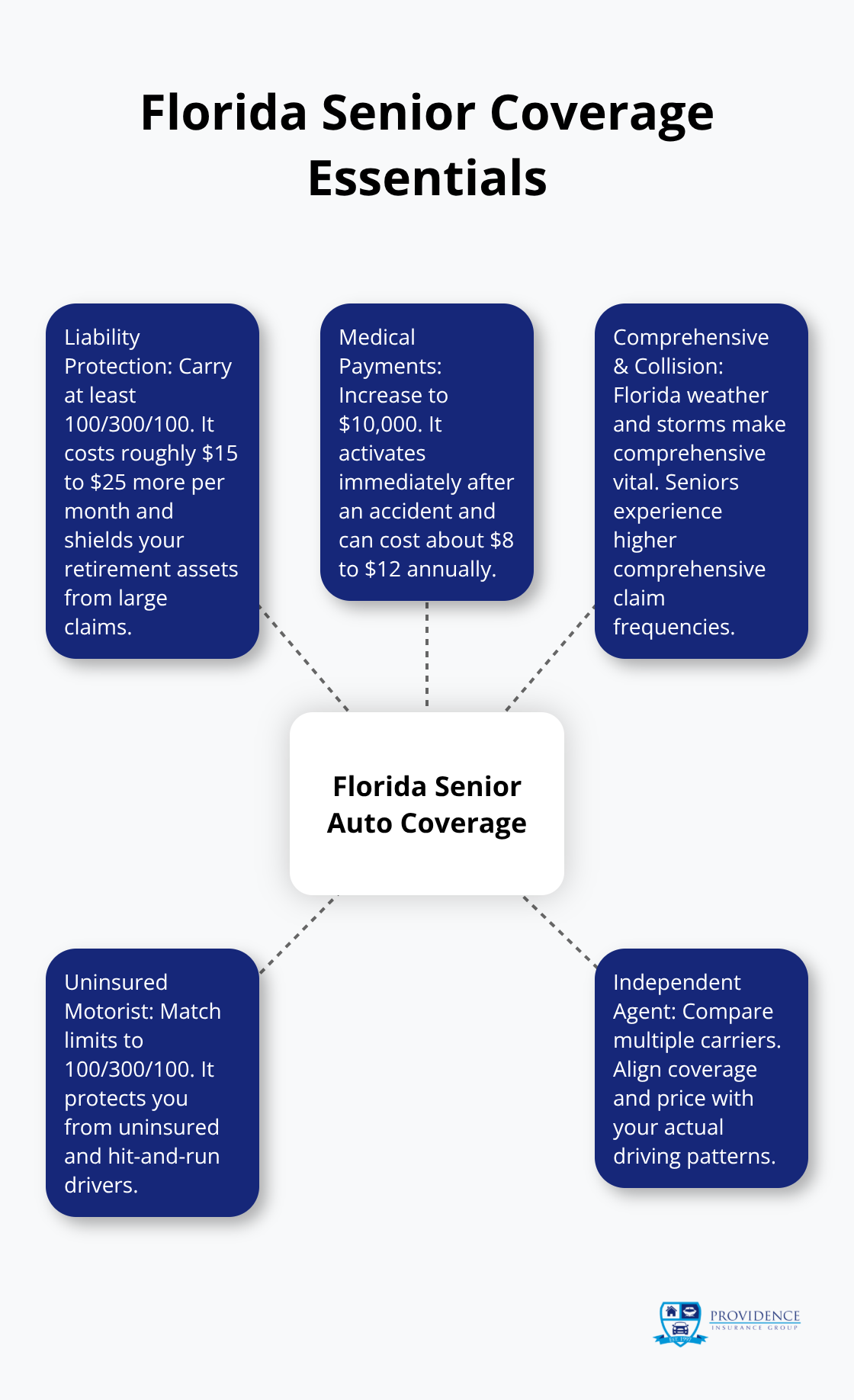
Liability protection forms the foundation of any auto policy, yet many seniors carry limits that haven’t been updated since the 1990s. Florida requires minimum liability coverage of 10/20/10, meaning $10,000 per person and $20,000 per accident for bodily injury plus $10,000 for property damage. These minimums fail to protect you adequately. A single serious injury claim routinely exceeds $100,000, and if you’re found at fault, your personal assets become vulnerable above your policy limits. Seniors should carry at least 100/300/100 coverage, which costs roughly $15 to $25 more per month but protects your retirement savings from catastrophic liability exposure.
Medical Payments Coverage: Immediate Protection After an Accident
Medical payments coverage operates separately from liability and covers your own medical expenses regardless of fault up to your policy limit. Standard policies cap this at $1,000 to $5,000, but a collision requiring emergency care and follow-up treatment exhausts those limits within days. Increasing medical payments to $10,000 costs approximately $8 to $12 annually and prevents you from filing a personal health insurance claim when you shouldn’t have to. This coverage activates immediately after an accident, covering ambulance fees, hospital stays, and necessary medical treatment without waiting for fault determination.
Comprehensive and Collision Coverage: Protecting Your Vehicle
Comprehensive and collision coverage protect your vehicle itself rather than other people’s injuries or property. Comprehensive covers weather, theft, and vandalism, while collision covers damage from accidents. Florida’s hurricane season and frequent thunderstorms make comprehensive coverage genuinely valuable for seniors, not optional. The National Association of Insurance Commissioners reports that comprehensive claims for seniors aged 65 and older run 30 percent higher than middle-aged drivers due to weather-related damage.
Uninsured Motorist Protection: Your Safety Net
Uninsured motorist protection addresses your biggest exposure as a senior driver. Uninsured motorist coverage compensates you when an uninsured or hit-and-run driver hits you. Standard policies often limit uninsured motorist medical payments to $5,000, creating a dangerous gap when hospitalization costs $15,000 to $40,000. Matching your uninsured motorist limits to your liability limits (100/300/100) creates consistent protection across all scenarios and eliminates coverage mismatches that leave you exposed.
Putting It All Together: Building Your Coverage Strategy
Seniors who maintain these stronger coverage types report higher claim satisfaction rates and faster resolution times when accidents occur. The modest premium increase represents a practical investment in actual protection rather than theoretical coverage. An independent insurance agent can help you structure these coverages to match your specific driving patterns and financial situation, comparing options across multiple carriers to find the right balance between protection and cost.
Maximizing Discounts and Saving Money on Senior Auto Insurance
Low-Mileage Discounts for Retirees
Stronger coverage costs money, but seniors who understand how discounts work can offset those increases substantially. Clients who stack discounts and optimize policy structure reduce their annual premiums by $400 to $800. The key is recognizing that insurance companies offer different discounts to different demographics, and seniors qualify for programs that younger drivers cannot access. Low-mileage discounts reward retirees who drive under 7,500 to 10,000 miles annually, which describes roughly 60 percent of Florida seniors. If you drive under that threshold, you’re leaving money on the table by not claiming this discount. Most carriers reduce premiums by 10 to 15 percent for low-mileage drivers, translating to $120 to $180 annually on a $1,200 base premium.
Safety Courses and Multi-Policy Bundling
Safety courses designed specifically for seniors generate 5 to 10 percent discounts that remain active for three years, meaning a single $15 course investment returns $45 to $90 in year-one savings alone. The American Association of Retired Persons offers AARP-branded courses that qualify for discounts with most major carriers, and many Florida community centers offer free or low-cost versions. Bundling your auto insurance with homeowners coverage creates immediate savings of 15 to 25 percent on your combined premium, which matters enormously for retirees carrying both policies. A senior who bundles saves roughly $200 to $400 annually compared to purchasing policies separately, yet many clients pay for separate policies because they never asked about bundling options.
Telematics Programs for Safe Drivers
Telematics programs represent the most aggressive discount opportunity for seniors who drive safely and predictably. These programs track your actual driving through a smartphone app, monitoring acceleration, braking, and time-of-day driving patterns. Safe drivers typically earn 15 to 30 percent discounts, with some carriers offering up to 40 percent for exceptionally careful driving records.
The Florida Department of Highway Safety and Motor Vehicles data shows seniors aged 70 and older have significantly lower accident rates than drivers aged 25 to 35, yet telematics programs often attract younger drivers while seniors overlook them. This represents a major mistake because retirees’ consistent, low-mileage, daytime driving patterns align perfectly with how telematics algorithms reward safe behavior. A 72-year-old who drives to the grocery store and doctor’s appointments three days weekly will generate dramatically better telematics scores than a 28-year-old commuting in rush-hour traffic.
Getting Started with Telematics
Installing a telematics program takes five minutes, requires no vehicle modification, and generates savings that compound monthly. After six months of safe driving data, most seniors see premium reductions of 20 to 25 percent applied automatically at renewal. The critical action is asking your agent explicitly whether telematics programs are available and whether they apply to your specific carrier and vehicle. Many agents fail to mention these programs because they require initial client setup, but the long-term savings justify the minimal effort required. An independent agent can help you identify which carriers offer telematics programs and determine whether your driving patterns qualify you for maximum discounts.
Final Thoughts
The right Florida senior car coverage combines stronger liability limits, adequate medical payments, comprehensive protection, and uninsured motorist coverage that matches your actual exposure. Standard policies written for younger drivers leave you vulnerable to gaps that could cost tens of thousands after an accident. Building proper coverage takes deliberate choices about limits and deductibles, but the investment protects your retirement savings from catastrophic claims.
Discounts matter enormously once you have the right foundation in place. Low-mileage discounts, safety courses, bundling, and telematics programs can reduce your annual premium by $400 to $800 without cutting coverage. Many seniors leave these savings unclaimed simply because they accept the first quote they receive or fail to ask about programs designed specifically for their driving patterns.
The next step involves comparing quotes from multiple carriers with an agent who understands senior-specific coverage needs. Rates vary dramatically between companies for identical coverage, and only direct comparison reveals where you’ll find the best protection at the lowest cost. Contact Providence Insurance Group today to discuss your specific situation and discover how proper coverage and available discounts can protect your retirement while keeping your premiums reasonable.
Disclaimer: The information provided in this blog is for general informational purposes only and does not constitute legal, financial, or insurance advice. Coverage options, terms, and availability may vary. Please consult with a licensed professional for advice specific to your situation