
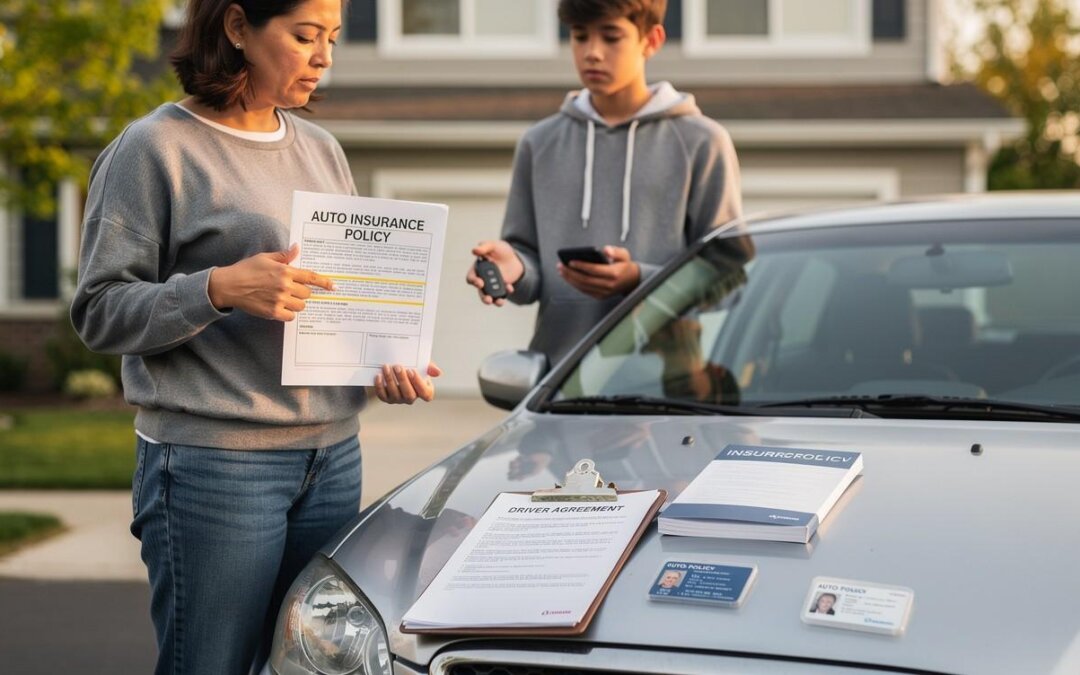
Insuring a teenage driver comes with real financial challenges. Insurance premiums for teen drivers can cost two to three times more than adult policies, and parents need concrete strategies to manage these costs.
At Providence Insurance Group, we’ve helped countless families navigate Florida teen driver insurance and find coverage that protects their teens without breaking the budget. This guide walks you through Florida’s licensing laws, rate factors, and proven ways to reduce your insurance expenses.
Florida’s Teen Driver Laws and Insurance Impact
Graduated Driver Licensing Requirements
Florida’s Graduated Driver Licensing system imposes specific restrictions that directly impact insurance rates and your family’s financial exposure. Teens with learner permits can only drive between 6 a.m. and 10 p.m., and they must have a licensed adult 21 or older in the front seat. Once your teen obtains their Class D license at 16, the nighttime driving restriction tightens to 11 p.m. until 6 a.m. for the first three months.
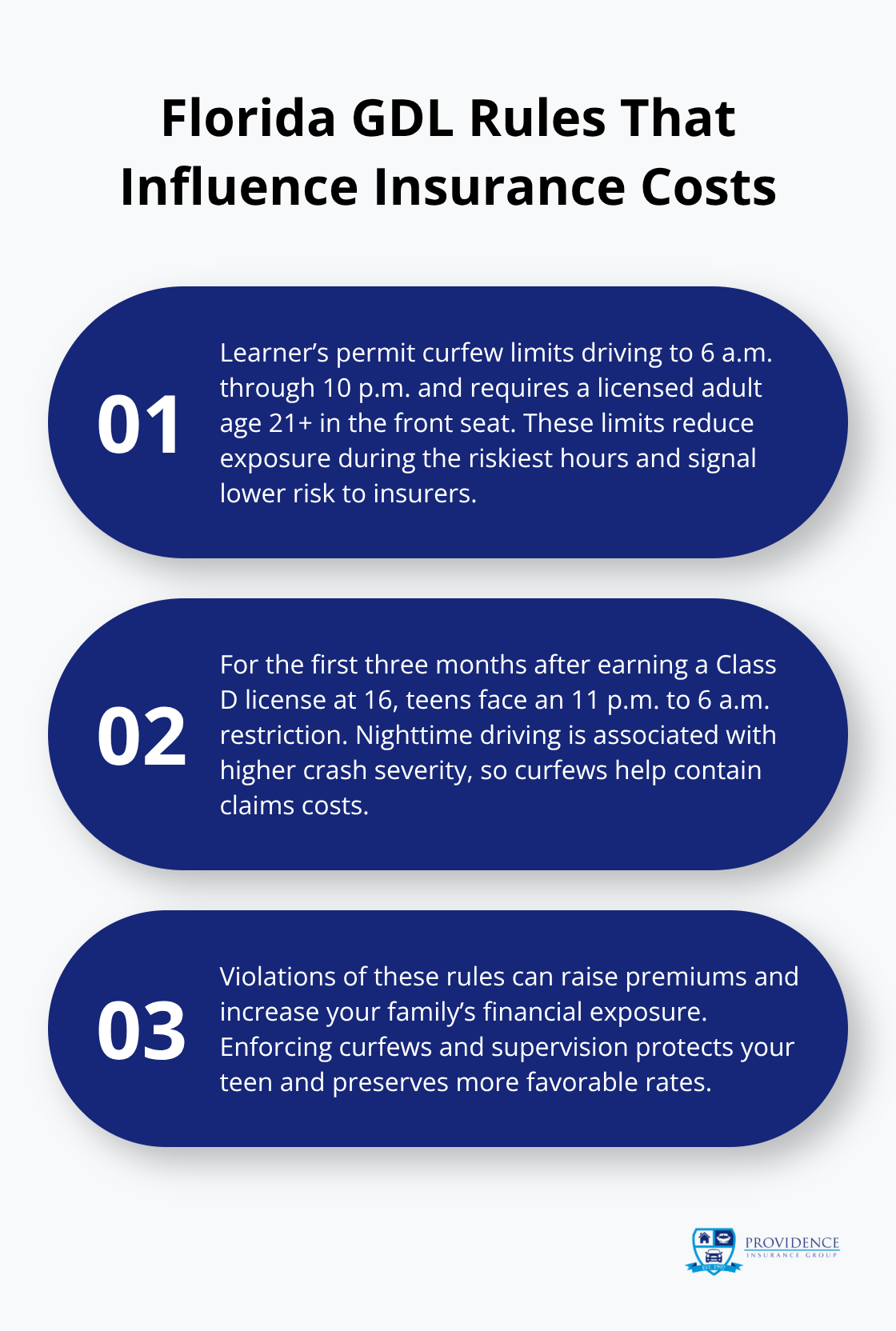
These curfew rules exist because the fatal crash rate for 16-19 year-olds is about 3 times the rate for drivers 20 and older, with nighttime crashes accounting for a significant portion of teen fatalities.
Phone Use and Passenger Restrictions
Phone use restrictions carry real teeth in Florida. Drivers under 18 cannot use any wireless device while operating a vehicle, even hands-free. This applies to texts, calls, and social media. The state also caps passengers during the first year of licensure-only one passenger under 21 is allowed unless a parent or guardian sits in the vehicle. Insurance companies recognize these restrictions reduce risk, but violations signal dangerous behavior to underwriters.
A texting-while-driving citation or a passenger violation on your teen’s record can increase premiums by 15 to 25 percent. These laws aren’t suggestions. Enforcing them protects both your teen and your insurance costs.
How Violations Affect Your Rates
Insurance carriers treat traffic violations as red flags. Your teen’s driving record directly influences what you pay each month. An independent agent can explain exactly how violations affect your specific policy and help you understand what coverage gaps might emerge if your teen breaks these rules. Understanding these financial consequences helps parents take enforcement seriously and motivates teens to follow the law.
Key Factors That Affect Teen Driver Insurance Rates
Age as the Primary Rate Driver
Age stands as the single most powerful factor in your teen’s insurance rate, and the numbers are stark. Sixteen-year-old drivers pay approximately 50 to 100 percent more than drivers in their twenties, according to insurance industry data. A 17-year-old typically costs less than a 16-year-old, but still significantly more than an 18-year-old.
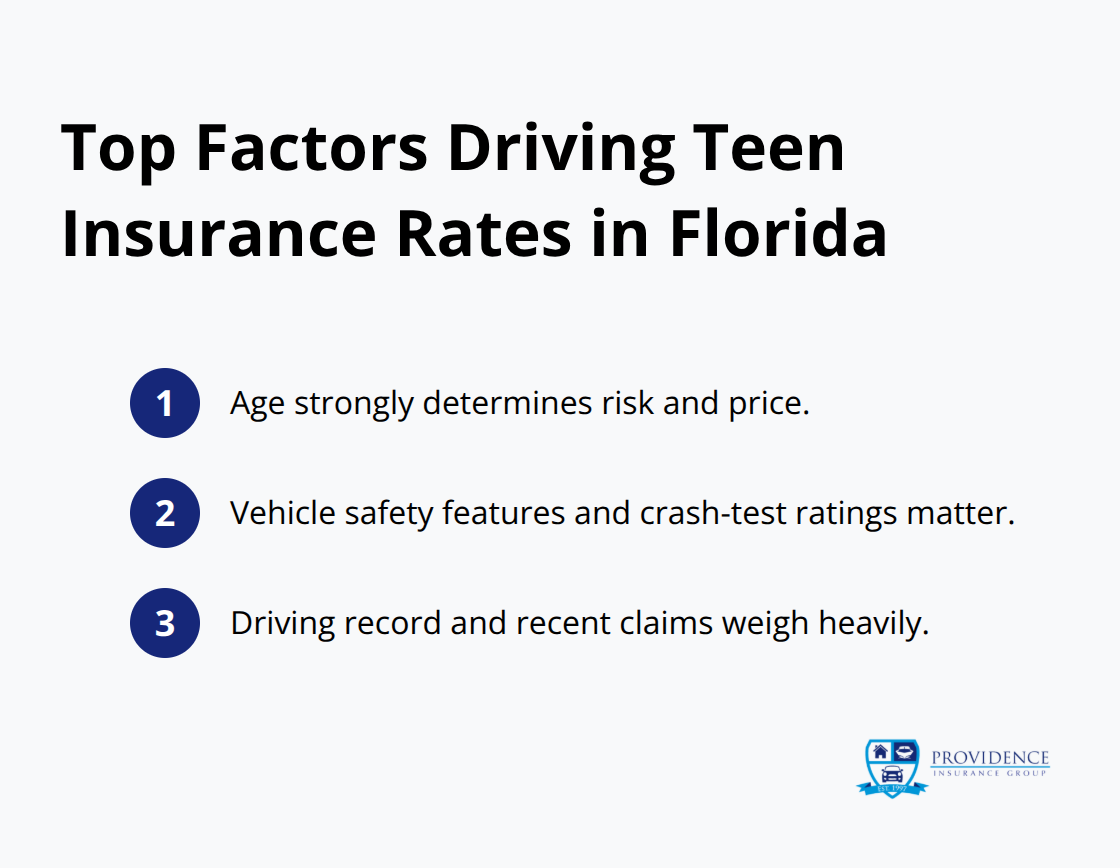
Insurance companies weight age this heavily because statistical risk drops sharply as teenagers gain driving experience. After your teen completes their first year without violations or claims, you’ll see a noticeable rate reduction.
Vehicle Selection and Safety Technology
The vehicle your teen drives matters just as much as age. A 2024 Honda Civic with electronic stability control and automatic emergency braking will cost less to insure than a 2010 Dodge Charger, even if both are priced similarly on the used market. Insurance companies favor vehicles with strong safety ratings and modern crash prevention technology because these features reduce injury severity and repair costs. A vehicle equipped with these systems can lower your premium by 10 to 15 percent compared to older models without them. When shopping for a car for your teen, try prioritizing safety ratings from the National Highway Traffic Safety Administration and Insurance Institute for Highway Safety over horsepower or style.
Driving Record and Claims History
Your teen’s driving record and claims history carry enormous weight in rate calculations. A single at-fault accident or minor traffic violation can increase premiums by 20 to 40 percent for three years. Major violations like reckless driving or DUI infractions can spike rates by 50 percent or more. This is why enforcement of Florida’s teen driving laws matters financially, not just legally. The combination of your teen’s specific vehicle choice, current age, and clean driving record creates your actual rate-and understanding how these factors interact helps you make smarter decisions about coverage and vehicle selection.
Proven Ways to Cut Teen Driver Insurance Costs
Reducing what you pay for teen driver insurance requires action, not just hope. Three concrete strategies work consistently: qualifying for good student discounts, enrolling your teen in formal driver training, and switching to usage-based insurance programs. Families save $500 to $1,500 annually by combining these approaches, and the financial gains stack when you apply them together.
Good Student Discounts
Good student discounts reward teens who maintain a B average or higher, typically reducing premiums by 10 to 15 percent according to the National Association of Insurance Commissioners. Your teen must meet specific GPA thresholds and maintain them throughout the discount period, so this isn’t passive savings-it requires sustained academic performance. Insurance companies recognize that academic responsibility correlates with safer driving habits, which is why they offer these reductions. Start documenting your teen’s grades now, since you’ll need official transcripts or report cards when you apply for the discount.
Driver Training and Defensive Driving Courses
Driver training courses approved by Florida’s Department of Highway Safety and Motor Vehicles go further than the minimum requirements. Teens who complete a defensive driving course from an approved provider earn discounts ranging from 5 to 10 percent, and some insurers offer additional reductions for completing advanced courses. These courses teach hazard recognition, emergency braking, and decision-making skills that directly reduce accident frequency. The investment in a course costing $50 to $150 pays back within months when the discount kicks in. Enroll your teen before they turn 16 to maximize the discount period.
Usage-Based Insurance Programs
Usage-based insurance programs, sometimes called telematics or pay-as-you-drive programs, represent the fastest-growing discount category and often deliver the largest savings. These programs use mobile apps or vehicle devices to track driving habits-acceleration rates, braking patterns, time of day, and miles driven. Safe drivers in these programs typically save 10 to 30 percent compared to standard policies. If your teen drives only 5,000 miles annually rather than the national average of 13,500 miles, usage-based programs capture that lower exposure and reward it immediately. The real-time feedback also helps teens understand how their choices affect their rates.
Bundling and Policy Consolidation
Bundling your homeowners or renters insurance with your auto policy adds another 15 to 25 percent discount across all policies combined. This strategy works because insurers reward customer loyalty and reduce their administrative costs when you consolidate coverage with one agent.
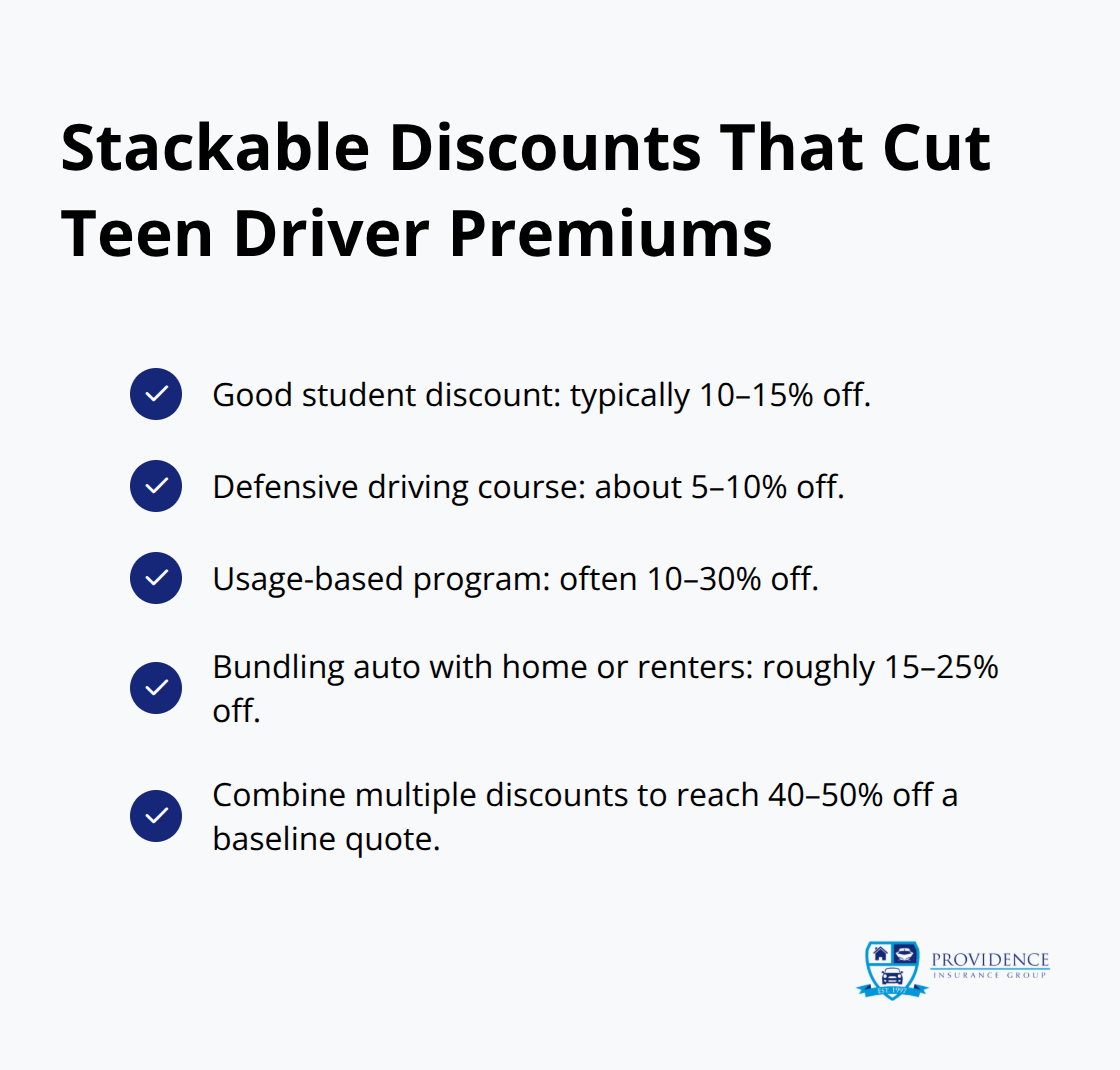
An independent agent can layer these discounts strategically-combining good student status, defensive driving completion, usage-based monitoring, and bundling often reduces your teen’s annual premium by 40 to 50 percent compared to a baseline quote. The key is starting these programs before your teen turns 16, since some discounts require documentation or completion before the policy begins.
Final Thoughts
Your teen’s first year behind the wheel shapes their driving habits and your family’s insurance costs for years to come. The coverage you select now determines what happens if an accident occurs, so this decision warrants serious attention. Liability coverage protects others if your teen causes injury or property damage, and Florida requires minimum limits of 10/20/10, while collision and comprehensive coverage protect your vehicle itself (and your lender will require both if you financed or leased the car).
Before your teen gets behind the wheel, complete three essential steps. First, have them take a defensive driving course approved by Florida’s Department of Highway Safety and Motor Vehicles to qualify for training discounts. Second, document their current GPA if they qualify for good student discounts, since you’ll need official records when you apply. Third, research usage-based insurance programs offered by your current or prospective insurer, as these programs often deliver the largest savings for safe teen drivers.
An independent agent simplifies this process and saves you money on Florida teen driver insurance. We at Providence Insurance Group specialize in personal insurance and work with Florida’s top carriers to compare rates and coverages side by side, then customize coverage that fits your budget and protects your teen properly. Contact us to discuss your teen’s coverage needs and receive a personalized quote that reflects all available discounts.
Disclaimer: The information provided in this blog is for general informational purposes only and does not constitute legal, financial, or insurance advice. Coverage options, terms, and availability may vary. Please consult with a licensed professional for advice specific to your situation