
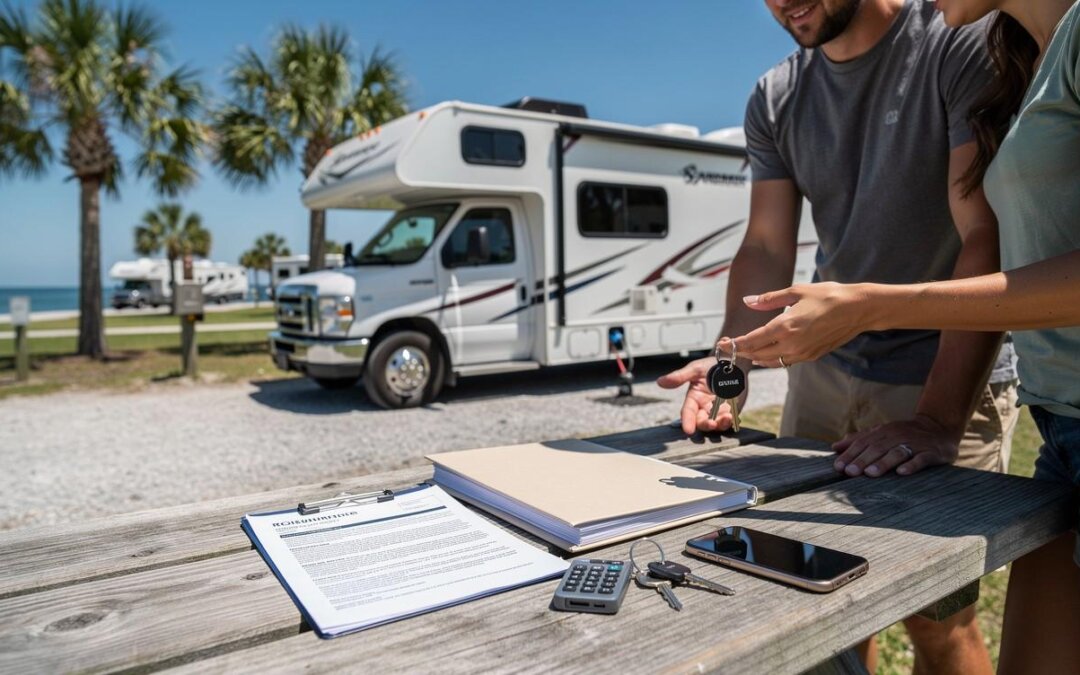
RV insurance Florida rates vary significantly based on your vehicle and driving habits. At Providence Insurance Group, we’ve helped countless RV owners understand what drives their premiums up or down.
The good news is that you have real control over many of these factors. This guide walks you through the specifics so you can make smarter decisions about your coverage and costs.
What Determines Your RV Insurance Rate
Your RV’s age and type Matter Most
Your RV insurance premium in Florida isn’t random. Insurance companies calculate your rate based on specific factors they can measure and track. The biggest driver is your RV itself. A brand-new Class A motorhome that costs $150,000 will cost significantly more to insure than a used travel trailer worth $30,000. Older RVs typically cost less to insure because their replacement value is lower, though some insurers charge more for vehicles over 15 years old due to mechanical concerns.
The type matters just as much as the age. A motorhome that you live in full-time faces different risks than a seasonal travel trailer you store most of the year. Full-timers need higher liability limits because they spend more time on the road, which naturally increases accident exposure.
Your Driving History Shapes Your Rate
Your driving history is the second pillar that determines your rate. A clean driving record without accidents or violations qualifies you for standard rates, while even one at-fault accident in the past three years can increase your premium by 15 to 40 percent depending on the insurer. Traffic violations hit harder. A single speeding ticket might add 5 to 10 percent to your rate, while a DUI conviction can triple your premium or result in denial of coverage entirely.
Insurance companies view this data through the lens of risk. Someone with multiple claims or violations represents higher likelihood of future losses, so they pay proportionally more.
Coverage Choices Give You Control
The final major factor is what you actually choose to cover. A $500 deductible costs more monthly than a $1,500 deductible because the insurance company pays less when you file a claim. Higher liability limits like 300/500/100 cost more than minimum Florida requirements of 10/20/10, but they also protect your personal assets far better if you cause serious injury or property damage.
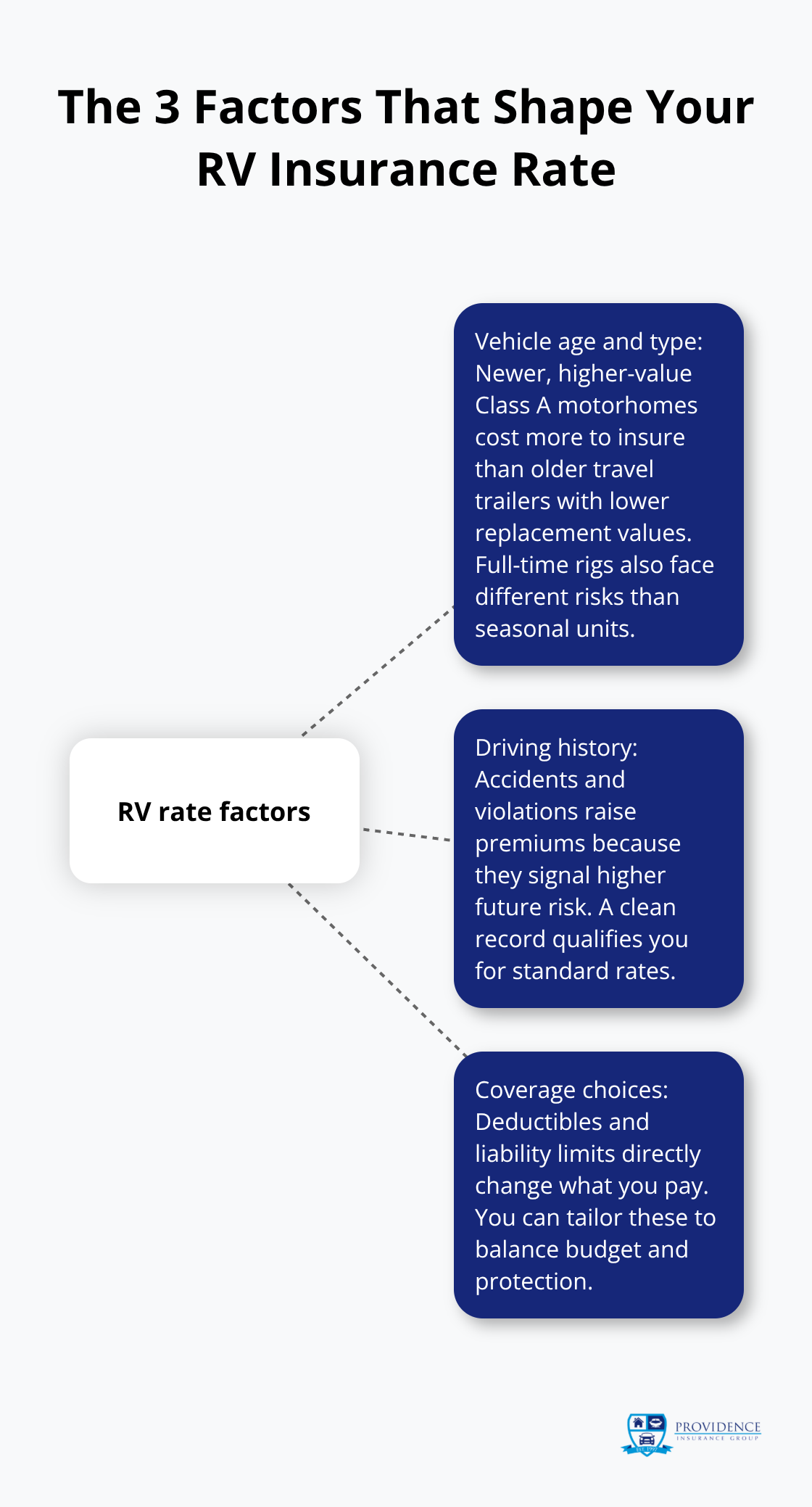
Coverage choices are the only factor you control completely. You can’t change your RV’s age or your past driving record, but you can adjust deductibles and limits to match both your budget and your actual risk tolerance. Once you understand how these three factors work together, you’re ready to explore the specific strategies that actually reduce what you pay each month.
How to Cut Your RV Insurance Costs
Reducing your RV insurance premium in Florida requires taking action on the factors you actually control. You can’t change your past, but you can strategically adjust your coverage, combine your policies, and invest in protective measures that insurers reward with discounts. Most RV owners leave money on the table because they don’t know what levers to pull.
Bundle Everything You Own for Real Savings
Combining your RV policy with your auto, home, or boat coverage produces the largest discount available in the insurance market. Most Florida insurers offer bundle discounts between 10 and 25 percent on your total premium when you consolidate policies with one carrier. If you’re paying $1,200 annually for RV insurance alone, bundling could reduce that to $900 or $1,080 depending on the insurer and your other coverage. Some carriers go further-GEICO and State Farm frequently offer 15 to 20 percent discounts for multiple policies, while regional Florida carriers sometimes match or exceed these rates. The math is straightforward: if you currently split your RV policy from your auto and home coverage across different companies, consolidating saves hundreds per year without reducing your protection level.
Maintain a Clean Driving Record to Lower Future Rates
Your past driving record is locked in, but your future driving matters tremendously. Insurance companies now use telematics devices and mobile apps to monitor driving habits in real time. Safe drivers who avoid hard braking, speeding, and rapid acceleration qualify for usage-based insurance discounts of 10 to 30 percent. Progressive’s Snapshot program and State Farm’s Drive Safe and Save both reward clean driving with measurable premium reductions. If you’ve had violations in the past, maintaining a clean record for three years removes those incidents from your rating, bringing your premium back down to standard levels. This is the only major factor where your actions today directly improve your rate tomorrow.
Install Security Features to Reduce Theft Risk and Premiums
Installing GPS tracking, anti-theft devices, and alarm systems on your RV doesn’t just protect against theft-it changes how insurers price your policy. RVs equipped with GPS systems typically receive 5 to 15 percent discounts because recovery rates for stolen units jump dramatically when location tracking is active. Steering wheel locks and hitch locks add another 3 to 8 percent reduction. Full alarm systems that monitor entry points can add another 5 percent. These aren’t theoretical benefits. Your insurer knows this data, which is why they discount aggressively for security investments. The upfront cost of a quality GPS system runs $300 to $800, but annual savings of $100 to $150 mean you break even within three to five years while gaining genuine theft protection.
Compare Quotes to Find the Best Rate for Your Situation
Now that you understand what actually reduces your premium, the next step involves comparing what different carriers charge for your specific RV and coverage needs. Each insurer weights these factors differently, meaning one company might charge significantly less than another for the exact same vehicle and driving history.
Finding the Right RV Insurance Quote in Florida
Get Multiple Quotes to Spot Real Price Differences
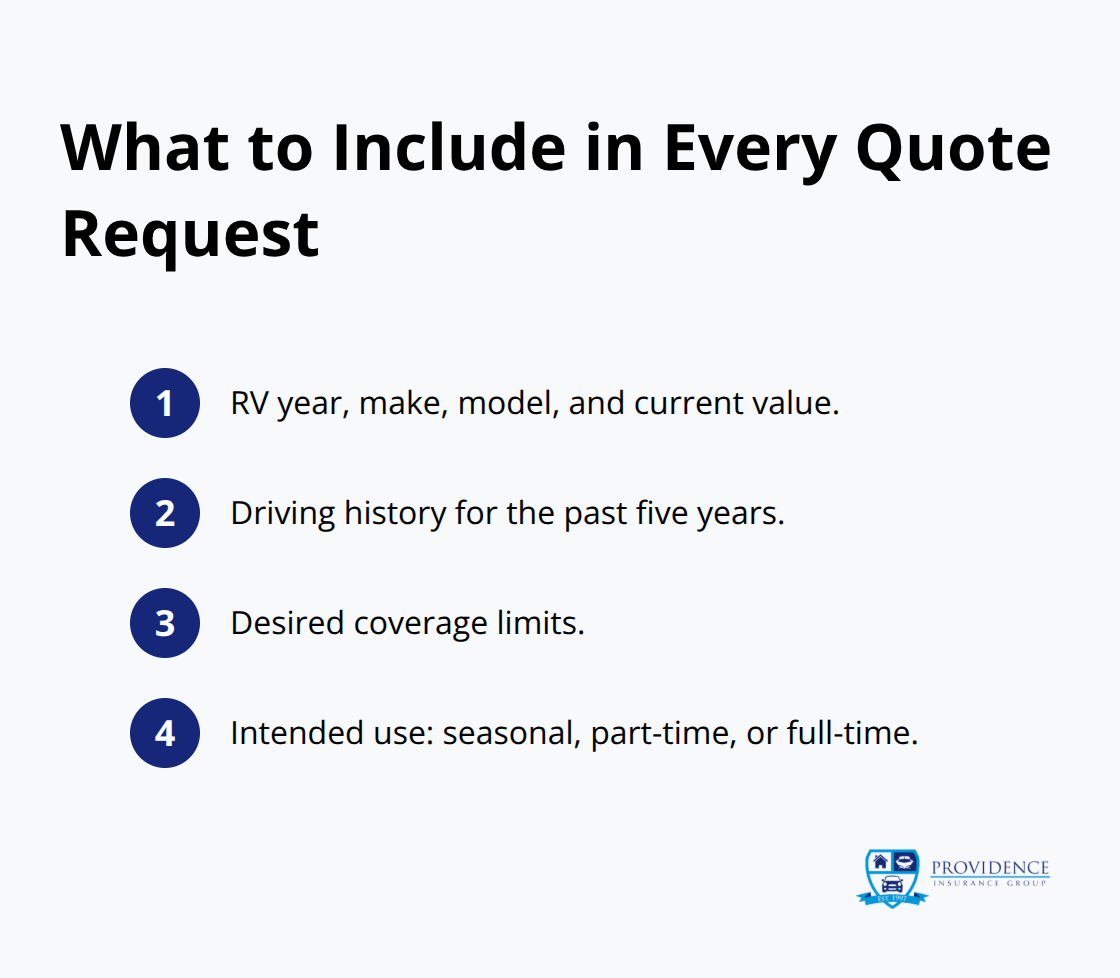
Different insurers price RV coverage differently based on their own loss data and underwriting philosophy. One carrier might focus heavily on your driving record while another emphasizes your RV’s safety features. This means the cheapest quote for your neighbor might cost 30 percent more for your situation. When you request quotes, provide identical information to each insurer so comparisons are meaningful. Include your RV’s year, make, model, and current value; your driving history for the past five years; the coverage limits you’re considering; and your intended use (seasonal, part-time, or full-time).
Most major carriers like State Farm, GEICO, and Progressive offer online quote tools that take 10 to 15 minutes and produce a baseline number. Regional Florida insurers often match or beat national rates because they understand local weather risks and theft patterns better than companies operating in 50 states.
Account for Florida-Specific Coverage Needs
Florida’s particular risks demand coverage choices that generic national policies might miss. Hurricane damage, flood exposure, and theft rates in your area should shape your deductibles and limits.
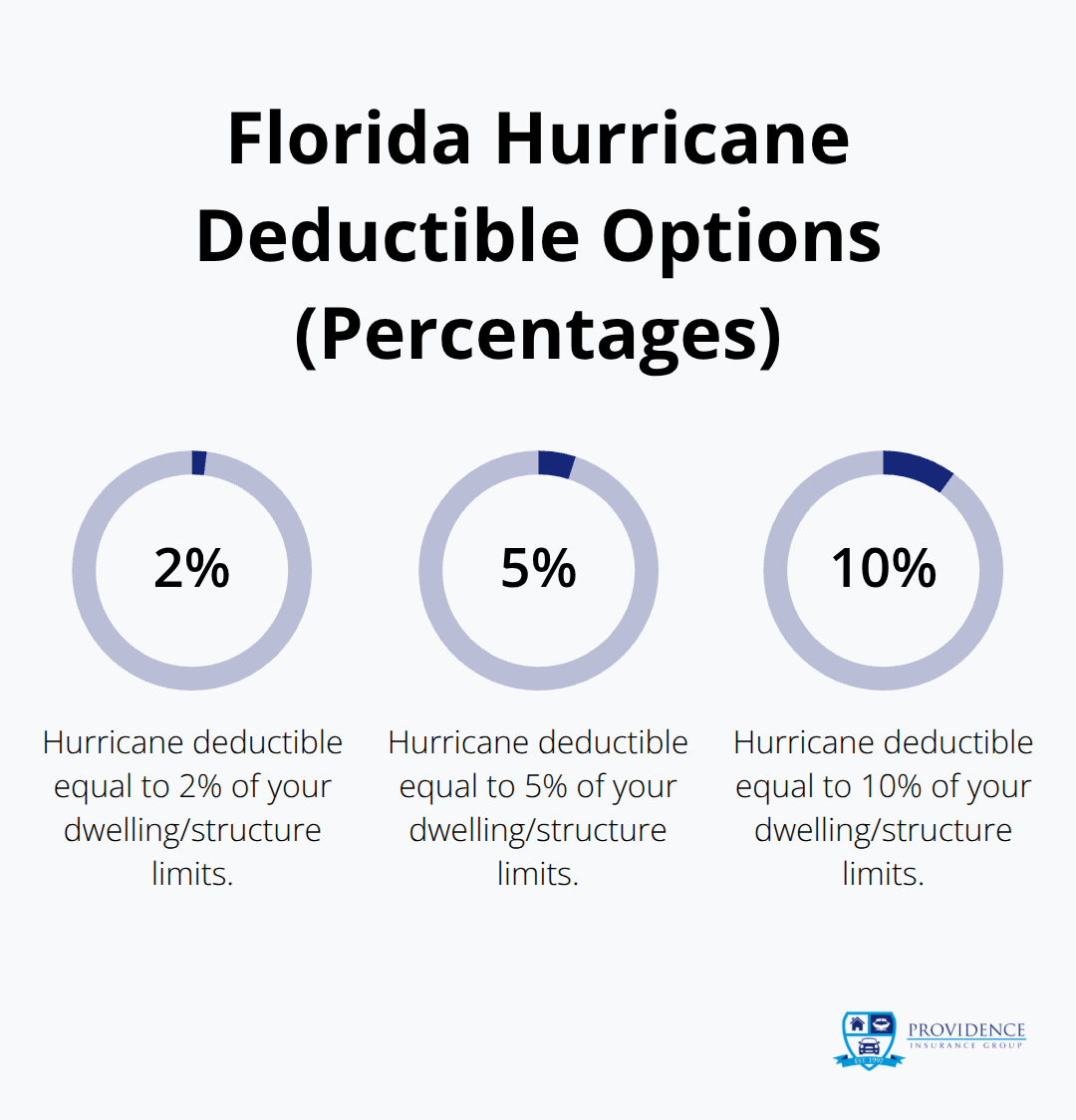
A motorhome parked year-round in South Florida faces different weather exposure than one stored seasonally in the Panhandle, yet many online quote systems don’t account for these nuances. When reviewing coverage options, ask insurers specifically about their hurricane deductible structure because all insurance companies must offer hurricane deductible options of $500, 2 percent, 5 percent, or 10 percent of the policy dwelling or structure limits. Uninsured motorist coverage matters more in Florida than most states because hit-and-run incidents involving RVs happen at above-average rates.
Verify Coverage for Your Actual Living Situation
Full-time RV residents should verify that liability coverage extends to residential use since standard policies sometimes limit coverage when your RV functions as a primary residence. This distinction affects your protection level significantly and requires direct conversation with your insurer before you purchase a policy. Coverage gaps in this area leave you exposed to serious financial risk if an accident occurs while you’re living in your RV.
Ask About Discounts That Carriers Don’t Advertise
Discounts vary wildly between carriers, and many Florida-specific programs go unmentioned unless you ask directly. Some insurers offer discounts for completing defensive driving courses, others reward multi-year policy commitments, and several provide reductions for paying your annual premium upfront instead of monthly. The discount conversation matters as much as the base rate because a slightly higher premium with aggressive discounts can beat a lower starting quote by $200 to $400 annually. An independent insurance agent takes the time to compare rates from multiple Florida carriers side by side, which reveals these hidden savings opportunities that you’d miss shopping alone online.
Final Thoughts
Your RV insurance Florida rates reflect three core factors: your vehicle’s age and type, your driving history, and the coverage limits you select. Two of these factors respond directly to your actions. You cannot change your past, but you can maintain a clean driving record going forward, bundle policies for substantial discounts, and install security features that insurers actively reward. You also control your deductibles and coverage limits completely, which means you shape your premium by deciding what protection level matches your actual needs and budget.
Finding affordable RV insurance requires comparing quotes from multiple carriers because each insurer prices your specific situation differently. One company might charge significantly less than another for identical coverage, which is why shopping around consistently saves hundreds annually. When you request quotes, provide the same information to each carrier so you’re comparing apples to apples, and ask directly about discounts that aren’t advertised. Verify coverage for your living situation if you’re a full-timer, and account for Florida-specific risks like hurricanes and theft patterns in your area.
The most effective approach combines rate shopping with strategic coverage decisions. An independent insurance agent compares rates from multiple Florida carriers side by side, revealing discounts and options you’d miss shopping online alone. Contact Providence Insurance Group at providenceinsuranceusa.com to get quotes that reflect your actual RV situation and find the coverage that protects you without overpaying.
Disclaimer: The information provided in this blog is for general informational purposes only and does not constitute legal, financial, or insurance advice. Coverage options, terms, and availability may vary. Please consult with a licensed professional for advice specific to your situation