

Running your own business in Florida comes with real financial exposure. One lawsuit or accident can wipe out years of profit, which is why self-employed Florida liability coverage isn’t optional-it’s essential.
At Providence Insurance Group, we’ve seen firsthand how the right protection saves self-employed professionals from devastating losses. This guide walks you through the liability risks you face and the coverage options that actually matter for your business.
Common Liability Risks for Self-Employed Professionals in Florida
How Civil Liability Affects Your Business
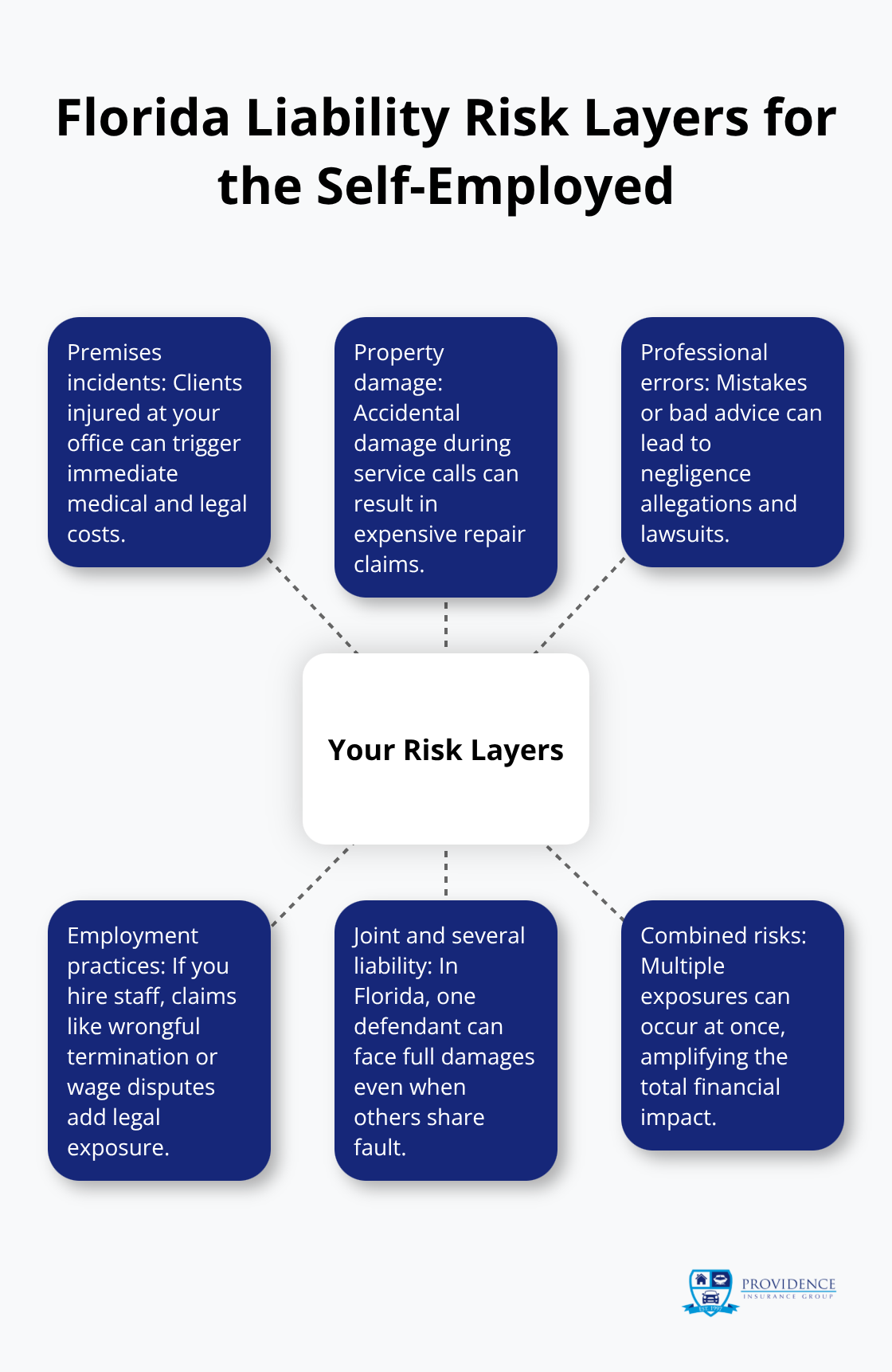
Accidents happen faster than you think. A client trips on your office stairs, damages equipment during a service call, or claims you made a costly mistake on their project. These situations happen to self-employed professionals every single day in Florida, and they cost money-lots of it. Civil liability means you pay damages when someone gets hurt or their property suffers damage because of your business operations or professional work. Florida’s specific liability rules matter when you plan your protection strategy.
Most self-employed professionals underestimate their exposure because they assume their business is too small to face serious claims. That assumption is dangerous. A single client injury claim can easily exceed $50,000 in medical costs and legal fees, and professional negligence claims often run higher when they involve service-based work like consulting, design, or advisory services.
The Multiple Exposure Layers You Face
Employment-related lawsuits add another layer of risk if you hire even one employee-wrongful termination claims, wage disputes, and workplace injury allegations can drain your business quickly. The key insight is that liability does not require you to intentionally harm someone; it attaches to negligence, mistakes, or situations where you are legally responsible for someone else’s actions.
Florida’s joint and several liability rules mean a claimant can potentially recover full damages from one defendant, even if multiple parties share fault. This concentrates risk on the business owner rather than spreading it across all responsible parties. The real threat is not just one specific risk-it is the combination of risks that most self-employed professionals face simultaneously.
Why Your Industry Determines Your Risk Profile
If you provide services, you carry professional liability exposure from errors or omissions in your work. If clients visit your location or you work at their sites, you face bodily injury and property damage claims. If you eventually hire staff, employment practices liability becomes a third exposure layer. What separates successful business owners from those facing financial ruin is recognizing these risks early and transferring them to an insurance carrier before a claim materializes.
The Protection Gap Most Business Owners Miss
A practical approach starts with identifying which risks apply to your specific industry and business model, then securing appropriate coverage limits that actually match your revenue and assets. Many self-employed professionals purchase the cheapest liability policy available, only to discover later that coverage limits are too low or critical exposures are not covered at all.
Your business structure matters too-forming an LLC or corporation creates a separate legal entity that shields personal assets from most business liabilities, but this protection only works when combined with proper insurance. Liability protection from your business structure and liability insurance work together; neither one alone provides complete protection. Without insurance, even an LLC cannot protect you from a significant judgment, and without proper business structure, personal assets remain vulnerable regardless of insurance coverage limits.
Understanding your specific liability exposure is the first step, but knowing which coverage types actually address these risks is what separates adequate protection from dangerous gaps in your policy.
Types of Liability Coverage Self-Employed Floridians Need
General Liability: Your Foundation Coverage
General liability insurance forms the foundation of protection for any self-employed professional in Florida. This coverage protects you against third-party bodily injury and property damage claims that arise from your business operations. When a client slips at your office, damages their car in your parking lot, or suffers an injury during a service call, general liability covers their medical expenses, property repairs, and your legal defense costs.
Florida self-employed professionals typically need minimum coverage limits of $300,000 per occurrence and $1,000,000 aggregate, though contractors and service providers working on larger projects often carry $1,000,000 per occurrence. The policy excludes professional mistakes or errors in your actual work product, which means it cannot stand alone if you provide services.
Professional Liability: Protecting Your Expertise
Professional liability insurance fills the gap that general liability leaves open. This coverage protects you when a client claims you made an error, gave bad advice, or failed to deliver promised results. Consultants, designers, accountants, and advisory professionals face constant exposure to negligence claims, and it can help cover costs related to third-party bodily injury, property damage, or advertising-related claims.
If your income depends on professional judgment or specialized expertise, this coverage is not optional. The policy covers your liability for errors and omissions in the services you provide, protecting both your business assets and your personal finances from claims that arise from your professional work.
Workers Compensation: A Legal Requirement
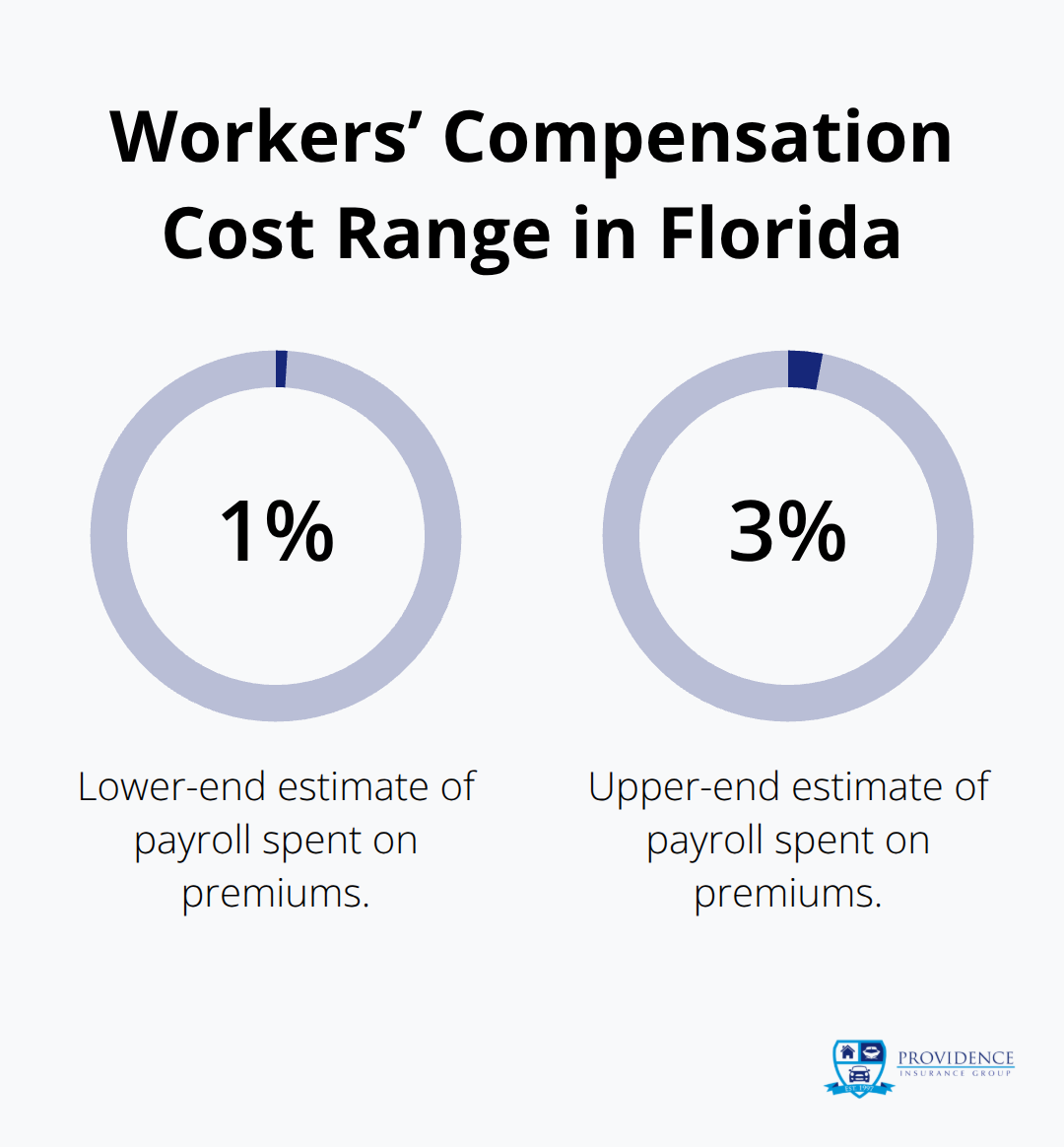
Workers compensation becomes mandatory the moment you hire your first employee in Florida. This coverage pays their medical bills and lost wages if they suffer a work-related injury, regardless of who bears fault for the accident. The cost runs roughly 1 to 3 percent of payroll depending on your industry classification, but failing to carry it exposes you to personal liability for employee injuries and potential criminal penalties.
Many self-employed professionals mistakenly believe they can skip workers compensation by classifying workers as independent contractors. Florida’s classification rules are strict, and misclassification creates serious liability exposure. The state examines factors like control over work, equipment provision, and payment structure to determine worker status, and the penalties for incorrect classification far exceed the cost of proper coverage.
Building Your Complete Protection Strategy
The right approach combines all three coverage types into a cohesive protection strategy tailored to your specific business model and revenue level, not a generic policy designed for businesses that operate nothing like yours. Your industry, client base, and growth plans all influence which coverage limits and additional protections you actually need.
Selecting the right coverage limits and understanding what each policy excludes requires careful analysis of your specific situation. This is where the next step in your protection plan becomes critical.
How to Choose the Right Liability Coverage for Your Florida Business
Match Coverage Limits to Your Actual Business Exposure
Your industry classification determines which risks dominate your exposure profile. A plumbing contractor faces different liability scenarios than a marketing consultant, and coverage limits that work for one business will leave another dangerously underprotected. Self-employed individuals in Florida often operate as sole proprietors, which means your personal assets remain fully exposed unless you structure your business as an LLC or corporation and pair that protection with adequate insurance limits.
Map exactly what your clients do on your property and what services you provide. If clients visit your location, general liability limits should start at $300,000 per occurrence minimum. Contractors working on larger commercial projects often carry $1,000,000 per occurrence because a single injury claim can easily exceed $50,000 in medical costs and legal fees. Professional liability limits depend on your service type and client contract values, with most consultants and service professionals needing $1,000,000 in coverage, though some high-risk advisory work demands $2,000,000 or higher.
Most self-employed professionals select coverage limits based on price rather than actual exposure, then discover during a claim that their limit falls $200,000 short of the actual damages. This mistake costs far more than the premium savings ever provided.
Select Deductibles That Match Your Cash Reserves
Deductible selection directly impacts both your premium cost and your out-of-pocket liability during a claim. This decision requires understanding your actual cash reserves rather than just choosing what feels affordable. A $2,500 deductible might save you 20 to 30 percent on annual premiums compared to a $500 deductible, but only if you maintain liquid reserves to cover that gap without disrupting business operations.
Higher deductibles reduce premiums significantly, but only if you can genuinely afford to pay that amount immediately when a claim occurs. Test your cash position honestly-if you cannot cover the deductible without borrowing money or delaying payroll, the premium savings create false economy.
Identify and Address Policy Exclusions
Policy exclusions are where most coverage gaps appear. Standard policies exclude professional errors, contractual liability, and employment practices claims unless you specifically add coverage. You must review exclusions against your specific work activities because what one policy covers, another policy excludes entirely.
Ask your agent directly which of your actual work activities fall outside the standard policy language. Either modify the policy to include them or accept the risk consciously rather than discovering the gap after a claim materializes. An independent agent who specializes in your industry can identify these exclusions before they become problems during claims, saving you from costly surprises when you need protection most.
Evaluate Additional Protections for Your Industry
Certain industries require coverage beyond the standard three liability types. If you handle client data or operate online, cyber liability protects you against data breaches and network security failures. If you provide advice that clients rely on for financial decisions, you may need errors and omissions coverage with higher limits than standard professional liability offers.
Your specific business model determines which additional protections matter. A consultant who works entirely remotely faces different exposures than one who maintains a physical office with client traffic. Review your actual operations against available coverage options rather than purchasing policies based on what competitors carry.
Work with an Agent Who Understands Your Business
An independent agent takes the time to understand your specific business operations, which helps identify coverage gaps before they become problems. This personalized approach beats generic online quotes that treat your consulting firm the same as every other consulting firm in the state.
Your agent should ask detailed questions about your client relationships, work locations, employee plans, and revenue projections. These specifics drive coverage recommendations far more than industry averages or standard policy templates. The right agent customizes your protection strategy to match your actual exposure rather than selling you a one-size-fits-all package.
Final Thoughts
Self-employed Florida liability protection requires three concrete actions. First, match your coverage limits to your actual business exposure rather than selecting the cheapest option available-a $300,000 general liability limit protects a small consulting practice, but a contractor working on larger projects needs $1,000,000 per occurrence. Professional liability coverage becomes non-negotiable if your income depends on specialized expertise or client advice. Workers compensation is legally mandatory the moment you hire your first employee, and misclassifying workers as independent contractors creates far greater liability exposure than the cost of proper coverage.
Second, select deductibles based on your actual cash reserves, not just premium savings. A higher deductible reduces your annual cost, but only if you can genuinely afford to pay it immediately when a claim occurs. Test your cash position honestly before committing to a deductible you cannot cover without disrupting operations.
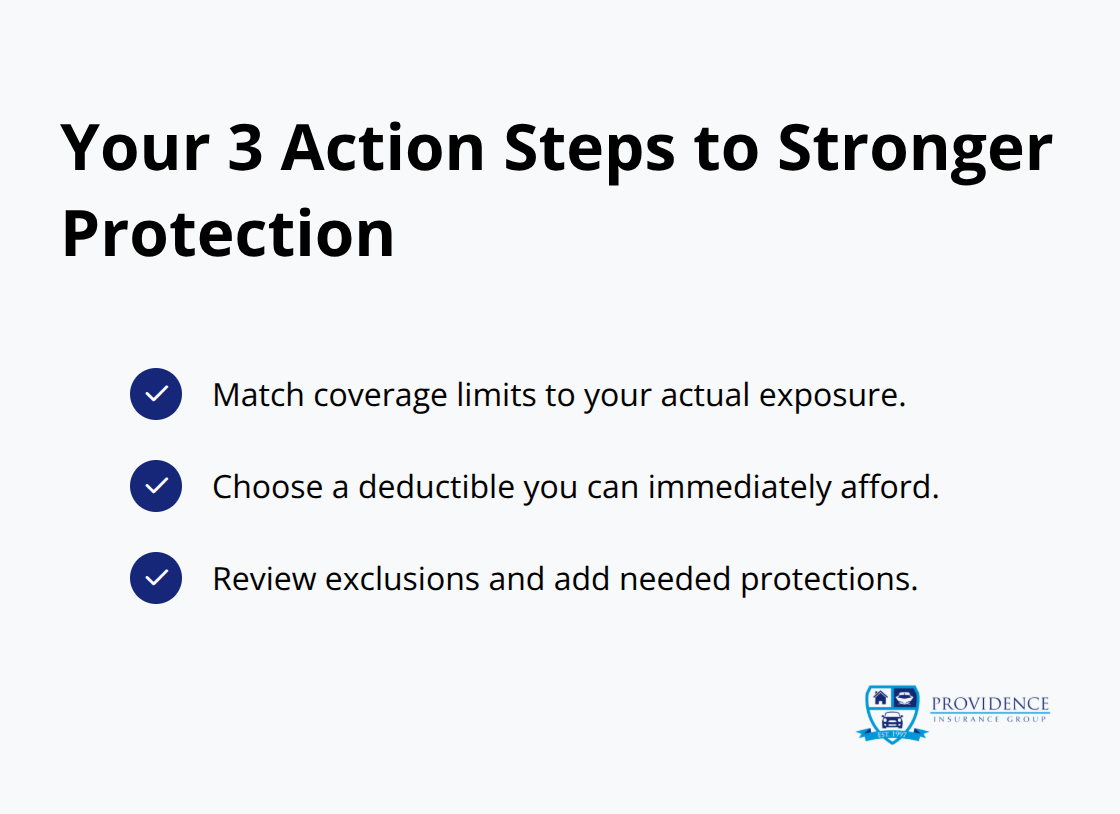
Third, review policy exclusions against your specific work activities. Standard policies exclude professional errors, contractual liability, and employment practices claims unless you add them explicitly. Contact Providence Insurance Group today to build your complete self-employed Florida liability protection strategy.
Disclaimer: The information provided in this blog is for general informational purposes only and does not constitute legal, financial, or insurance advice. Coverage options, terms, and availability may vary. Please consult with a licensed professional for advice specific to your situation