
Owning a motorhome in Florida comes with unique insurance challenges that many RV owners overlook. From state minimum requirements to protecting your personal belongings on the road, Florida motorhome insurance demands careful attention.
At Providence Insurance Group, we help RV owners navigate these complexities and find coverage that actually fits their lifestyle. This guide walks you through what you need to know to protect your investment properly.
What Florida Motorhome Owners Must Know About State Insurance Requirements
Florida requires motorhome owners to carry two essential coverages: Personal Injury Protection and property damage liability. These aren’t optional suggestions-they’re legal minimums the state enforces. Many RV owners mistakenly assume their auto insurance extends to their motorhome, but it doesn’t. Your auto policy likely won’t cover the motorhome itself, its contents, or liability while you travel or live in it. This gap exposes you to serious financial risk.
The state minimum coverage proves genuinely insufficient for most owners. If you cause an accident that injures someone or damages property worth more than the legal minimum, you become personally liable for everything beyond that limit. Your personal assets-savings, home equity, future wages-become targets in a lawsuit. We recommend you carry at least $100,000 in bodily injury liability and $100,000 in property damage liability. This higher coverage costs surprisingly little more than minimums but shields you from catastrophic financial loss.
How Liability Coverage Works on the Road
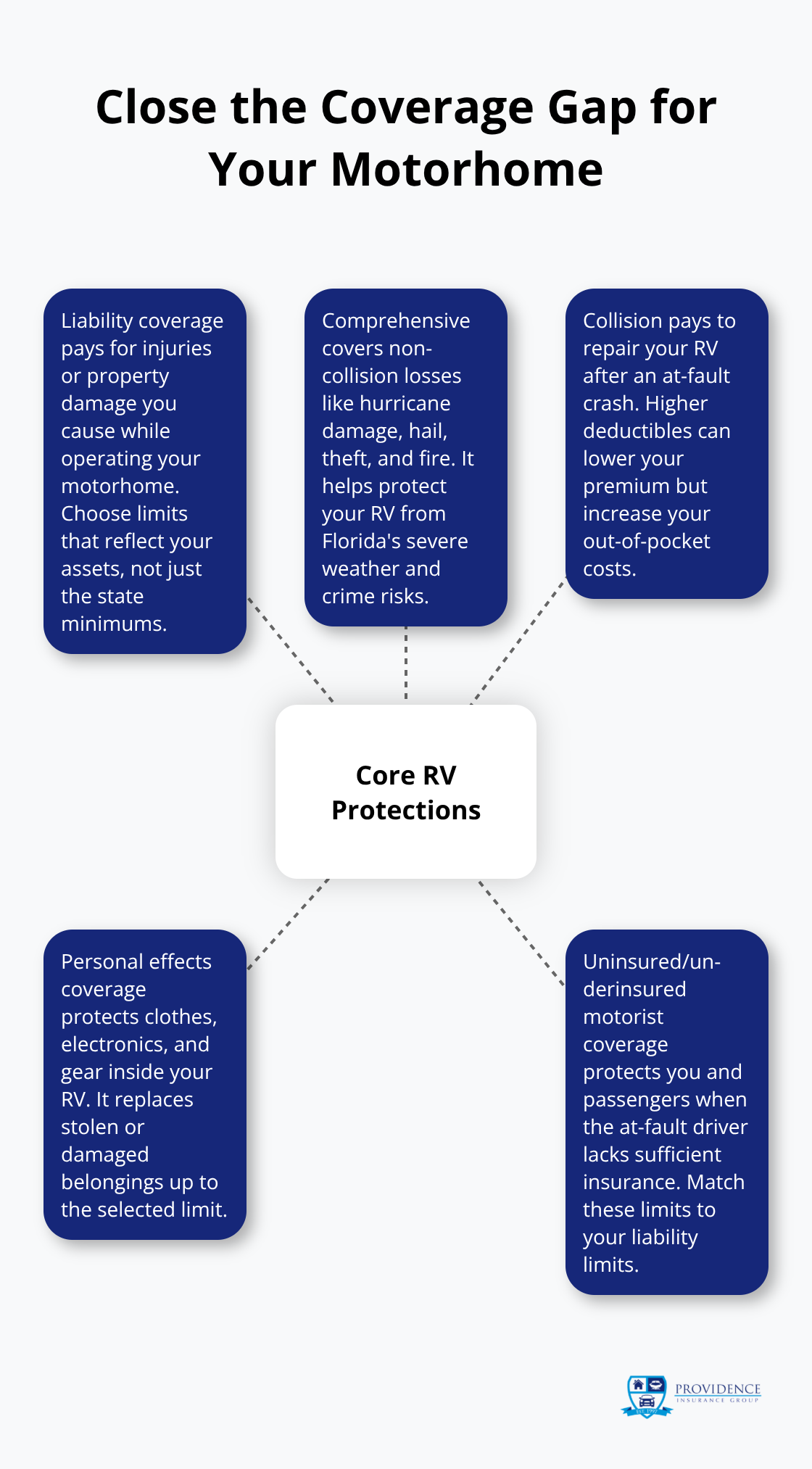
Liability coverage pays for injuries you cause to others and property damage you cause to their vehicles or property during an accident. If you hit another car, injure its occupants, or damage a storefront while parking, your liability coverage handles those claims up to your policy limits. Florida law allows you to decline uninsured and underinsured motorist coverage only by signing a waiver, but we strongly advise against it. Too many drivers on Florida roads carry minimal or no insurance, and if an uninsured driver hits you, this coverage protects you and your passengers.
The real-world issue most RV owners face is that their motorhome represents a significant collision risk due to size and weight. Accidents involving motorhomes typically result in higher medical bills and property damage claims than standard vehicle accidents, which is exactly why the state minimums feel inadequate once you examine actual claim scenarios.
Full-Time Residency Changes Everything
If you live in your motorhome more than six months per year, your insurance needs shift dramatically. Full-time RV residency requires specialized coverage that standard motorhome policies don’t always include. You need personal liability coverage that extends beyond driving situations-for instance, if someone suffers injury while visiting your parked motorhome at a campground. Medical payments coverage becomes more important because you operate a mobile residence, not just a vehicle. Loss assessment coverage up to $5,000 protects you if your RV association levies charges following a covered loss.
Part-time RV owners can typically use standard motorhome policies, but full-time residents must request full-time RV coverage explicitly. Many insurance companies don’t offer this automatically, so you must ask specifically about these protections when shopping for a policy. The distinction matters because full-time residency means your motorhome functions as your primary home, and your insurance should reflect that reality rather than treat it as a vehicle you occasionally use for vacations. Understanding this difference sets the stage for exploring the specific coverage types that protect your motorhome and everything inside it.
Coverage That Protects Your Motorhome and What’s Inside
Comprehensive and Collision Coverage Form Your Foundation
Comprehensive and collision coverage form the backbone of motorhome protection, yet many Florida owners skip them or carry inadequate limits. Comprehensive coverage protects against hurricane damage, hail, theft, and fire, while collision coverage handles at-fault accidents on congested highways. If you financed your motorhome, your lender requires both coverages, but even if you own it outright, skipping these exposes you to massive out-of-pocket repair costs.
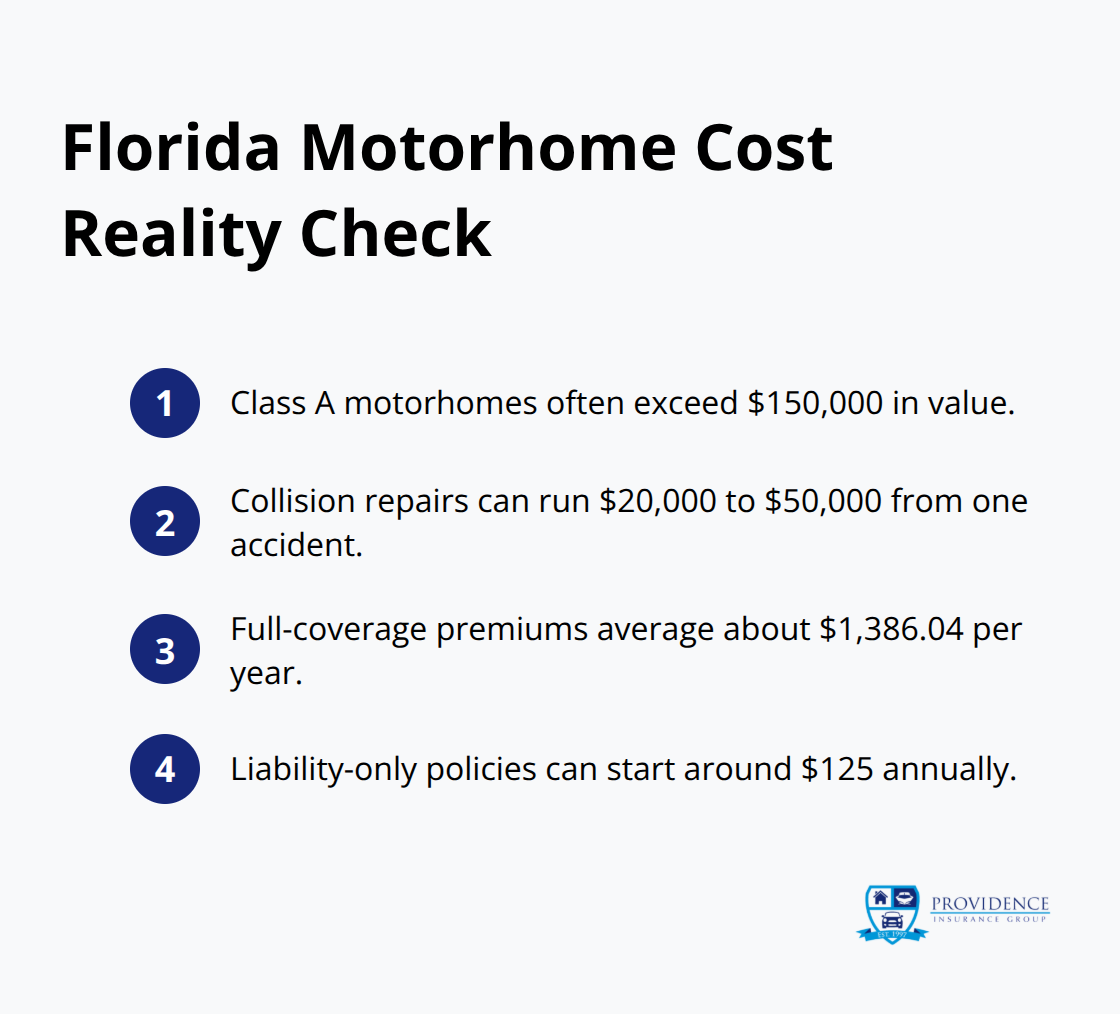
A Class A motorhome can cost $150,000 or more, meaning collision damage from a single accident could easily exceed $20,000 to $50,000 in repairs. Progressive’s 2024 data showed average Florida motorhome premiums around $1,386.04 annually with full coverage, but liability-only policies start around $125 per year. That $1,200+ difference seems significant until you face a total loss and realize comprehensive and collision coverage pays for replacement while you’re stuck with nothing.
Total Loss Replacement for Newer Motorhomes
Consider adding total loss replacement coverage for newer motorhomes, which pays to replace your RV with a brand-new model of equal or better value if it’s totaled in an accident. This coverage matters most for motorhomes under five model years old because older RVs receive only the depreciated cash value instead of replacement cost. Newer motorhomes lose value rapidly in the first few years, so total loss replacement coverage protects you from the gap between what you owe and what your motorhome is actually worth after depreciation.
Personal Belongings Require Specific Protection
Personal belongings inside your motorhome deserve specific protection that standard auto policies won’t cover. Your clothes, electronics, camping gear, and travel essentials can total $10,000 to $30,000, yet standard motorhome policies either don’t cover these items or cap coverage at inadequate limits. Personal effects coverage protects your belongings, such as laptops or camping equipment, from theft, loss, or damage while using your RV. This targeted protection prevents you from absorbing massive losses when theft or fire strikes your motorhome at a campground or rest stop.
Uninsured and Underinsured Motorist Coverage Fills Critical Gaps
Uninsured and underinsured motorist coverage protects you when another driver causes an accident but carries minimal or no insurance. Florida law requires insurers to offer this coverage, though you can decline it only by signing a waiver. Given that many Florida drivers operate with state minimum liability limits of just $10,000 per person, uninsured and underinsured motorist coverage becomes genuinely practical protection.
If an underinsured driver causes an accident that injures you or your passengers, this coverage fills the gap between their policy limits and your actual medical expenses. We recommend carrying uninsured and underinsured motorist limits equal to your liability limits, so if you carry $100,000 in bodily injury liability, maintain $100,000 in uninsured and underinsured motorist coverage. This alignment means you’re protected at the same level whether you cause an accident or someone else does. With this foundation of protection in place, you’re ready to examine the mistakes that leave many RV owners underinsured and exposed to financial hardship.
How RV Owners Leave Themselves Exposed to Financial Loss
Most Florida motorhome owners carry insurance that sounds adequate until they actually need it. The gap between what owners think they have and what they actually have causes real financial damage when accidents happen. Many owners purchase the absolute minimum coverage Florida law requires, then assume they’re protected. This approach leaves you vulnerable because state minimums of $10,000 in property damage liability won’t cover serious accidents. A single collision involving your motorhome can generate $30,000 to $100,000 in damages and medical bills, meaning you personally absorb everything above your policy limits.
Underestimating Coverage Needs Creates Catastrophic Gaps
State minimum coverage proves dangerously inadequate for most motorhome owners. When you cause an accident that exceeds your policy limits, you become personally liable for the difference. Your savings, home equity, and future wages become targets in a lawsuit. Progressive’s 2024 data showed Florida motorhome premiums averaging $1,386.04 annually with comprehensive coverage, yet many owners never explore whether their current policy reflects their actual financial exposure. The cost difference between state minimums and adequate coverage remains surprisingly small-often just a few dollars per month-but the protection difference proves enormous.
Equipment Upgrades Demand Policy Updates
The most dangerous mistake happens when owners add thousands of dollars in upgrades without updating their policies. You install a new entertainment system worth $8,000, add $5,000 in camping gear, and upgrade your kitchen appliances, yet your personal belongings coverage remains capped at $2,000. When theft or fire strikes, you recover only a fraction of your actual losses. Your motorhome investment grows with each upgrade, but your coverage stays frozen at outdated limits. This mismatch leaves you exposed to substantial out-of-pocket costs that proper coverage would have prevented.
Full-Time Residency Requires Specialized Protection
Another critical error involves failing to request full-time RV coverage if you live in your motorhome year-round. Standard motorhome policies exclude certain liability scenarios that full-time residents face, such as someone injured while visiting your parked motorhome at a campground. This coverage gap leaves you personally liable for medical bills and legal fees that full-time RV coverage would have handled. Your insurance must match your actual living situation, not your original purchase intent.
Discounts and Rate Comparisons Remain Unclaimed
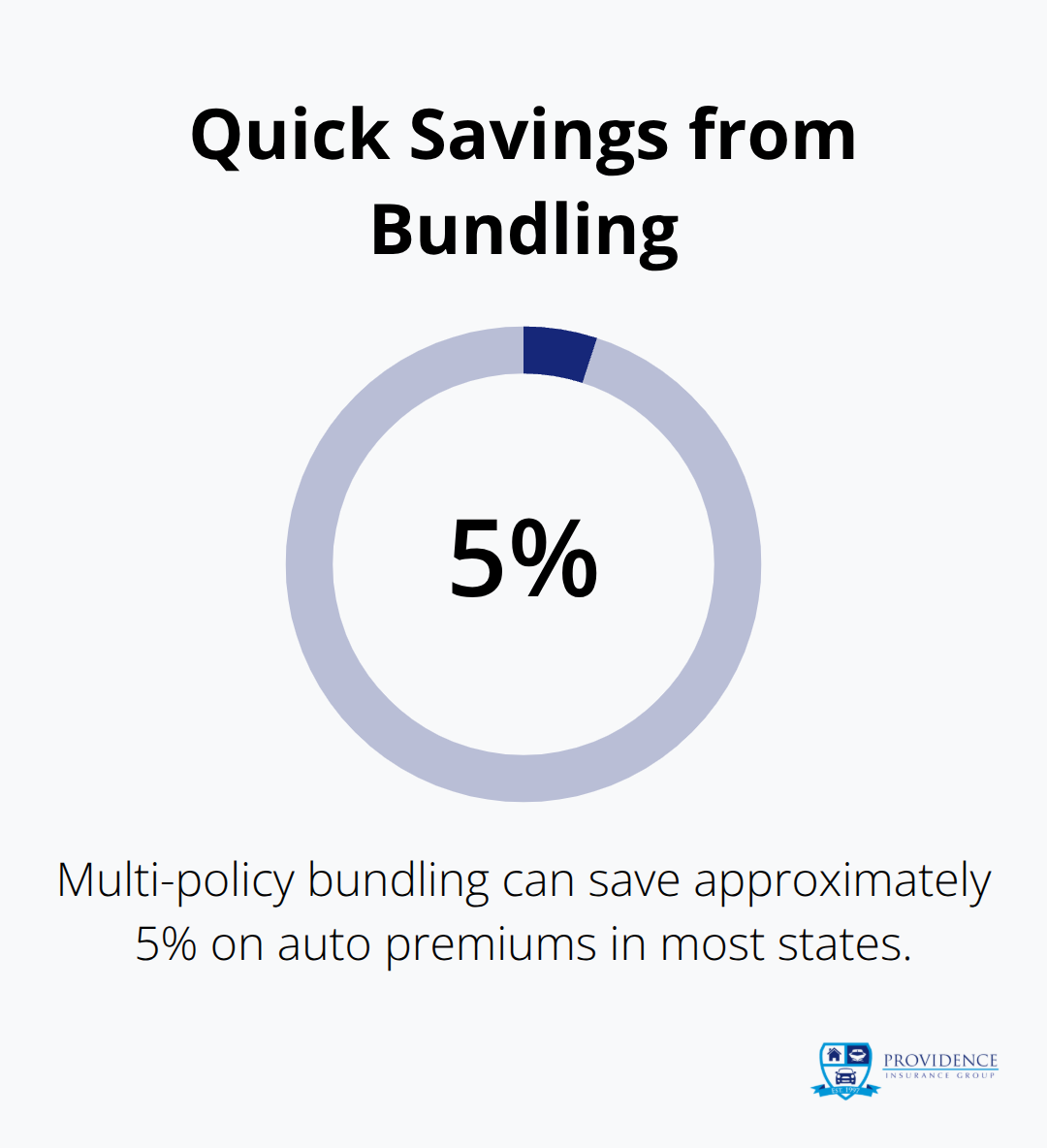
Owners lock themselves into overpriced policies because they never compare rates or ask about available discounts. Multi-policy bundling can save approximately 5% on auto premiums in most states according to industry data, yet many RV owners never combine their motorhome policy with auto or home coverage. Safe driver discounts reward three years of clean driving records, original owner discounts apply regardless of motorhome age, and paying your full premium in advance rather than monthly installments generates additional savings.
These discounts compound quickly, potentially reducing your annual premium by $200 to $400 or more, yet they remain unclaimed because owners assume their current rate is standard. As an independent insurance agent, Providence Insurance Group takes the time to compare rates and coverages side by side across Florida’s top carriers, then maximizes your available discounts to fit your specific situation.
Final Thoughts
Florida motorhome insurance protects far more than just your vehicle-it protects your financial security and peace of mind on the road. State minimum requirements provide a legal floor, not a safety net, and the mistakes we’ve covered throughout this guide reveal a consistent pattern: owners either carry inadequate coverage or fail to update their policies as their motorhomes and lifestyles evolve. Comprehensive and collision coverage, personal belongings protection, and uninsured motorist coverage form the foundation of real protection, while full-time residents need specialized coverage that standard policies don’t automatically include.
We at Providence Insurance Group understand these complexities because we work with Florida motorhome insurance owners every day. As an independent agency, we represent many of Florida’s top insurance carriers, which means we compare rates, coverages, and payment options side by side to find what works best for you. We take the time to understand your motorhome, how you use it, and what protection matters most-then we maximize your available discounts so you’re not overpaying for coverage you need.
Contact us for a personalized review of your current motorhome insurance or to get a quote if you’re shopping for coverage. Visit Providence Insurance Group to start the conversation, or call us directly, and we’ll ask the right questions to build a policy that matches your motorhome and your lifestyle. Don’t let coverage gaps or unclaimed discounts cost you thousands when an accident happens.
Disclaimer: The information provided in this blog is for general informational purposes only and does not constitute legal, financial, or insurance advice. Coverage options, terms, and availability may vary. Please consult with a licensed professional for advice specific to your situation