

Running your own business in Florida means you’re responsible for protecting everything you’ve built. Self-employed Florida insurance isn’t just a checkbox-it’s the foundation that keeps your income, assets, and future secure.
At Providence Insurance Group, we’ve seen too many self-employed professionals operate with dangerous coverage gaps. The right insurance strategy prevents financial disaster when something goes wrong.
What Insurance Must Self-Employed Professionals in Florida Actually Have
General Liability Coverage for Client Protection
General liability coverage protects you when a client claims your work caused them harm or financial loss. Florida courts have awarded substantial judgments in service-related disputes, with the National Association of Insurance Commissioners reporting that small business liability claims average between $25,000 and $100,000 in legal defense costs alone. If you work with clients in their homes or offices, this coverage becomes non-negotiable. Most clients now require proof of liability insurance before hiring contractors or consultants, making it a practical business requirement. We recommend minimum limits of $1 million per occurrence for most self-employed professionals, though policy limits may vary by industry and project scope.
Protecting Your Business Assets and Equipment
Property insurance covers your equipment, inventory, tools, and workspace if theft, fire, or weather damage occurs. Self-employed professionals often underestimate replacement costs for specialized equipment. A photographer’s camera setup, an electrician’s truck and tools, or a consultant’s computer systems can cost $10,000 to $50,000 or more to replace. Standard homeowners or renters policies exclude business property, meaning you have zero coverage if something happens. Florida’s hurricane season adds significant risk, with the state experiencing major storms roughly every three years according to the National Hurricane Center. You need a dedicated commercial property policy that covers your specific equipment at replacement value, not depreciated value. Many self-employed professionals also overlook inland flood coverage, which standard policies exclude but which matters greatly in Florida’s geography.
Health Insurance Decisions for Solo Operators
Self-employed workers in Florida have three realistic paths: individual marketplace plans through the Affordable Care Act, short-term health plans, or going uninsured. The average ACA bronze plan in Florida costs around $400 to $600 monthly for someone in their 40s, according to Healthcare.gov data. Marketplace plans offer the most comprehensive coverage and include preventive care at no cost. Short-term plans cost less but exclude pre-existing conditions and cap coverage limits, making them risky for anyone with chronic health issues.
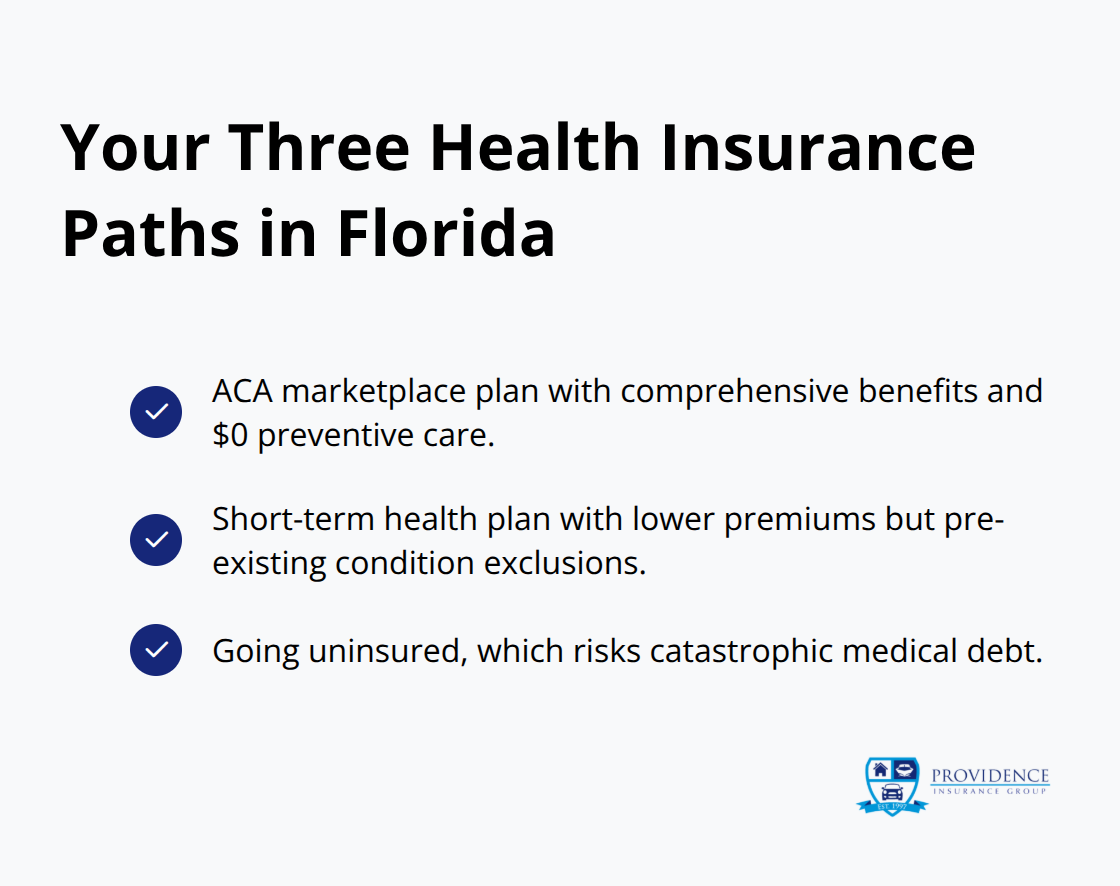
Going without coverage exposes you to catastrophic medical debt. Many self-employed professionals combine a high-deductible ACA plan with a Health Savings Account, which allows tax-deductible contributions up to $4,150 annually for self-only coverage (this strategy provides both insurance protection and a tax-advantaged savings tool for medical expenses).
Coverage Gaps That Create Financial Exposure
You now understand the three pillars of self-employed insurance in Florida. But most business owners still operate with dangerous gaps between what they think they have and what actually protects them when claims happen.
What Coverage Gaps Actually Cost Self-Employed Professionals
Liability Limits That Disappear Too Fast
Most self-employed professionals in Florida think their $1 million liability policy protects them completely. It doesn’t. A single lawsuit from a dissatisfied client, a serious injury on your property, or unexpected business interruption can exceed your coverage limits and wipe out years of income. Self-employed professionals typically need minimum coverage limits of $300,000 per occurrence and $1,000,000 aggregate. If you run a service business with multiple client touchpoints, a $1 million limit disappears fast once legal fees begin accumulating. Florida courts award judgments regularly exceeding $500,000 in construction defect cases, professional liability disputes, and personal injury claims. Many successful self-employed professionals operate with $2 million to $3 million in liability coverage because they understand that one catastrophic claim can destroy a decade of business growth.
The Income Protection Problem Nobody Addresses
Beyond liability, disability insurance represents the coverage gap that hits hardest. The Council for Disability Awareness reports that the average disability lasts 34.6 weeks, yet most self-employed workers have zero income replacement if they cannot work. If you earn $5,000 monthly and become unable to work for six months due to injury or illness, you lose $30,000 in income while your business expenses continue. Disability insurance replaces 50% to 70% of your income during recovery periods, typically costing $50 to $150 monthly depending on your age and occupation. This coverage transforms a financial catastrophe into a manageable setback.
Business Interruption: The Forgotten Safety Net
Business interruption coverage fills another critical gap by covering your operating expenses and lost income when your business cannot operate due to a covered event like fire or severe weather. A Florida-based flooring contractor who loses access to their warehouse for three months faces $40,000 to $60,000 in rent, utilities, and payroll costs regardless of revenue. Without business interruption coverage, those expenses come directly from your personal savings or force you to take on debt. This policy type protects the financial backbone of your operation when circumstances beyond your control force a shutdown.
Why Coverage Gaps Exist in the First Place
Self-employed professionals often purchase insurance based on price alone or accept whatever coverage a captive agent recommends without questioning whether it matches their actual business risks. Many policies contain massive blind spots that nobody discusses when coverage is purchased. The gaps between what you think you have and what actually protects you when claims happen can cost everything. An independent insurance agent who takes time to understand your specific business operations identifies these gaps before they become expensive problems. When you’re ready to examine your current coverage and fill these dangerous holes, the right agent makes all the difference.
How to Choose the Right Insurance Provider for Your Self-Employed Business
Working with an Independent Agent Who Understands Your Industry
The agent you select determines whether your coverage actually protects you or leaves you exposed. Most self-employed professionals make this decision based on whoever responds first or offers the lowest quote, which is exactly backwards. A captive agent representing one insurance company cannot show you competing options, meaning you’ll never know if you’re paying too much or missing better coverage. An independent agent works differently-they take time to understand your specific business operations, client relationships, and revenue model before recommending coverage.
This matters because a one-size-fits-all approach fails for self-employed professionals. A freelance graphic designer has completely different risks than a plumbing contractor, yet many agents treat them identically. When an agent asks detailed questions about your business volume, client types, equipment value, and revenue sources, they’re building the foundation for accurate coverage recommendations. Agents who skip this step are selling policies, not solving problems.
Comparing Multiple Quotes and Coverage Options
Florida’s insurance market includes numerous carriers with wildly different pricing and coverage options for self-employed professionals. Getting quotes from three to five carriers typically reveals significant differences in annual premiums for identical coverage. An independent agent can compare multiple quotes and access different carriers side by side, giving your business more options when evaluating coverage and prices.
Captive agents cannot do this comparison work. Additionally, discounts for self-employed professionals vary dramatically between insurers. Some carriers offer 10% to 15% discounts for bundling multiple policies, while others offer bundling discounts of only 5%. Professional organization memberships, safety certifications, and loss-free years can each generate 5% to 10% additional discounts depending on the carrier.
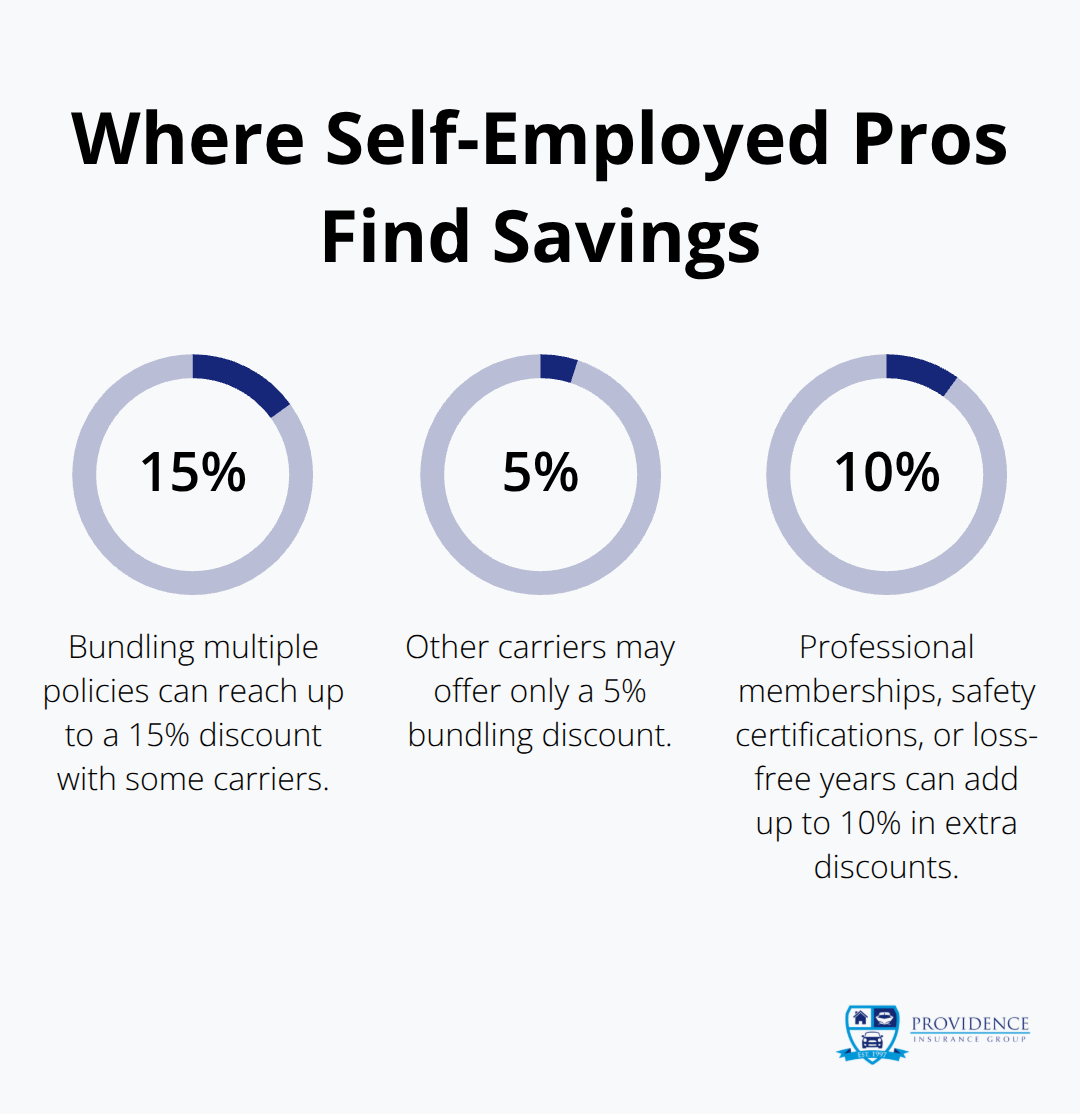
An independent agent who knows which carriers offer which discounts ensures you capture every available reduction.
Maximizing Available Discounts for Self-Employed Professionals
Asking your agent to itemize all available discounts forces accountability and prevents you from overpaying. Many self-employed professionals never review their coverage after purchase, meaning gaps and outdated limits persist for years. Your business changes constantly, yet your insurance often stays frozen in time.
Revenue growth should trigger liability limit increases because your financial exposure grows with your business size. New equipment purchases require property insurance updates to maintain replacement value coverage. Tax strategy changes might affect which health insurance option makes sense for your situation. An agent who schedules annual reviews catches these shifts and adjusts your coverage accordingly.
Confirming Coverage Before Claims Happen
During these reviews, request a detailed explanation of what each policy covers and excludes, specific dollar amounts for each coverage limit, and what situations would trigger a claim denial. Many self-employed professionals discover coverage gaps only when filing claims, which is far too late. The right agent prevents this by walking you through your actual business scenarios and confirming which policies respond.
If a client injury occurs at your workspace, does your liability policy cover it? If weather forces you to close for a week, does business interruption coverage replace your lost income? If your equipment suffers damage during transport, does your property policy cover it?
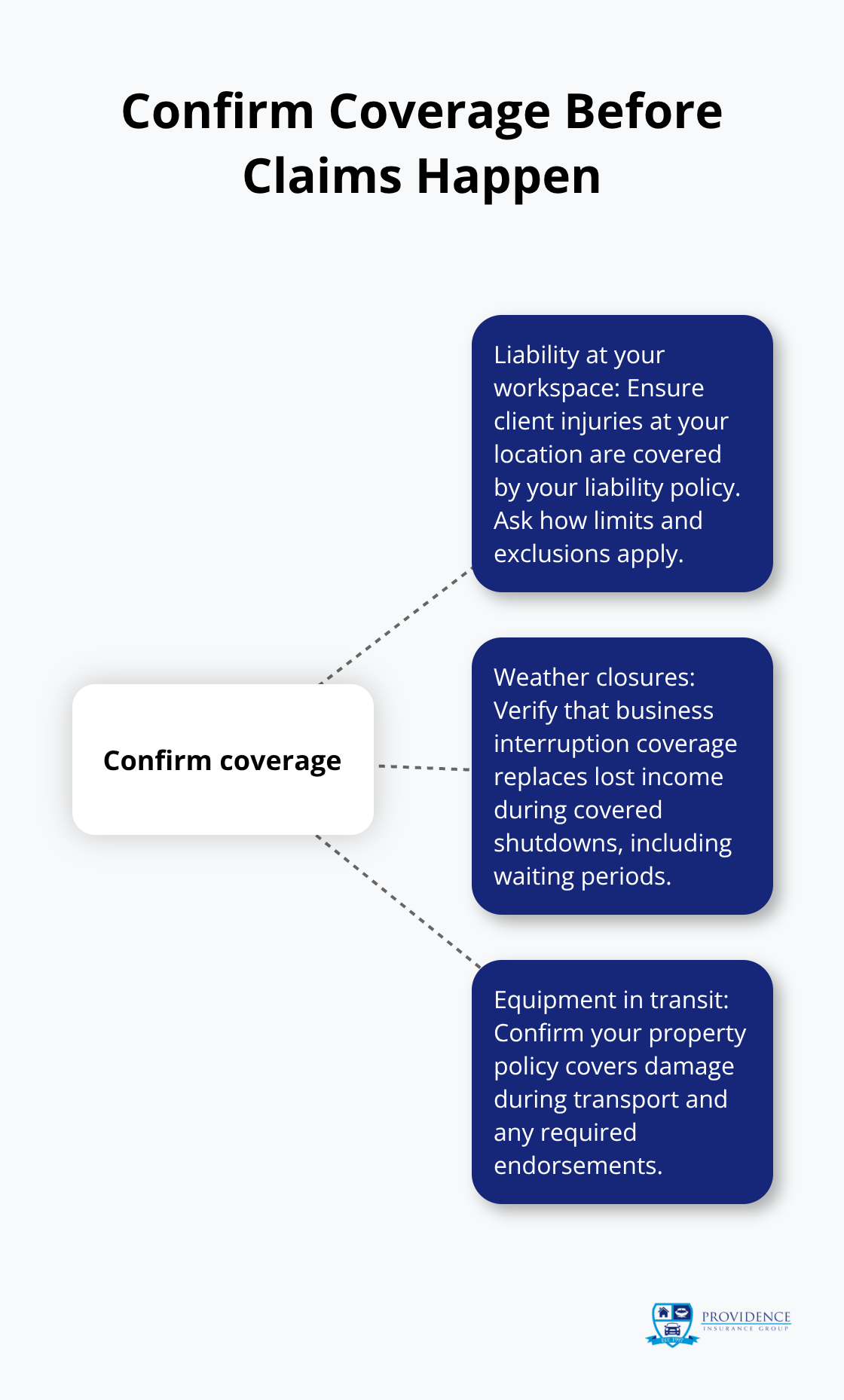
These questions have specific answers that depend on your exact policy language, and your agent should answer them before claims happen. This proactive approach transforms insurance from a confusing obligation into a clear protection strategy tailored to your actual business operations.
Final Thoughts
Self-employed Florida insurance protects the financial future you’ve built through years of hard work. General liability coverage shields you from client disputes, property insurance replaces your equipment and assets, and health insurance prevents medical debt from destroying your savings. Disability insurance and business interruption coverage fill the gaps that separate financial stability from catastrophic loss.
Your current coverage likely contains blind spots between what you assumed you purchased and what actually protects you when claims happen. Schedule time this week to gather your existing policies and review their actual coverage limits, exclusions, and what situations trigger claim denials. Write down your business assets, monthly operating expenses, revenue figures, and the specific work you perform so you have concrete information for an insurance professional.
Contact Providence Insurance Group to schedule a comprehensive coverage review and ensure your self-employed Florida insurance strategy matches your actual business operations. We compare rates and coverages from many of Florida’s top carriers side by side, which means you see your real options instead of being locked into one company’s offerings. Your protection strategy should evolve as your business grows, and the right agent makes that happen proactively rather than waiting for claims to reveal gaps.
Disclaimer: The information provided in this blog is for general informational purposes only and does not constitute legal, financial, or insurance advice. Coverage options, terms, and availability may vary. Please consult with a licensed professional for advice specific to your situation